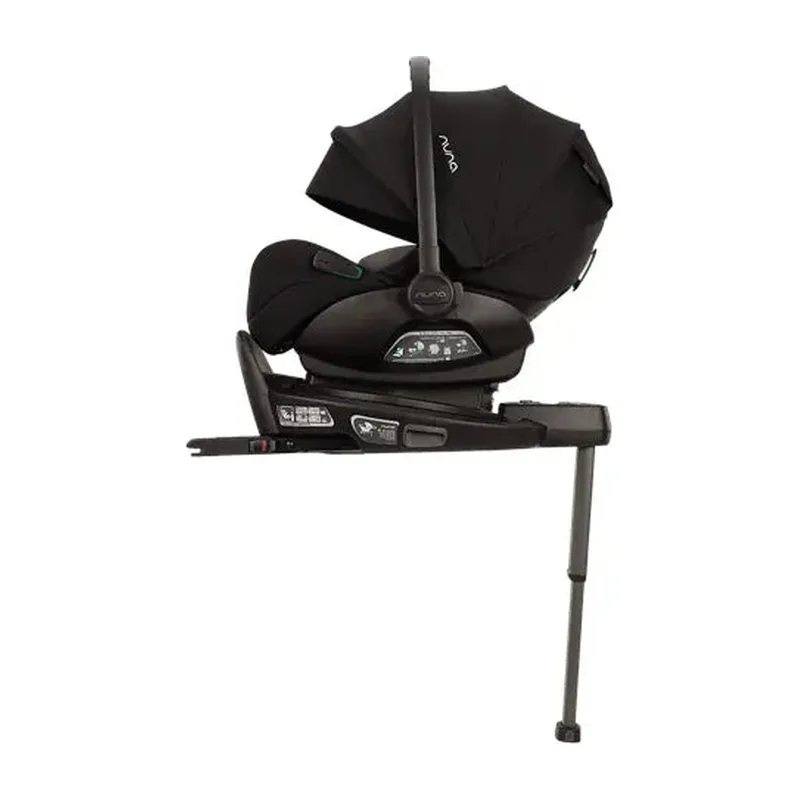
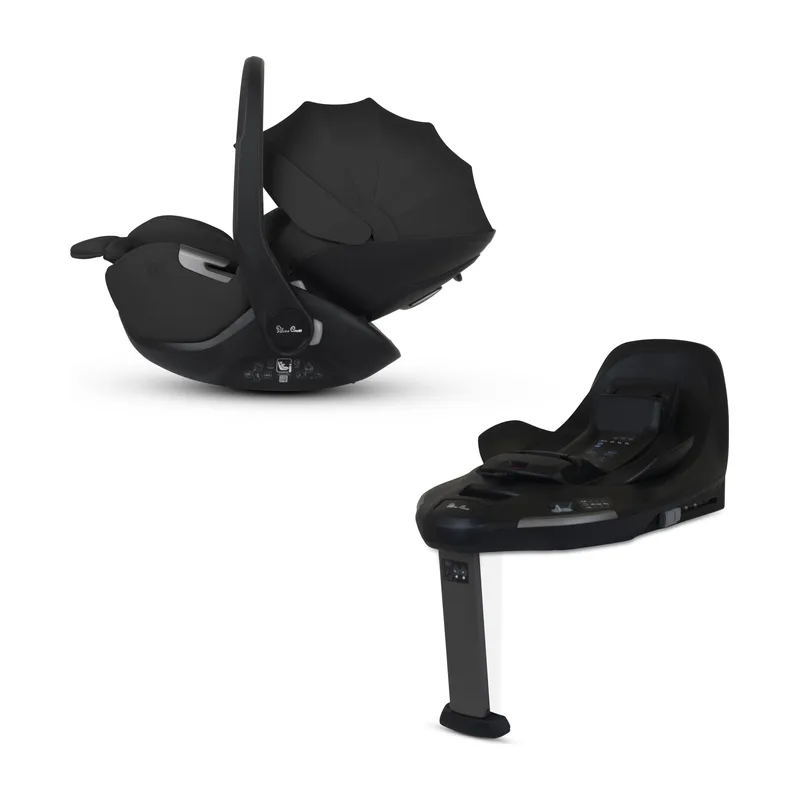
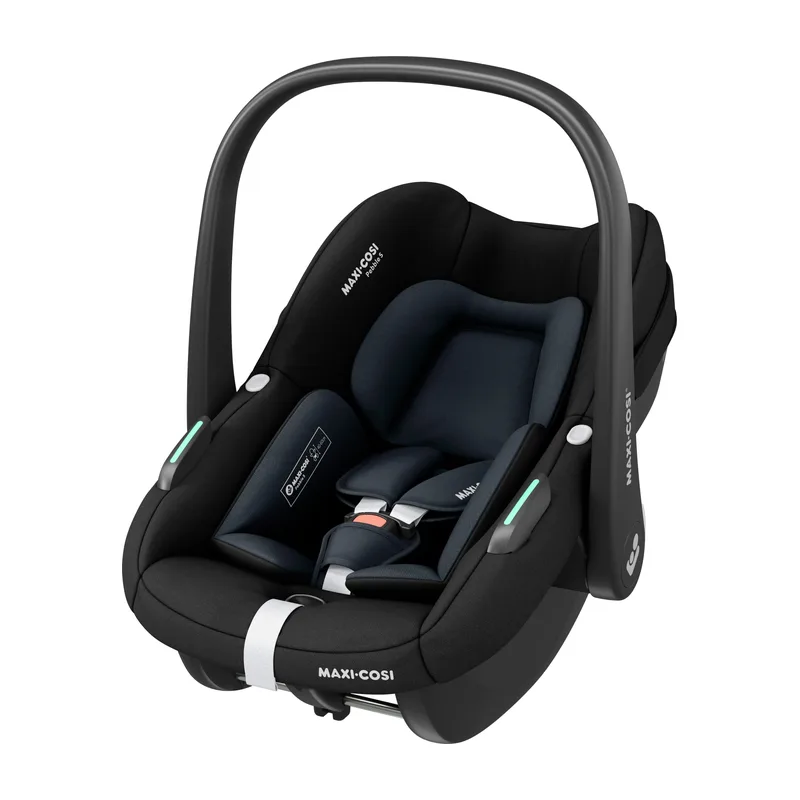
In depth: baby car seats explained
ADAC gives safety 50 percent and operation 40, so ergonomics barely moves the grade
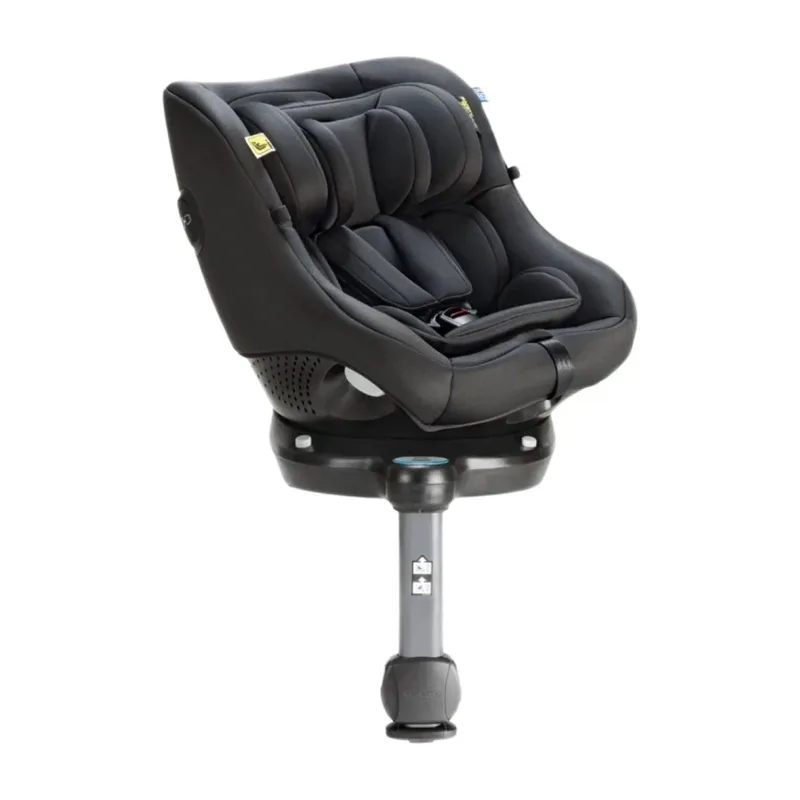
ADAC's overall grade is built from its safety category at 50 percent, operation at 40 percent and ergonomics at 10 percent, and a harmful substances result worse than good lowers the total. For the Pebble S the sums work: 0.5 times 1.7 plus 0.4 times 1.9 plus 0.1 times 2.1 comes to 1.82, and ADAC's overall grade is 1.8. For the Cloud G3 the same sum gives 2.16 against a published 2.2.
That weighting explains why the Pebble S finishes ahead of seats with better ergonomics, and why the Cloud G3's weak 2.6 for ergonomics adds only 0.06 to its overall grade compared with a 2.0, while the same 0.6 gap in safety would add 0.30. Our own weights are different on purpose. Crash protection carries 35 points, operation 20, price 15, weight and height range 15, comfort 10 and harmful substances 5, because a buyer pays for the shell weight and the price as well as the grade. The resulting order matches ADAC's own overall grades, with the Cloud G3 and i-Gemm 3 tied at 2.2 on ADAC's side and separated on ours by 0.1 kg of weight and 2 cm of height.
The grades themselves are the same ones ADAC publishes, converted so that 1.0 scores 100 and each further grade point costs 20. A 2.6 for ergonomics, the Cloud G3's, therefore scores 68, and a 1.9 for operation, the Pebble S's, scores 82. The conversion is applied to every seat the same way, which keeps the comparison to what ADAC measured.
The Pebble S against the Coral Slide Pro: £285.04 buys 0.5 kg off the shell and 4 cm of height
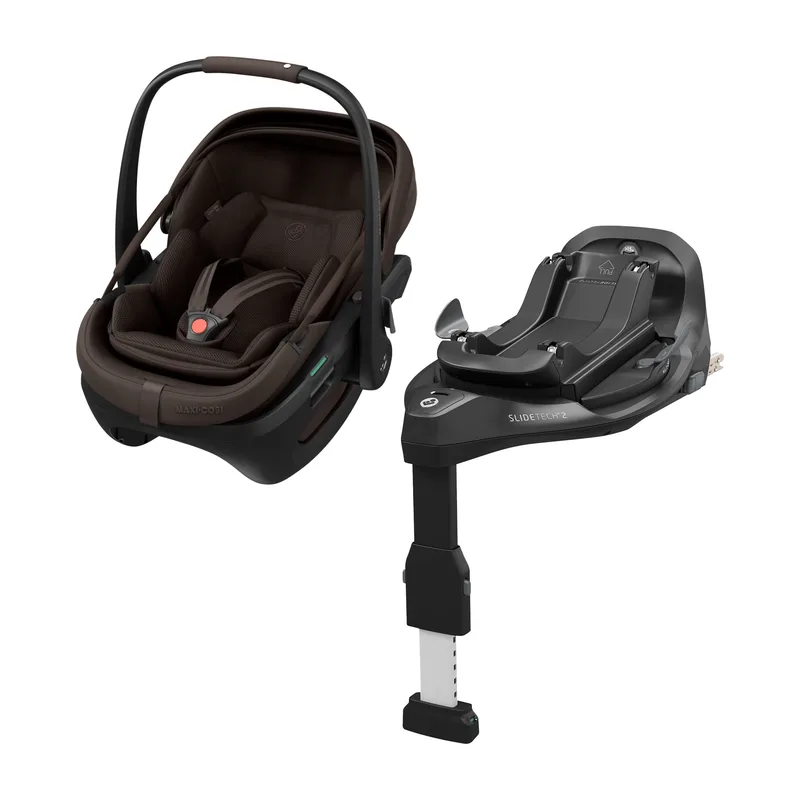
The two are from the same maker, and ADAC graded both with their own bases: the Pebble S at 1.8 in May 2025 and the Coral Slide Pro at 2.1 in October 2026. The Pebble S pair costs £214.94 and the Coral Slide Pro bundle £499.98. In return the Coral Slide Pro takes 0.5 kg off the shell, adds 4 cm of height range and, according to Maxi-Cosi, slides the seat 27 cm out of the car.
The Coral Slide Pro's base weighs 12.4 kg against 6.5 kg for the Pebble S base, so the two pairs weigh 15.4 kg and 10.0 kg when both parts are counted. ADAC graded the Pebble S safety 1.7 and the Coral Slide Pro 2.1, and the Coral Slide Pro's cover can only be hand washed. Without bases, ADAC's overall grades are 2.7 for the Pebble S and 3.0 for the Coral Slide Pro, so the Pebble S keeps the lead on the belt as well.
The Coral Slide Pro suits a parent who lifts the shell several times a day and has a car where the slide helps. It does not suit anyone who moves the base between cars, or who counts the money first: the Pebble S has the better crash grade for £285.04 less.
The Cloud G3 and i-Gemm 3 finish on the same grade for almost the same money
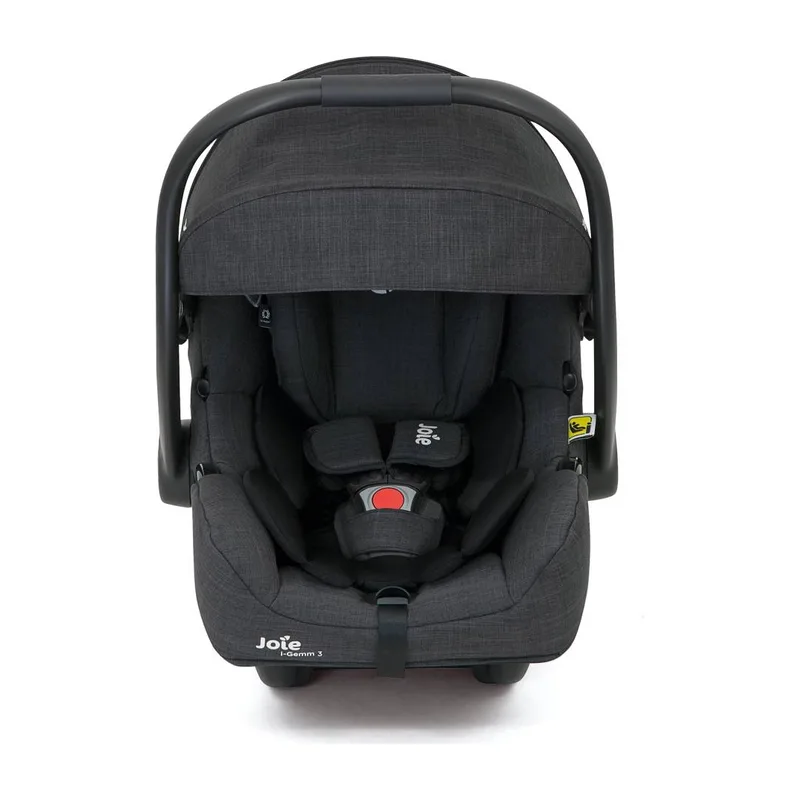
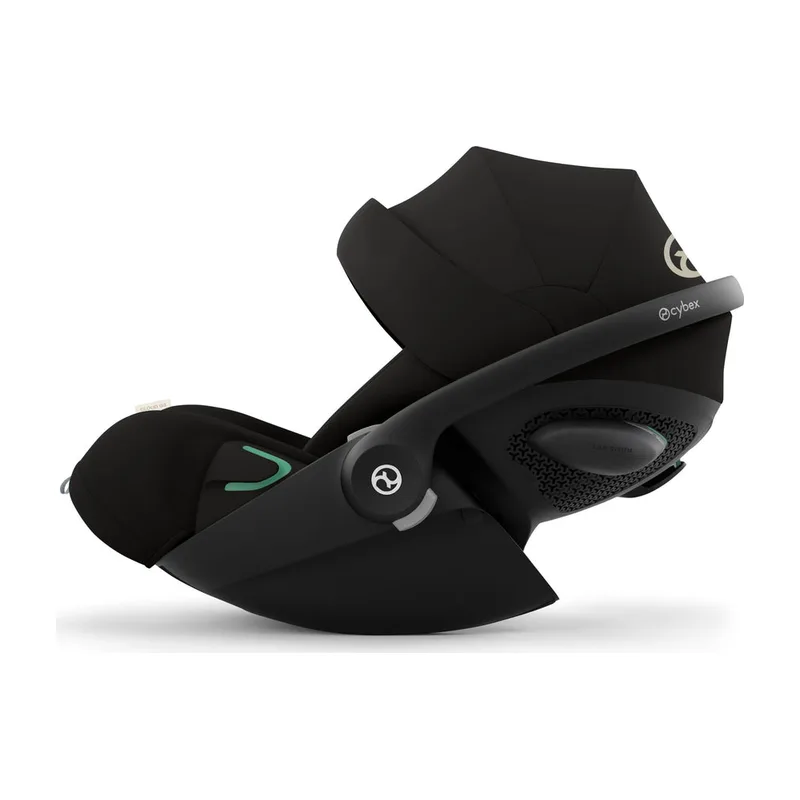
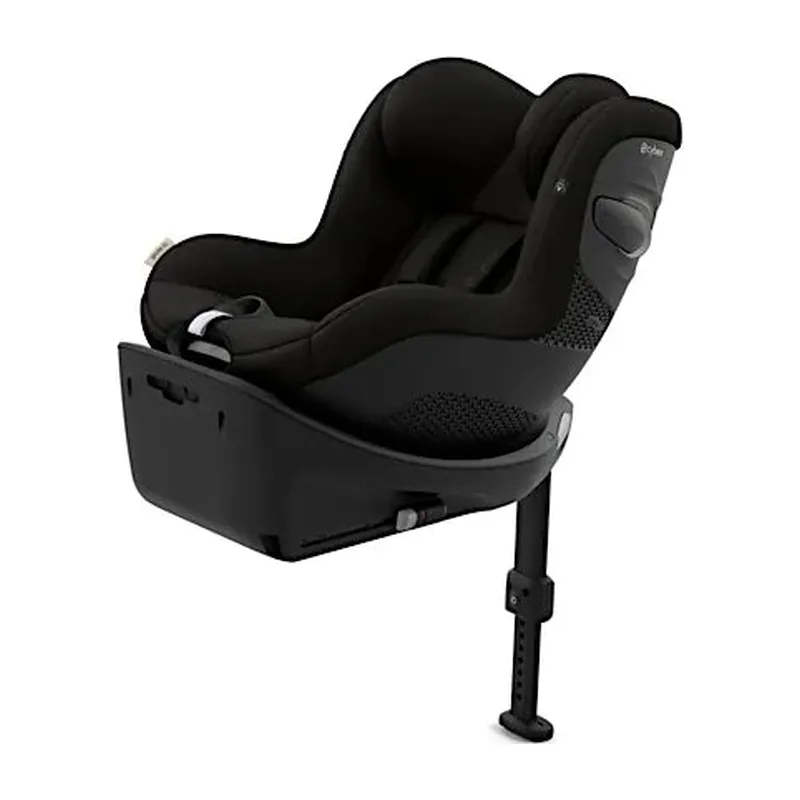
Both were graded 2.2 by ADAC in October 2026, and the pairs cost £298.95 and £298. Their crash results mirror each other: the Cloud G3 has low side crash risk and average frontal risk, the i-Gemm 3 the reverse. The Cloud G3 weighs 0.5 kg less on the shell and has 2 cm more height range, and it comes with an 87 cm ceiling that matches the Coral Slide Pro.
The i-Gemm 3 is easier to live with in other ways. Its operation grade is 1.9 against 2.0, its cover comes off easily and it has very good leg support and a good view out, where the Cloud G3's ergonomics grade of 2.6 is the lowest of the seven. It pays with a cover graded 2.7 and a need for a large belt length. For the Cloud G3, Cybex says its base also takes the Sirona G3 toddler seat, a plus for parents who want to stay in one maker's system.
The difference between them in a shop is therefore preference, not safety. A parent with a short belt in the car, or someone who wants the lowest harmful substances grade, should lean to the Cloud G3. Someone who cares about leg support and how simply the cover is removed should lean to the i-Gemm 3.
Seats left out, and why
The Britax Römer Baby-Safe Pro with the Vario Base 5Z is graded 5.5 by ADAC and is subject to a recall, so it is not in the ranking. Belt-fitted without the base, ADAC graded it 3.1. The Nuna Pipa Lite with the Base Next, graded 2.0 in May 2025, was shown as a pre-order at Simply Baby with delivery between 24 November and 1 December, so it did not have confirmed stock. ADAC adds that it has no belt guides, so it can only be used on its base.
The BeSafe Go Beyond with the Beyond Base was graded 1.8 in October 2024 and the Maxi-Cosi Pebble 360 Pro2 with the FamilyFix 360 Pro 2.2 in May 2024. ADAC says results from 2020 to 2024 are not directly comparable with those from 2025 because the method became stricter, so both are left out of a ranking that rests on 2025 and 2026 results. The Bugaboo Otter with its 360 Base, graded 2.7 in May 2026, was not priced.
Buying guide: choosing the right baby car seat
The best baby car seat is the one you can fit correctly in your own car
ADAC's advice starts with the car, not the seat. It says to check that the seat is approved for the vehicle, to look for the i-Size marking on the rear seats of the car and, where you can, to take both the baby and the car to a specialist shop. It adds that not every Isofix base fits every seat from the same maker, so seat and base are best bought together.
The fitting rules differ more than the grades suggest. For the Pebble S, ADAC lists installation on the Isofix base with its support leg in i-Size seat positions and in approved vehicles. For the Coral Slide Pro, Cloud G3, i-Gemm 3, i-Level Pro, Arra Flex and Glide Plus 360 it lists the support leg only in vehicles the maker has approved. If your car is not on a seat maker's list and has no i-Size marking, the Pebble S is the only one of the seven where ADAC's wording leaves the base route open, and the others would be fitted with the three point belt.
Belt fitting has its own limits. ADAC grades each seat without its base too, and for four of the seven the belt-fitted grade is worse, clearly so for two: the Pebble S falls from 1.8 to 2.7 because the lap belt guides are narrow and hard to recognise, and the Coral Slide Pro falls from 2.1 to 3.0. If you plan to use a belt in a second car, read the without-base results before you buy, because ADAC found that the instructions and the belt guides decide how likely a fitting mistake is. A seat with a 12.4 kg base like the Coral Slide Pro is also an awkward choice if the base has to move between cars.
The base makes up about half of what you pay, so compare the pair
Retailers advertise the seat price, but ADAC graded each of these seats with its base and the grades only apply to that combination. At UK Baby Centre the Pebble S seat is £104.99 and its FamilyFix S base £109.95, so the base costs more than the seat. For the Cloud G3 the seat is £159 at Baby Nest and the Base G3 £139.95 at UK Baby Centre, 47 percent of the pair. For the Coral Slide Pro, Maxi-Cosi lists the seat alone at £279.99 and the bundle at UK Baby Centre costs £499.98, so the base is about £220 of it.
The base is also where shops differ most. The Joie i-Base Encore is £159 at UK Baby Centre and £190 at Babys Mart, a £31 gap on a part that does not change between shops. The seat prices move less: the i-Gemm 3 seat was £139 at Everything Baby and £144 at Baby Gear Online. When you compare offers, add the base to the seat at every shop before you decide, and check that the stock is for the exact base, not just the seat.
There is a case for skipping the base. If the seat will mostly ride in a car you use for school runs and holidays rather than daily, a belt-fitted seat saves between £110 and £240 on the models whose bases we priced. ADAC's belt-fitted grades show the price of that choice, though: the Pebble S scores 2.7 without its base and 1.8 with it, and the Coral Slide Pro 3.0 and 2.1. The Glide Plus 360 is the exception, at 2.4 without its base and 3.1 with it, because its frontal crash result is better on the belt.
A baby outgrows the shell by height, and 83 cm arrives sooner than 87 cm
All seven seats are approved up to 13 kg and carry the R129 approval, which is height based. GOV.UK says that height-based seats must keep a child rear-facing until over 15 months, and ADAC says a baby only moves to the next seat once the top of the head reaches the top edge of the shell. What differs is the height ceiling: 83 cm for the Pebble S, 85 cm for the i-Gemm 3 and 87 cm for the other five.
Maxi-Cosi gives the age range for the Pebble S as 0 to 15 months and for the Coral Slide Pro as 0 to 24 months, and Cybex gives up to 24 months for the Cloud G3, while ADAC puts the usual use of all of them at up to about 18 months. The figures cannot all be right for one baby, which is why height matters more than the age printed on the box. A baby who is tall for their age will reach 83 cm earlier than 87 cm, and the Pebble S then needs replacing first.
The price per month of use shows what you pay for the extra range. Taking each maker's own age range, the Pebble S pair at £214.94 works out at about £14 a month, the Cloud G3 pair at £298.95 about £12 and the Coral Slide Pro bundle at £499.98 about £21. That arithmetic favours the seat that lasts longest only if your baby stays inside it that long. When the shell is outgrown, the toddler car seat comparison on this site covers the next step.
Every 100 grams in the shell is carried up to 13 kg of baby
The shell is the part you lift. ADAC weighed it at 3.0 kg for the Coral Slide Pro, 3.5 kg for the Pebble S, 4.1 kg for the Cloud G3, 4.5 kg for the Arra Flex, 4.6 kg for the i-Gemm 3 and i-Level Pro and 5.3 kg for the Glide Plus 360. At the 13 kg weight limit that is a lifted load of 16.0 kg for the lightest and 18.3 kg for the heaviest, a difference of 2.3 kg every time the baby comes out of the car.
The makers' figures sit below ADAC's for some seats: Maxi-Cosi quotes 3.2 kg for the Pebble S, Silver Cross 4.8 kg for the Glide Plus 360 and Cybex 4 kg for the Cloud G3. Even on the lower figure the Glide Plus 360 is the heaviest of the seven, so the ranking of the seats does not change. Maxi-Cosi also sells a soft carrier for the Coral Slide Pro that it puts at 2.5 kg, but ADAC's 3.0 kg for the shell is the figure used here.
Weight is only worth paying for if you carry the baby in the shell. If the seat stays on its base and the baby is lifted out and in by the harness, as ADAC says the turning seats allow, the Coral Slide Pro's lead matters less and its 12.4 kg base matters more. For a parent who makes five short trips a day with a sleeping baby, a shell that is 1.1 kg lighter than the Cloud G3 is worth more than any of the comfort features.
The recline setting is a comfort feature that ADAC says costs some protection
Five of the seven have a recline adjustment for the baby's comfort, and for the Coral Slide Pro, Cloud G3 and Glide Plus 360 ADAC states that the steeper position gives better protection in a crash. For the Glide Plus 360 ADAC says considerably better. The Pebble S and i-Gemm 3 are not listed with the feature, and ADAC's Pebble S entry mentions none.
The most serious example in the group's neighbourhood is the Britax Römer Baby-Safe Pro with the Vario Base 5Z. In ADAC's autumn 2026 round the belt buckle of its harness opened in the frontal crash in the lying position, and ADAC graded it 5.5. Britax has announced a voluntary recall for seats made between 26 December 2025 and 30 September 2026. ADAC advises owners to use it only upright or, if possible, belt-fitted without the base. It was left out of this comparison because of that result.
The practical reading is to follow the maker's instructions on which angle to use while driving, and to treat the most reclined setting as a setting for short stretches outside the car where the seat allows it. Where this does not suit: a seat you cannot get into the steeper position in your car, because of a raked rear seat or a low roof, is a reason to look at the shell shape in a shop before buying.
The cover has its own grade, and it belongs to one fabric
ADAC sends the fabric that touches the baby to a laboratory for harmful substances and, since 2025, for PFAS. For the i-Gemm 3 it examined the Quartz cover and graded harmful substances 2.7, slightly raised. For the Cloud G3 it examined Magic Black Comfort and graded 2.4. The i-Level Pro and Arra Flex scored 1.0, and ADAC does not name the fabric it examined for those.
ADAC's overall grade is lowered when the harmful substances result is worse than good, which is what happened to the i-Gemm 3: its safety, operation and ergonomics grades alone would point to about 2.1, and its overall result is 2.2. In our comparison the harmful substances criterion carries 5 points of 100, so it does not decide the ranking, but it separates two seats that are otherwise close.
Makers sell the same seat in several fabrics. Cybex lists a Comfort line and a Plus line for the Cloud G3, and a shop selling the Cloud G3 Plus in Moon Black prices the pair at £329. That is a different fabric from the one ADAC examined, so the grade should not be assumed to carry over. When the colourway matters to you, ask the shop which cover line it sells.
Seats from marketplace sellers outside Europe failed ADAC's extra crash test
For the first time in autumn 2026, ADAC ran an extra crash test on three seats bought from sellers outside Europe through online platforms. None met the requirements, and two had no UN R129 approval, which means they may not be used to secure children in a car. GOV.UK says a height-based seat must carry the R129 label.
The price gap is the temptation. The seats above cost at least £214.94 as a pair, and a seller outside Europe can undercut that. The saving is not worth taking unless the seat carries the R129 label, comes from a seller who can supply the approval documents and has a UK or European address for returns and recalls. Recalls are real: the Britax recall above shows a known brand needs one too.
Buying from a UK shop also brings a warranty. Maxi-Cosi gives 24 months on the Pebble S and Coral Slide Pro, and ADAC says Joie advises not using the i-Gemm 3 for more than five years after purchase. The warranty terms for the Cloud G3, Joie, Nuna and Silver Cross seats were not stated on the pages we read, so ask the shop before you buy.
Frequently asked questions
What is the best baby car seat in the UK?
In our comparison the best baby car seat for most families is the Maxi-Cosi Pebble S with the FamilyFix S base, our top pick, at £214.94 for the pair. It has ADAC's strongest crash grade of the seven, 1.7, and the second lightest shell at 3.5 kg. Its height limit of 83 cm is the shortest of the group.
How long can a baby stay in an infant car seat?
Until the top of the baby's head reaches the top edge of the shell, according to ADAC, or the 13 kg weight limit, whichever comes first. The seven seats here are approved from 40 cm up to 83, 85 or 87 cm depending on the model. ADAC puts the typical use at up to about 18 months, and the makers' own age ranges run from 15 to 24 months.
Do I need an Isofix base for a baby car seat?
No, all seven can be fitted with the three point belt, but ADAC's belt-fitted grades are lower for most of them. The Pebble S scores 2.7 without its base and 1.8 with it, the Coral Slide Pro 3.0 against 2.1. The exception is the Glide Plus 360, at 2.4 without its base and 3.1 with it. The base also keeps the seat in place between trips.
What does i-Size or R129 mean on a baby car seat?
R129 is the approval for height-based seats, and i-Size is the name for it on many products. GOV.UK says height-based seats must keep a child rear-facing until over 15 months and must carry the R129 label. ADAC says its crash forces are higher than the approval requires, so an R129 label is the minimum, not the grade.
Is a more expensive baby car seat safer?
Not on ADAC's grades. The Pebble S pair at £214.94 has a safety grade of 1.7, better than the Coral Slide Pro at £499.98 with 2.1 and the Glide Plus 360 at £425 with 3.4. Price buys things ADAC grades separately, such as a lighter shell, a turning base or a cover with fewer harmful substances.
Can I put a baby car seat in the front seat?
Yes, if you deactivate any front airbag first. GOV.UK says to deactivate front airbags before fitting a rear-facing baby seat in a front seat, and ADAC repeats the warning for each seat. The car's handbook says which seat positions suit an Isofix base.
What happened with the Britax Baby-Safe Pro?
ADAC graded the Baby-Safe Pro with the Vario Base 5Z 5.5 in October 2026 after the harness buckle opened in the frontal crash in the lying position. Britax announced a voluntary recall for seats made between 26 December 2025 and 30 September 2026. ADAC advises owners to use it upright or belt-fitted without the base.
Which baby car seat has the lightest shell?
The Maxi-Cosi Coral Slide Pro, at 3.0 kg as ADAC weighed it, followed by the Pebble S at 3.5 kg and the Cloud G3 at 4.1 kg. The Silver Cross Glide Plus 360 is the heaviest at 5.3 kg, or 4.8 kg on Silver Cross's own figure. The Coral Slide Pro costs £499.98 and has a 12.4 kg base.
Are ADAC's results relevant in the UK?
Largely, because the seats are approved to the same R129 standard and the crash forces ADAC uses are higher than that approval requires. The limits are that ADAC is a German test and may grade a fabric that UK shops do not sell. Check the vehicle list of the seat maker for your car, since approvals differ by market.
What do the grades mean for the cover fabric?
ADAC grades harmful substances and PFAS in one fabric of each seat. The i-Gemm 3 cover scored 2.7 and the Cloud G3 cover 2.4, while the i-Level Pro and Arra Flex scored 1.0. A different fabric from the same maker may score differently, so ask the shop which cover you are buying.
How much does a baby car seat with a base cost?
From £214.94 for the Pebble S to £499.98 for the Coral Slide Pro in our check on 17 November. Three cost about £300 as a pair (the Cloud G3, i-Gemm 3 and i-Level Pro), while the Glide Plus 360 costs £425 and the Arra Flex £489. The base is roughly half the total in every case.