In depth: baby monitors explained
The three monitors the Good Housekeeping Institute and this page share are close on paper
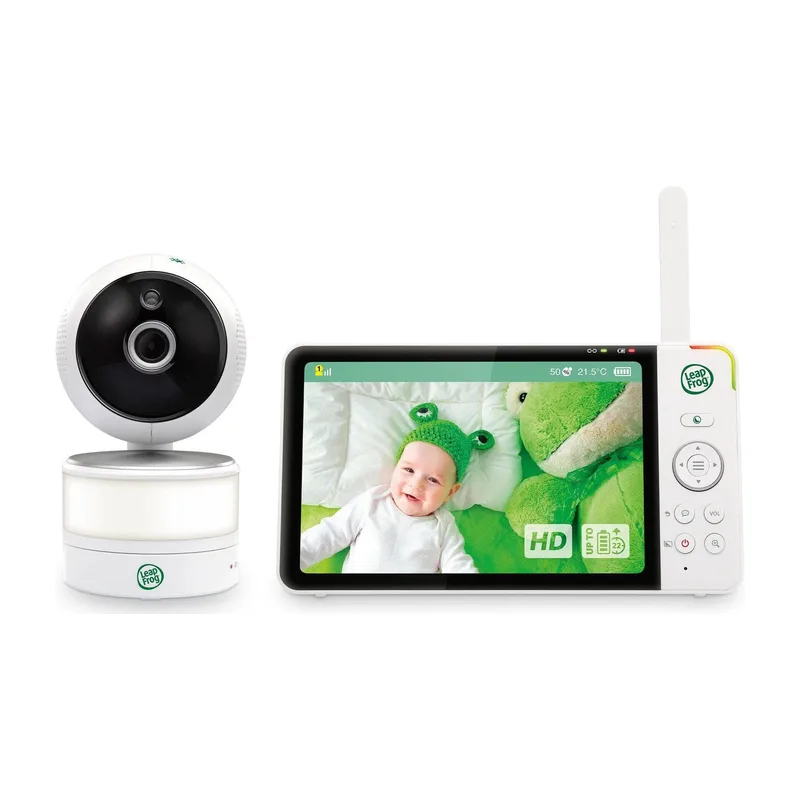
The Good Housekeeping Institute's roundup covers three of our five monitors: the VTech RM7766HD, the LeapFrog LF920HD and the Angelcare AC25-1. It scores them at 87, 85 and 83 out of 100, a gap of only four points across the three. Our ranking puts them in the same order, although we weight price, battery and the number of outlets covering a model, while the Good Housekeeping Institute's panel weighs what its parent testers experienced.
The panel's comments explain the scores. For the VTech it praised audio and picture quality and the app but called the battery lacklustre and noted there is no touchscreen. For the LeapFrog it praised the screen, the touchscreen and the battery, and described it as intuitive to set up. For the Angelcare it rated image quality highly and set-up as easy, but noted the range is limited. None of the comments is a measurement, and we have no way to confirm that the three were used in the same house at the same distance.
The roundup also contains models we do not cover, among them Tommee Tippee's Dreamview and Dreamsense, Nanit's Pro, CuboAI's Smart Baby Monitor 3, an earlier Owlet Dream Duo bundle and Babymoov's Yoo Go+. We left them out because we could not verify UK stock at a store we could read, or because the version covered differs from the one on sale now. That is a limit of this comparison, not a judgement on those monitors.
The VTech and the LeapFrog are close enough that price and network choice decide it
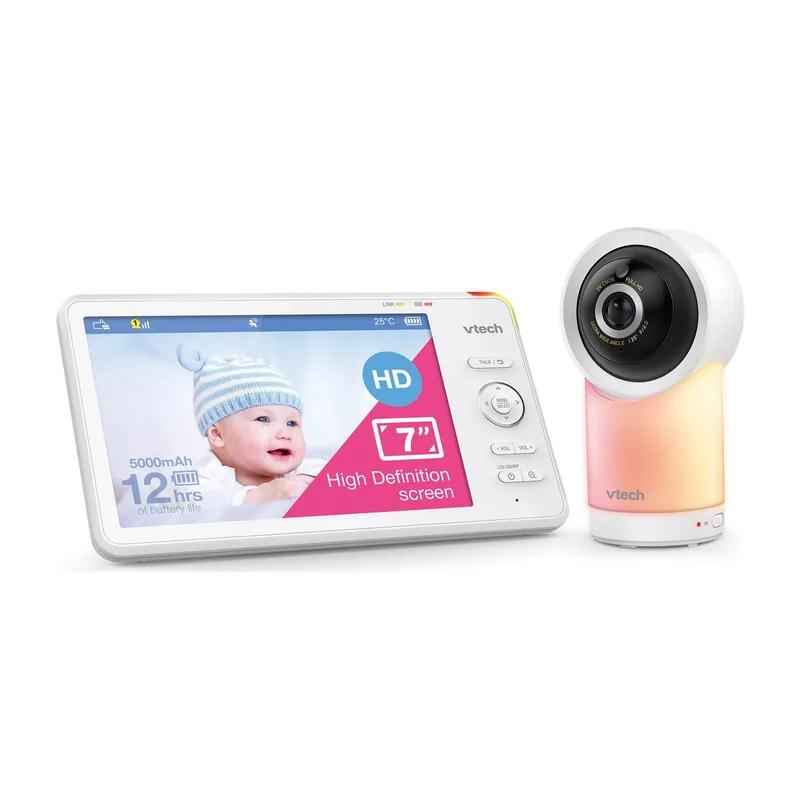
Both have 7 inch screens, both pan, tilt and zoom, both have temperature sensing and lullabies. The differences are connection, battery and price. VTech uses Wi-Fi and an app, quotes 12 hours of video and costs £139.99. LeapFrog uses a closed link, quotes 15 hours and costs £129.95.
If you would never use the app, the LeapFrog gives you more battery for less money, and it has a touchscreen that the Good Housekeeping Institute liked and the VTech lacks. If you would use the app daily, the VTech is the only one of the two that can show you the room from elsewhere. The stronger evidence behind the VTech, three outlets against one, is the reason it ranks first in our comparison, and a buyer who does not want an app has a good reason to ignore that ranking and buy the LeapFrog.
The Momcozy has the longest battery quote and the least certain picture
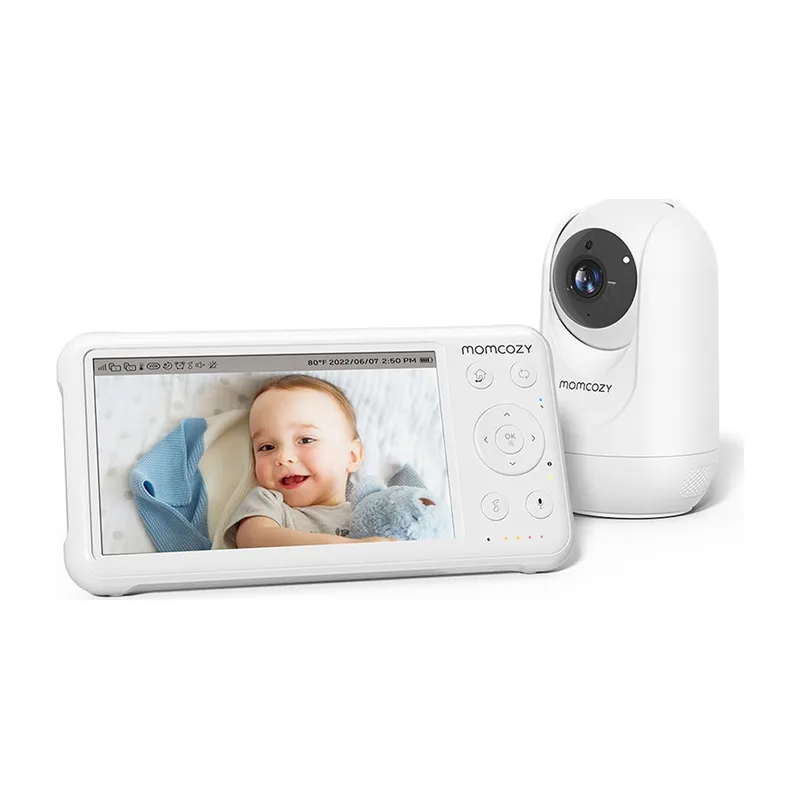
Expert Reviews' December 2024 review calls the Momcozy BM01 a solid option at a good-value price for simple, easy-to-set-up monitoring, and its September 2024 roundup named it best for no-fuss set-up. The same review says the video is slightly grainy and night images are less sharp than on premium models. Mumsnet's tester called video and audio strong and said it exceeded expectations. Both can be true: a monitor can look clear at the distance of a cot and grainy next to a 2K camera.
It has the longest quoted battery and the longest night vision figure, 4.5 m, but it has no app and no stated zoom. For a parent who wants to put a camera on a shelf pointing at a cot and not think about it again, those omissions are not costs. For a parent who wants remote viewing, they are, and the VTech is the better answer.
The price sits between the two leaders and the Angelcare. At £159.99 it costs £30.04 more than the LeapFrog, which has the larger screen and the touchscreen. The Momcozy's case therefore rests on the battery quote and on not wanting an app, and a buyer who wants neither of those should look at the LeapFrog first.
How the order was reached, with the sums shown
The criteria weights are picture and sound 25, features 20, connection and range 15, tester and owner feedback 15, price 15 and battery 10. Picture and features carry the most because they are what a parent looks at every day, and battery carries the least because most monitors spend the night on the mains. The weights are the same for every model, and a model with no stated figure scores below models with one, so the Angelcare and the Owlet do not gain from saying nothing about battery.
The first-place result comes from the VTech's lead on three criteria at once. It has the broadest feature list (pan, tilt, zoom, app, sensors), the broadest evidence (three outlets) and a mid-table price at £139.99. Its weakest score is battery, at 12 hours of video, and that criterion carries only a tenth of the total. The LeapFrog wins on price and battery but has one outlet covering it. Move the weights, for instance by doubling the weight on battery, and the LeapFrog and the Momcozy gain ground, which is why we publish the weights openly.
Buying guide: choosing the right baby monitor
A closed-signal monitor and a Wi-Fi monitor solve different problems
The LeapFrog LF920HD and the Momcozy BM01 talk to their parent units over their own link. LeapFrog describes an encrypted 2.4 GHz connection that does not use Wi-Fi, and Mumsnet lists the Momcozy as having no Wi-Fi and no app. The VTech RM7766HD and the Owlet Dream Duo go the other way: both rely on a home network and a phone app, and the VTech also keeps a parent unit with a 7 inch screen. That is the first decision, because it settles what happens when the broadband drops and who else can reach the camera.
A closed link has an obvious limit: you can only watch from within range. If one parent works away from home or grandparents want to look in, the LeapFrog and the Momcozy cannot do it. The VTech lets the app share access with family members, and the Good Housekeeping Institute notes there is no charge for extra users. If neither of those situations applies to you, the closed link is simpler, has no password to guard and costs less: the LeapFrog is £10.04 below the VTech.
A Wi-Fi monitor is not a worse monitor, but it is a networked camera in a nursery. Mumsnet's advice for Wi-Fi models is to change the default password to a strong one and update it regularly, to use two-step authentication and to use only Wi-Fi connections you trust. We have not assessed any app's security, and nothing in the sources we read rates one app above another, so treat that advice as a minimum and not as a ranking.
Access is the other half of the Wi-Fi question. The Good Housekeeping Institute says the VTech's app allows unlimited family members at no extra cost, and a UK retailer quoting VTech says there are no subscription fees. For a household where two parents and a grandparent all want a view, that makes the VTech the cheapest route to three screens here. For a household with one adult at home most nights, a parent unit like the LeapFrog's or the Momcozy's does the job without an account. Subscription terms for the Owlet are not stated in the sources we read, so read them before you buy.
The screen you carry around matters more than the resolution on the box
Screen size is the cleanest difference between these monitors. The VTech and the LeapFrog both have 7 inch screens, the Momcozy has 5 inches, the Angelcare 4.3 inches and the Owlet has none because it uses your phone. A Mumsnet tester of the VTech picked out the screen size and the zoom as what she liked, and the Good Housekeeping Institute said the LeapFrog's screen and clarity impressed.
Resolution figures are harder to use. VTech lists a 2K sensor on its camera, though one retailer page also says 1080p. The Momcozy is 1080p according to Expert Reviews, which also found the video slightly grainy and the night images softer than on premium models. The LeapFrog's screen is 720p and its camera resolution is not stated. These numbers describe different parts of the chain, so they cannot be ranked against each other without a side-by-side measurement, and we found none.
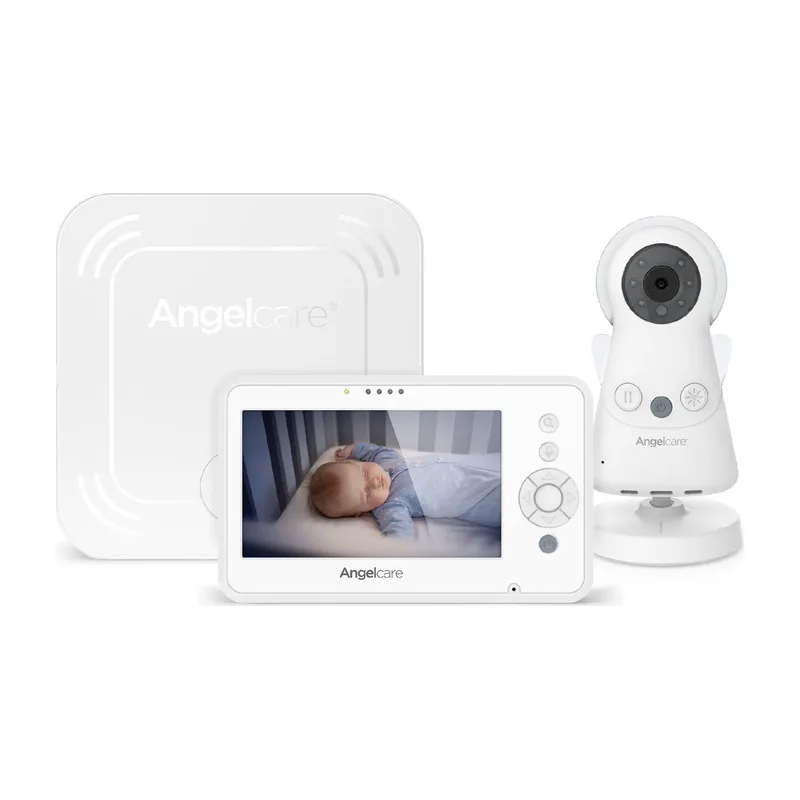
What helps in practice is how you will use the screen. If you will glance at it from the sofa, 5 inches is workable. If you will prop it on a bedside table at night, a larger screen is easier to read half-asleep, and a 7 inch unit with a night light, like the VTech's seven-colour one, is less likely to need your phone. If a 4.3 inch screen is the price of getting a movement pad, as with the Angelcare, accept that you are choosing the pad over the picture.
Range figures describe open air, not your house
The quoted ranges here are 300 m for the LeapFrog, 289 m for the Momcozy, 150 m for the Angelcare and nothing stated by VTech for the RM7766HD, although Mother&Baby and Mumsnet both list 300 m. Every one of those is a manufacturer or outlet figure for clear line of sight, and the Angelcare's listing says exactly that. Walls, floors and the distance from the router for Wi-Fi models will all cut into them.
Testers noticed the gap between listing and living room. Mother&Baby saw the VTech's connection weaken at distance, and the Good Housekeeping Institute advised checking that the Angelcare's limited range suits your home. Mumsnet's tester used the Momcozy at up to 20 m, which says it works across a flat but nothing about its limit.
For a small terraced house or a flat, the difference between 150 m and 300 m is academic, and a 150 m monitor is not a poor buy. For a large detached house or for use in the garden, the longer figures are the only reason to look at the LeapFrog or the Momcozy before the Angelcare. A Wi-Fi monitor sidesteps the question while your network reaches, and fails the moment the router does.
Battery hours are quoted for video and rarely measured
LeapFrog quotes up to 15 hours of video and 22 hours of audio only. John Lewis lists up to 19 hours of video for the Momcozy. VTech quotes up to 12 hours, and the Good Housekeeping Institute called that battery lacklustre. The Angelcare and the Owlet state no figure in the sources we read. The longest number is the Momcozy's, but it is a retailer's figure and Expert Reviews says its reviewer plugged the screen in overnight.
Nobody keeps a baby monitor off charge for fun, and a night-time monitor will usually sit on the mains. The battery matters for three situations: a power cut, carrying the parent unit from room to room during the day, and travelling. For the first, any of the quoted figures covers a night. For the second, 12 hours against 19 is a difference of seven hours, which is the gap between needing to recharge at lunchtime and not.
If you do the sum, the choice between a 12 hour and a 15 hour monitor is a choice you make once every few weeks, when you forget to plug it in. The VTech's feature list is worth more than three hours for most households. The Momcozy's battery gap is only decisive if you will genuinely use it portably.
A movement pad is an extra alert, not a safety device
The Angelcare AC25-1 is the only monitor here with a sensor pad under the mattress. The retailer listing says the alarm sounds if no movement is detected for 20 seconds and offers four sensitivity levels. A Mumsnet tester found it reassuring and reported no false alarms.
The Lullaby Trust is plain about what that does and does not mean. It says there is no research showing that baby monitors help prevent sudden infant death syndrome, and that parents should follow all of the safer sleep advice whether or not they use a monitor. It also says movement monitors do not work reliably when you are co-sleeping, because they pick up the adult's movement, and that skin contact versions should stop being used at about six months or when the baby can roll. The NHS advice is for the baby to sleep in the same room as you for at least the first six months, and nothing in it depends on owning a monitor.
A pad suits a parent who finds the quiet of a monitored room more stressful without it and who understands that it adds information, not protection. It does not suit a parent who is likely to be woken by every alarm, or one who might be tempted to treat it as a reason to leave the baby in another room earlier than advised. Mumsnet's review of a different movement system, the Babysense 7 True Sleep, says its breathing alerts may feel reassuring for some parents but could heighten anxiety for others. That is the commonest worry attached to this category.
Vitals sensors add data, and data is not the same as reassurance
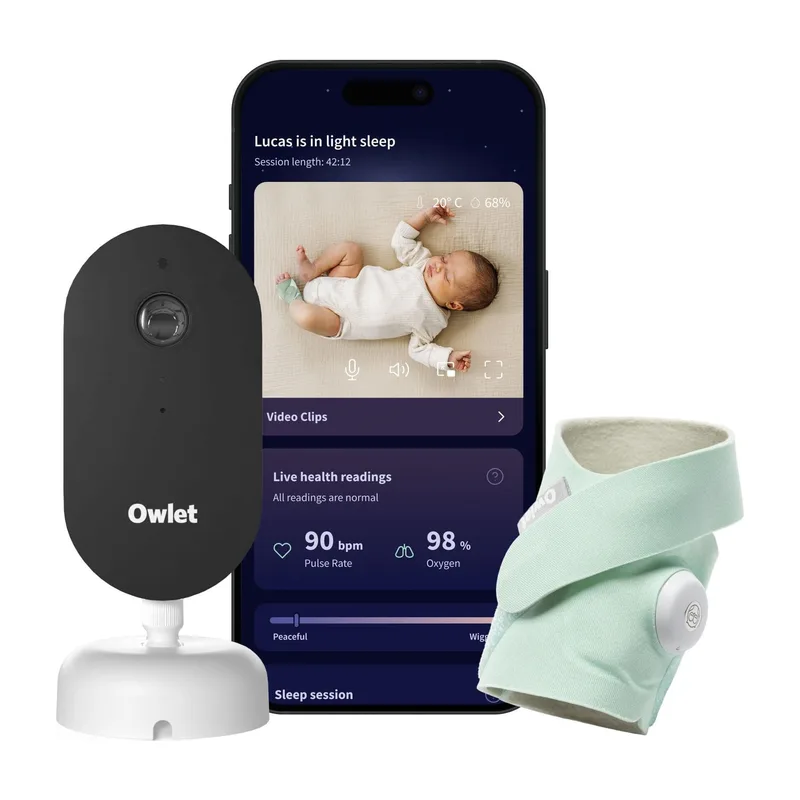
The Owlet Dream Duo sits in a different category from the rest. According to Owlet, the sock tracks pulse rate and oxygen level and sends notifications for readings outside set limits, for healthy babies from 2.5 to 13.6 kg, or up to about 18 months. The camera is a separate 2K unit, and everything is read on a phone.
The Lullaby Trust says it does not include monitors that measure heart rate, breathing rate or oxygen in its Care of Next Infant programme, because too much detail can increase anxiety. A sleep expert quoted on the Mumsnet page makes a similar point from the other side: some parents find breathing and movement monitors reassuring, while others feel they create more anxiety than comfort. Owlet's page calls the sock medically certified without naming a certifying body, we have not verified that, and the sources we read do not say what the notifications can and cannot catch.
Our advice is to treat the Owlet as a product for the parent who wants the data and has the budget, at £379.99, not as a safer option than the others. It scores top on features because it does the most, and bottom on price because it costs £204.99 more than the next most expensive model. A parent who is likely to be alarmed by a low reading at three in the morning, or who has no medical reason to track one, may be better served by a plain camera.
Match the monitor to your home before you match it to your budget
In a flat, range hardly separates these monitors and a short-range model costs nothing in practice. The Angelcare's 150 m is plenty, and the question becomes whether you want a movement pad, which the Angelcare alone offers, or the larger 7 inch screens of the VTech and the LeapFrog. A flat also tends to have one router within a few rooms of the nursery, so a Wi-Fi camera such as the VTech is less likely to struggle.
In a larger house, the sums change. The LeapFrog quotes 300 m and the Momcozy 289 m on their own links, and neither depends on a router in another part of the building. The VTech depends on the strength of the home network, and Mother&Baby saw its connection weaken at distance. If the nursery is on a different floor from where you sit in the evening, test the signal before the return window closes, whichever model you choose.
For two working parents who want to look in during the day, only the VTech and the Owlet can do that, and the VTech does it for £139.99 against £379.99. For a family with a lot of visitors at night, a closed link keeps the picture inside the house. Neither choice is wrong, but each answers a different question, and the price gap between the cheapest and the dearest of the four video-only models here is only £45.05, so the right answer is the one that matches how you live, not the one that costs least.
Evidence is thinner than the star ratings on a shelf suggest
We could not read a verified retailer review count for any of the five monitors, so every placement here rests on named outlets and manufacturer specifications. That is why the VTech, which three outlets cover, comes first, and the LeapFrog, which one outlet covers, still takes second place on price, battery and its manufacturer specification. A model with one tester and a good specification is a fair buy. It is a less certain one than a model with three testers and the same good specification.
Look at when and how an outlet used the product. The Good Housekeeping Institute's roundup is dated November 2025, Mumsnet's page was updated in November 2026, Expert Reviews published its Momcozy review in December 2024 and Mother&Baby's VTech award is from 2024. A 2024 write-up of a model that has not changed is still useful. A 2024 write-up of a model that has since been replaced by a similar-looking successor is not.