In depth: swivel car seats explained
How ADAC grades a car seat, and why we use it
ADAC tests child seats twice a year with other members of the ICRT network, including Which? in the UK. ADAC crash tests each seat in a frontal and a side impact using dummies of different sizes, and assessed for ease of use, ergonomics and harmful substances. Grades follow the German school scale, from 0.6 (very good) to 5.5 (poor).
Which? publishes its scores only to members, but ADAC publishes the shared results free of charge, so we use ADAC's grades and comments. We translated them from German; the original pages are linked in each seat's sources.
Since 2025 ADAC also checks for PFAS, the so called forever chemicals. The Graco has a PFAS result, graded very low; the older results do not include that check.
ADAC's comments are short, but they are consistent across seats, which makes them useful for comparing two seats directly. We use them in each seat's assessment to explain where the grade came from.
A seat that ADAC has not graded may still be a good seat. We simply cannot show you evidence that it is, which is why it ranks below seats that have published results.
Graco, Mica 360 Pro or Cybex: three seats for three priorities
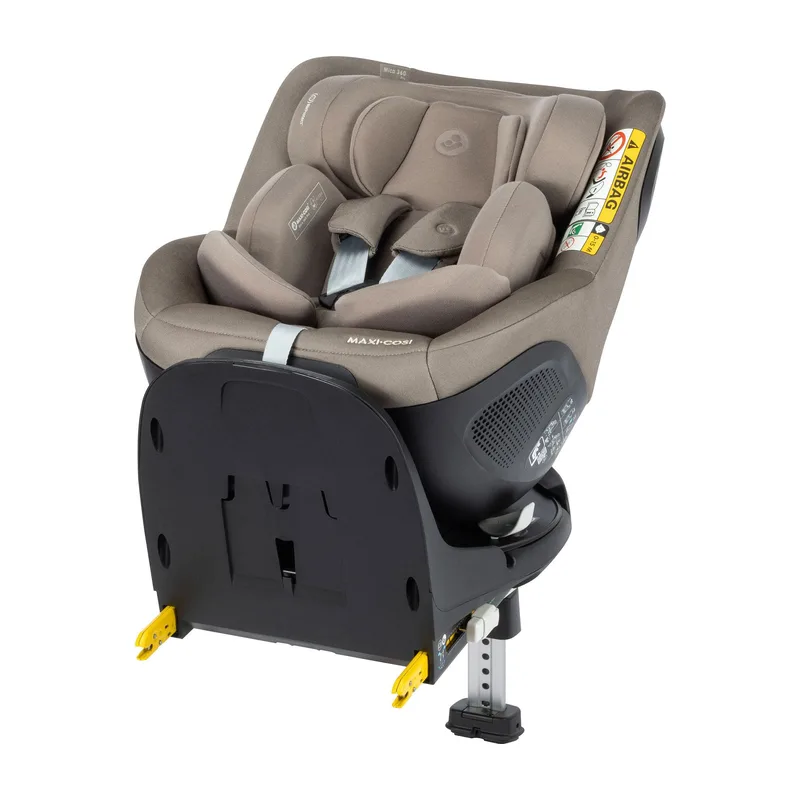
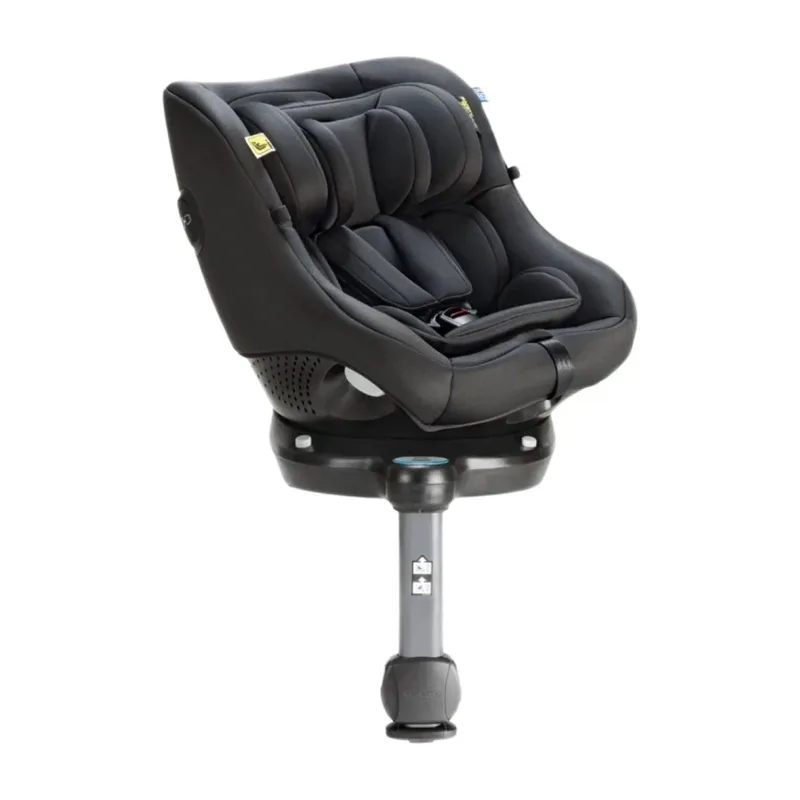
These two are the likeliest final choice. The Graco costs £139.99 and has a 2025 result with very low side impact risk but average frontal risk; the Mica 360 Pro costs £349.99 and was rated low risk in both crash types in 2024.
The Mica 360 Pro is also easier to use according to ADAC, has a five year guarantee at John Lewis and better ergonomics. The Graco is lighter, has a higher weight limit and a PFAS result, and costs £210 less.
If the extra money is not a stretch, the Mica 360 Pro's balanced crash result and long guarantee make it a strong choice. If it is, the Graco gives you a current ADAC result and the swivel convenience at a fraction of the price.
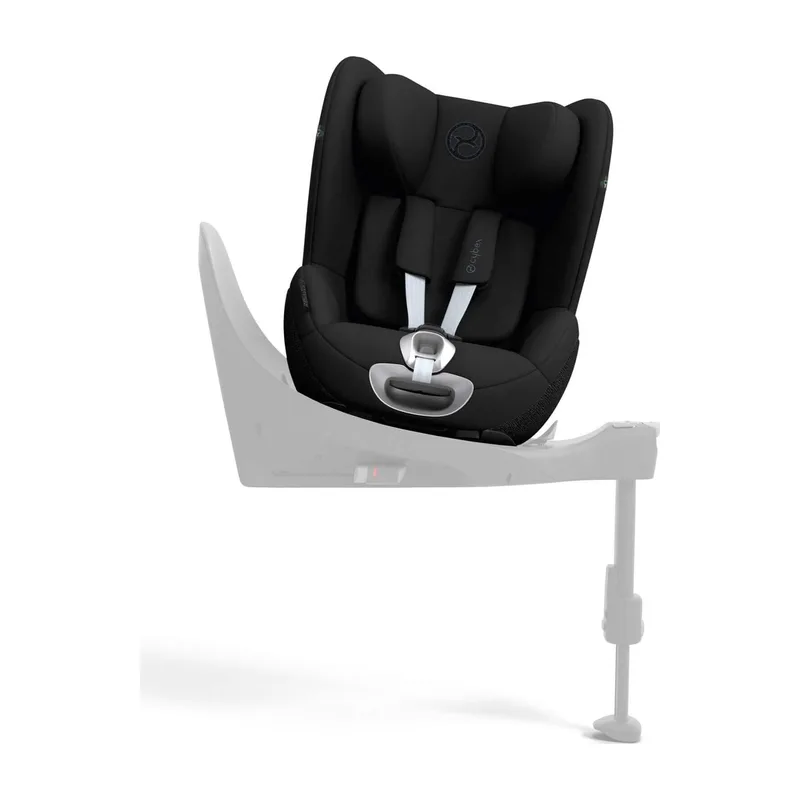
The Cybex has the better safety grade, 1.7 against 2.0, and the lighter seat to carry, 7.3 kg against 14.9 kg for the Mica with its base. ADAC rated both the frontal and side impact risk as low or very low for each.
The Mica wins on ease of use, with an operation grade of 2.4 against 2.9, and on price: £349.99 against £441.95 for the Cybex with its base. John Lewis also lists a five year guarantee for the Mica.
If the seat will move between two cars, the Cybex with a second base is the most practical system here. If it stays in one car and several people will fit and buckle it, the Mica's ease of use and lower price are the better bet.
Keeping a swivel seat working: rotation, connectors and covers
The rotating mechanism is the part that sets these seats apart, so keep it clean. Crumbs and grit in the turntable make it stiff and can stop it locking in place. Check that the seat clicks firmly into its rear facing or forward facing position before every journey.
ISOFIX connectors and the support leg have indicators that show green when correctly fitted. Check them whenever the seat has been moved or the car has been cleaned.
Covers should be washed as the maker recommends; harsh detergents can affect the flame retardant treatment some covers carry. Never use a seat with a missing or damaged cover part, and replace the seat after any significant crash.
Store the seat out of direct sun when it is not in the car; prolonged heat can weaken plastic parts. If you store it for a second child, keep the manual and all parts together.
If the rotation becomes stiff or stops locking, stop using the seat until the maker or retailer has checked it.
Rear facing for longer: how the swivel helps
Keeping a young child rear facing protects the head and neck better in a frontal crash, which is why i-Size requires rear facing until at least 15 months. All five seats here can be used rear facing, and the swivel makes it much easier to get a heavier toddler in and out while still facing backwards.
The limits for rear facing differ by seat, so check them in the manual. John Lewis says the Mica 360 Pro can be used rear facing up to 105 cm, its full height range.
A swivel seat is often what makes extended rear facing practical in daily life. Without it, lifting a 15 kg toddler into a rear facing seat over the side of the car is hard work, especially in a car park.
When your child does turn forward facing, the swivel still helps: buckling a forward facing toddler is easier when the seat faces the door.
Buying guide: choosing the right swivel car seat
A swivel seat makes every journey easier, but it does not make the seat safer
The point of a swivel seat is your back. Turning the seat towards the open door lets you lift a baby in and buckle the harness facing you, instead of leaning across the car. For parents recovering from a caesarean, for tall cars and for small door openings, that is a real benefit used every day.
Rotation is a convenience, not a safety feature. ADAC's crash results for the five seats here range from very good to average depending on the seat, not on whether it swivels. Choose the safety level you want first and treat the swivel as the reason to pay more for it.
It also adds weight. The swivel seats here weigh between 11.3 kg and 14.9 kg, apart from the Cybex Sirona T, whose seat weighs 7.3 kg because the rotating part is in the separate base. A fixed seat of the same type is usually lighter.
If you rarely take the seat out of the car, the weight barely matters. If you move it between cars every week, it matters a lot, and the Cybex's separate base becomes worth its price.
Swivel seats also help with older toddlers who resist being put in the car. Turning the seat to face you lets you lift a wriggling child straight in rather than twisting them through the door, which many parents find makes the whole process quicker and calmer.
The swivel only works if it locks reliably in each position. ADAC does not grade the rotation separately, but it does record the risk of incorrect use, and a seat left half turned is one of the mistakes that matters. Every seat here should click audibly into its driving position; if yours does not, have it checked.
Think about your parking too. In a tight space next to a wall, a swivel seat lets you load the child even when the door opens only partly, which is when a fixed rear facing seat is hardest to use.
Crash results vary more than the price does
ADAC's safety grades for the four seats with results run from 1.7 for the Cybex Sirona T to 2.3 for the Joie Spin 360. The Mica 360 Pro was the only one rated low risk in both frontal and side crashes; the Graco was rated very low risk in a side crash but average in a frontal one.
The most expensive seat has the best safety grade, but the cheapest i-Size seat, the Graco, was graded under ADAC's current programme and connects very firmly to the car. Price alone is a poor guide to crash protection here.
Frontal crashes are the most common serious collisions, which is why the frontal result deserves attention. All five seats can be used rear facing, which is how young children are best protected in a frontal crash; check how long each seat stays rear facing before you buy.
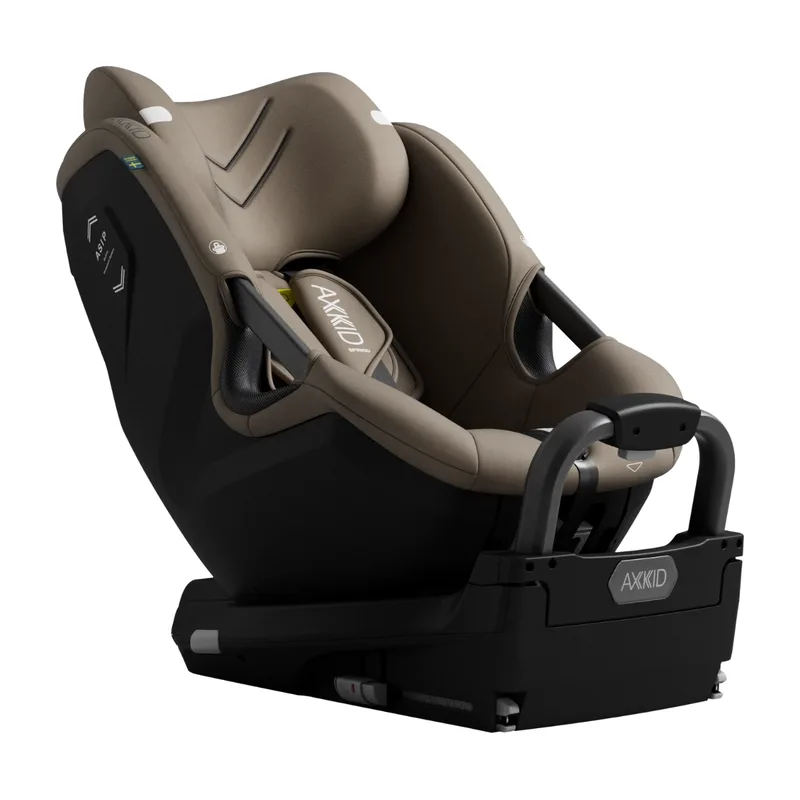
A seat without a published crash result, like the Axkid Spinkid 2 here, has met the legal standard but has not shown how much better than that it is. We rank it below every seat with a result for that reason, not because we know it to be worse.
Side impact protection has improved across the board, and every seat with a result here was rated low or very low risk in a side crash. The bigger differences now lie in the frontal crash, which is where the Graco and the Joie were rated average or low and the Mica 360 Pro and the Cybex low.
When you compare grades, also read ADAC's short comments. A note such as connects very firmly to the car, which ADAC gave the Graco, tells you something about how the seat behaves in a crash that the overall number does not.
The overall grade combines crash protection with ease of use and ergonomics, so two seats with the same overall grade can protect quite differently. That is why the safety grade carries the most weight here.
An older ADAC grade is not a lower one, but it is on a different scale
ADAC changed its test programme in 2025 and says results from before are not directly comparable with newer ones, while seats rated good from 2020 to 2024 can still be recommended. Only the Graco has a result under the current programme; the Cybex, Maxi-Cosi and Joie were graded between 2022 and 2024.
We deduct five safety points from each older result to reflect that. Without the deduction, the Mica 360 Pro would move ahead of the Graco, so the order at the top depends on how much weight you give to the change. We think the deduction is fair, and we state it openly.
For you, the practical point is to look at the year next to any grade you see in an advert. A grade of 2.0 from 2024 and a grade of 2.0 from 2026 were reached under different crash conditions.
If a newer version of a seat appears, check whether ADAC has graded the new version itself. A new name often means a new result is needed, even when the seat looks the same.
The deduction also means a seat with an older result can still come top in a category if it is clearly better. The Cybex Sirona T, graded in 2023, keeps the best crash protection score here even after the deduction, because its safety grade of 1.7 is well ahead of the others.
Retailers and makers often quote ADAC grades in their marketing. That is fine, but check the year and the exact model name against ADAC's own page, which is linked in each seat's sources here.
Ignoring the deduction would put the Mica 360 Pro first. If you trust older results as much as new ones, read the Mica as the stronger choice and the Graco as the cheaper one.
Ease of fitting matters most when the seat is used by more than one person
ADAC's operation grade measures how likely people are to fit or buckle a seat wrongly, how clear the instructions are and how heavy the seat is. The Mica 360 Pro scored best here at 2.4, the Graco 2.8, the Cybex 2.9 and the Joie 3.1. None is outstanding, which is typical for heavy rotating seats.
Grandparents, childminders and a second parent all need to use the seat correctly. A seat that is easy to buckle wrongly is a risk every time a different person uses it, so if the seat will be shared, give this criterion more weight than our 20%.
ISOFIX with a support leg reduces fitting mistakes, because indicators show when the connectors and leg are correctly in place. Read the manual for your seat and check the indicators every time the seat is refitted.
The cover is part of daily use too. ADAC found the Cybex Sirona T's cover hard to remove and the Graco's and Joie's easy, all machine washable.
Practice before the baby arrives. Fitting a heavy swivel seat for the first time in a hospital car park is stressful, and fitting mistakes are more likely when you are tired and rushed. Install it at home, check the indicators and try the rotation a few times.
If you are unsure, many specialist baby shops offer a free fitting check. It costs nothing and catches the most common mistakes, such as a support leg that does not reach the floor or ISOFIX connectors that are not fully latched.
A seat that is harder to use correctly is not a bad seat, but it asks more of you. Read the manual once fully, keep it in the car and follow the fitting checklist every time.
Weight and footprint decide whether a swivel seat suits your car
Swivel seats are big. ADAC rated the Graco as taking up a lot of room and the Mica 360 Pro and Cybex as taking more than average; only the Joie Spin 360 was rated as having a small footprint. In a small car, a large rear facing seat can push the front passenger seat forward.
Weight matters if the seat moves. The Mica 360 Pro weighs 14.9 kg with its base according to John Lewis and the Axkid 14.5 kg, against 11.3 kg for the Graco. The Cybex seat is only 7.3 kg because the base stays in the car.
Measure the space between the rear seat and the front seat backrest with the front seat in your normal driving position, and compare it with the maker's fitting information. Most makers publish a vehicle list showing which cars a seat has been checked in.
For three across the back, swivel seats are rarely the answer. Their width and rotating bases make them hard to fit next to other seats.
Front passenger space is the hidden cost of a large rear facing seat. If the seat sits behind the front passenger, that person may need to move their seat forward to give the child seat room, which can be uncomfortable for a tall adult on a long trip.
The child's view out also matters on long journeys. ADAC noted a limited view out for the Graco, the Mica 360 Pro, the Cybex and the Joie, typical for rear facing seats, so a mirror or a window shade may help keep a toddler content.
Try the seat in your car before you commit, if the shop allows it. A seat that fits on paper can still clash with a sloping roof line or a high door sill when you rotate it.
i-Size and R44 are different approvals, and the newer one sets the bar higher
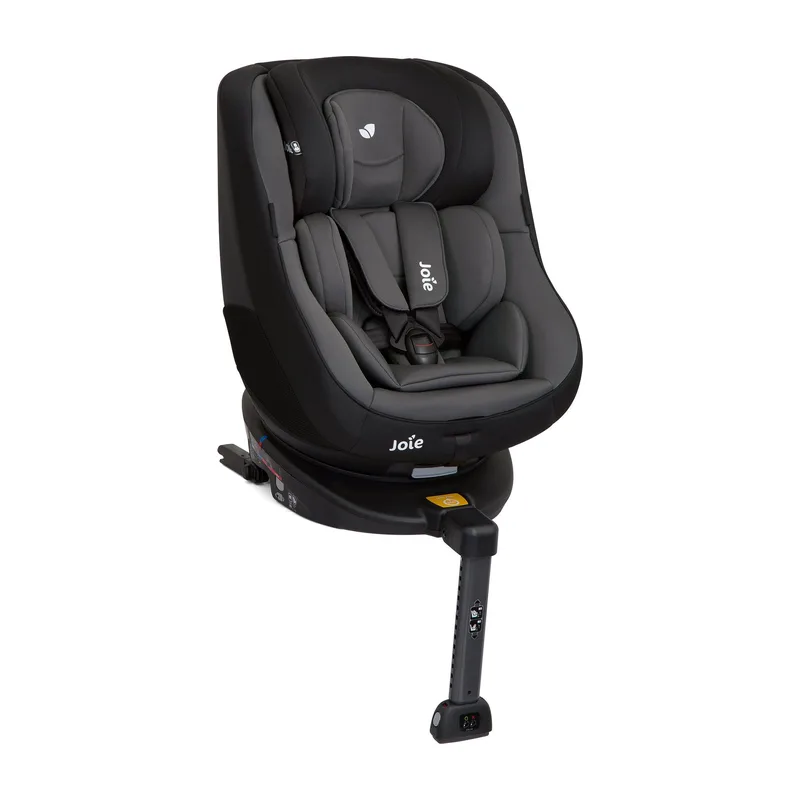
Four of the seats here are approved to UN R129, known as i-Size, which uses the child's height and includes side impact crash requirements. The Joie Spin 360 is approved to the older R44 standard for weight groups 0+ and I, which uses the child's weight and was designed before side impact requirements existed.
An R44 seat is not automatically less safe; ADAC rated the Joie's side impact risk low. But i-Size seats are the current standard and offer clearer guidance on when your child has outgrown a stage, because height is easier to check than weight.
If you are choosing between the Joie and the Graco, the £30 difference buys the newer approval, a 2025 ADAC result and a higher weight limit of 21 kg.
Check the approval label on any seat you buy. It is on the seat itself and shows the standard and the height or weight range.
The Joie's weight based approval also means you need to weigh your child to know when they have outgrown each stage, while the i-Size seats tell you by height. Measuring height is easier and less likely to go wrong, which is one practical reason the newer standard is preferred.
None of the R44 seats is unsafe to use if it is in good condition and correctly fitted. But if you are buying new, an i-Size seat is the more future proof choice.
The approval also affects how long the seat lasts. An R44 group 0+ and I seat is outgrown by weight, which some heavy babies reach sooner than the height limit of an i-Size seat.
Base or no base: what you pay for with a separate base
The Cybex Sirona T is the only seat here where the rotating base is sold separately, at £199.95 on top of the £242 seat at Mamas & Papas. The other seats come with their base or have it built in.
A separate base costs more but brings two advantages. The seat weighs 7.3 kg to carry, and you can buy a second base for another car and move only the seat. For families with two cars that swap the seat often, that can be worth the cost.
For one car, the separate base mostly adds cost. The Mica 360 Pro and Graco do the same job with an integrated base for less money.
Make sure any base you buy matches the seat: bases are rarely interchangeable across ranges, and ADAC's result applies to the seat on the base ADAC used.
A second Base T makes sense if both parents drive the child regularly. The seat lifts off one base and clicks onto the other in seconds, avoiding the need to refit ISOFIX connectors and a support leg every time the seat changes cars.
If you only have one car, the separate base is mostly a cost. Spending the difference on a seat with an integrated base and a strong result, such as the Mica 360 Pro, gets you most of the benefit.
Bases are usually ISOFIX with a support leg. Check that your car's floor in front of the rear seat is solid where the leg will stand; some cars have storage compartments there that need a filler.
Spreading the cost over four years changes the comparison
A swivel seat from birth is used for up to four years, until the child reaches 105 cm. Over that time the Graco at £139.99 costs about £35 a year, the Mica 360 Pro about £87 and the Cybex with its base about £110.
The guarantee matters over that period. John Lewis lists five years for the Mica 360 Pro, longer than the seat will be used; Natural Baby Shower lists one year for the Axkid. For the others the guarantee is not stated on the pages we read.
A second hand swivel seat is not a saving worth making unless you know its full history. Rotating mechanisms and ISOFIX connectors can be damaged in a crash in ways you cannot see.
If you plan a second child, a seat from birth that stays in good condition can be used again, provided it is within its age limits and has not been in a crash.
Price is also a reason to look at stock and delivery. On the assessment date, several well known swivel seats were out of stock or available only to preorder, and prices for the seats here differed by up to £10 between shops for the same model.
Check whether the shop offers a fitting service or an easy return if the seat does not fit your car. A swivel seat that does not fit is expensive to send back.
Factor in the cost of a second base or a second seat if the child will travel regularly in two cars. A cheaper seat bought twice can cost less than one expensive seat with a separate base.