In depth: high back booster seats explained
How ADAC tests boosters, and what its grades mean
ADAC tests child car seats twice a year, in spring and autumn, together with other members of the ICRT network of consumer organisations. ADAC crash tests each seat in a frontal and a side impact using dummies of different sizes, then assessed for ease of use, ergonomics and harmful substances, and given a grade on the German school scale, where 1.0 is the best and 5.5 the worst.
The overall grade combines those parts, with safety weighted most. Results of 0.6 to 1.5 are very good, 1.6 to 2.5 good, 2.6 to 3.5 satisfactory, 3.6 to 4.5 adequate and above 4.5 poor. All five seats with ADAC grades here are rated good overall.
Since 2025 ADAC has also checked for PFAS, the so called forever chemicals, and graded the Cybex Solution G2 and Kidfix Pro 1.0, very low. The older results do not include that measurement, which is another reason not to compare old and new grades too closely.
ADAC publishes these results free of charge in German. We translated the grades and comments ourselves; the original pages are linked in each seat's sources.
The test conditions are the same for every seat in a given programme, which is what makes the grades comparable within a test year. Between programmes, the conditions change, which is what makes comparisons across the 2025 change less precise.
Kidfix i-Size or Kidfix Pro: the same price, a newer result
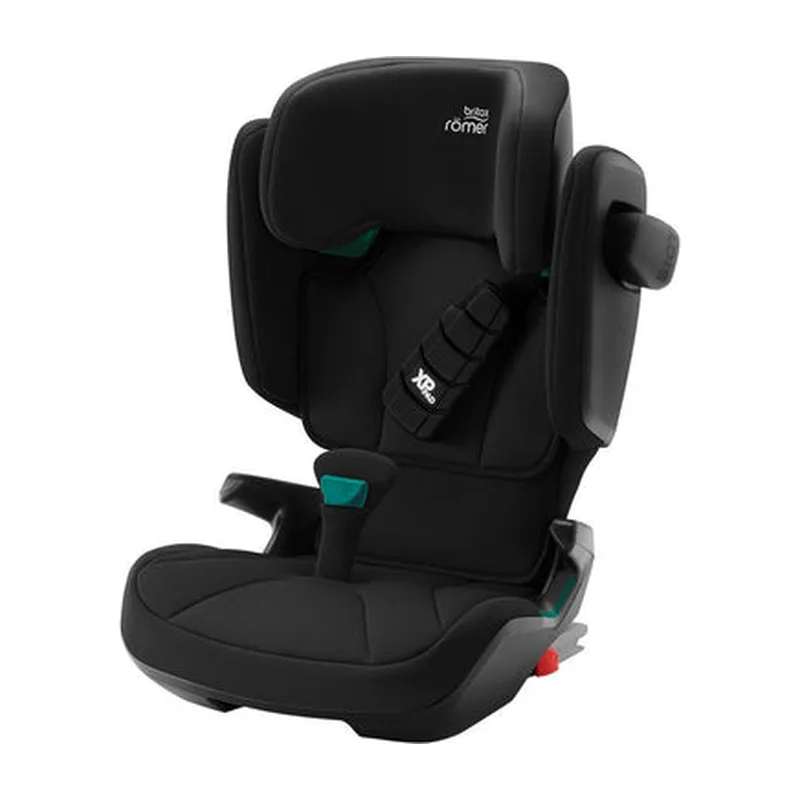
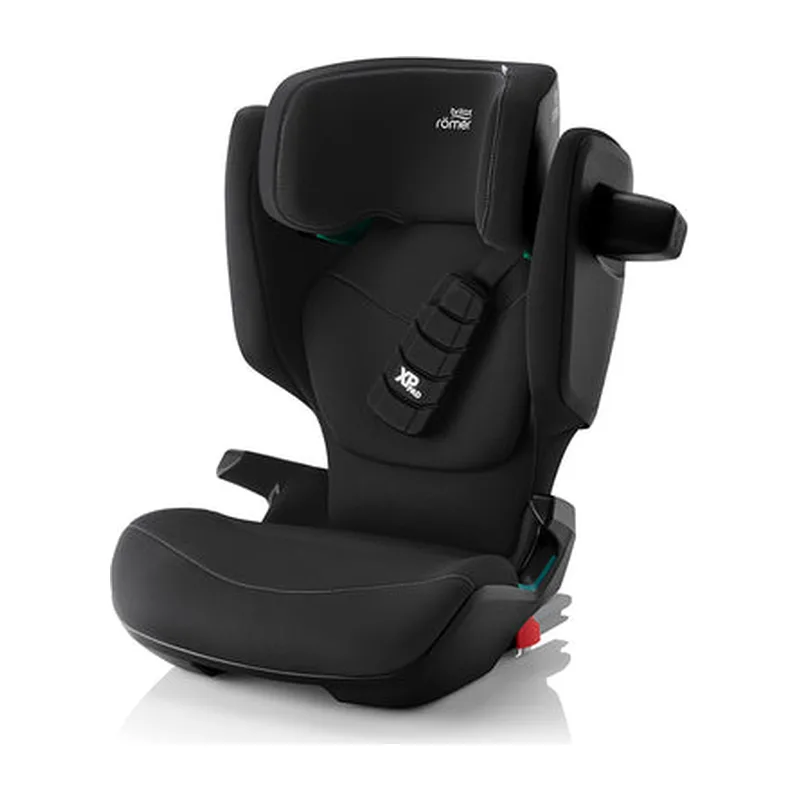
The two Britax seats have the same safety grade, 1.7, and nearly the same overall grade, 1.8. The difference is when ADAC graded them: the Kidfix i-Size in October 2022, the Kidfix Pro in October 2025 under ADAC's current programme. On 14 November, the Kidfix Pro cost £149 and the Kidfix i-Size £149.
ADAC's comments separate them in a few places. The Kidfix Pro connects very firmly to the car and its cover comes off easily, while the Kidfix i-Size's cover is hard to remove. On the other hand, ADAC found the Kidfix Pro's instructions only adequate and its padding thin, and rated the Kidfix i-Size's padding good.
At the same price, the Kidfix Pro is the better buy for most people, because its result was reached under the current programme and its cover is easier to remove. The Kidfix i-Size makes sense if you prefer its better padding or find it in a colour you want at a lower price.
Both are sold widely in the UK, so it is worth checking two or three shops for the colour you want before choosing.
Using a booster correctly: the checks that matter most
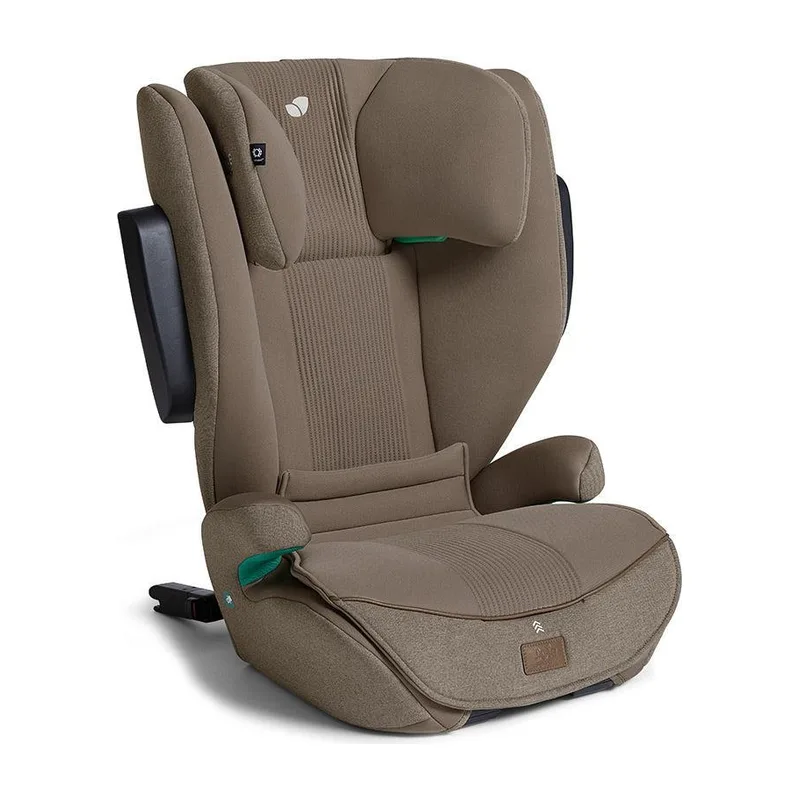
The shoulder belt should cross the middle of the child's shoulder, not the neck or the upper arm, and the lap belt should lie low across the hips, not the stomach. The headrest's height controls the shoulder belt, so raise it as your child grows; most seats here have a headrest with several positions, such as the Joie's ten and the Axkid's eight.
Thick winter coats push the belt away from the body. Take the coat off or open it before buckling, and use a blanket over the belt instead.
If the seat has ISOFIX, connect it every time, even when the child is not in the car, so the empty seat stays put. If the seat is belt only, buckle the seat belt over the empty seat when the child gets out.
Never use a seat in front of an active front airbag in a way the maker does not allow, and follow the car's handbook for which seats can take child seats.
Check the fit again whenever your child has a growth spurt or you change cars. A booster that fitted well in one car can sit differently in another, depending on the shape of the seat and where the belt anchors are.
Joie i-Traver against Cybex Solution G2: an older strong result or a newer good one
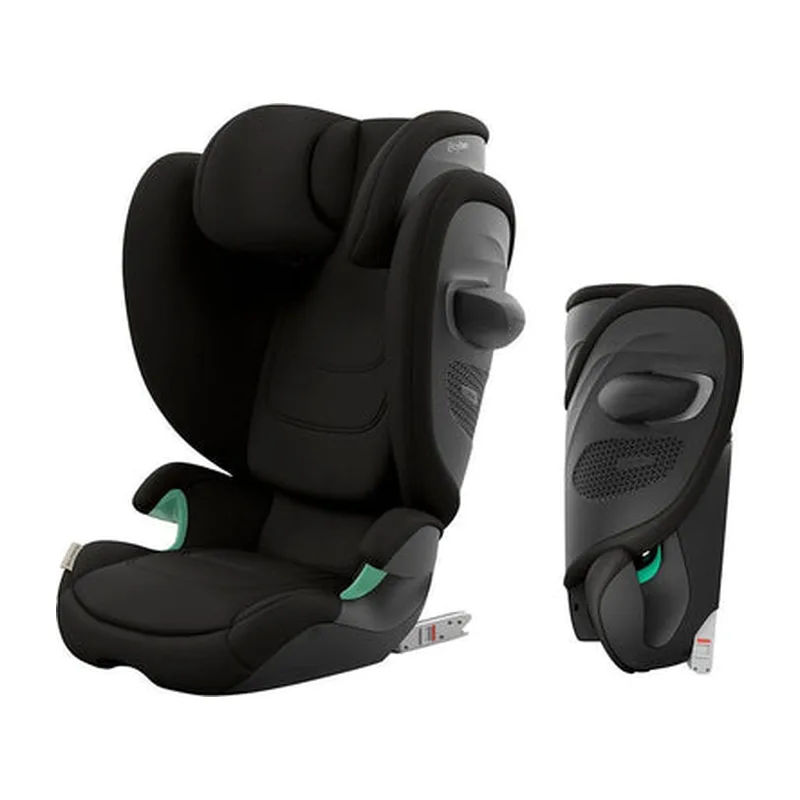
These two are the closest call on the page. The Joie costs £100 and earned a safety grade of 1.9 in 2021; the Cybex costs £108 and earned 2.3 in 2025 under the stricter programme. Both have very good or good side impact results; both were rated average in the frontal crash.
The Cybex is easier to use in ADAC's view, folds, has a three year warranty and a 2025 PFAS result. The Joie is lighter, a little cheaper and had the better safety grade, though on the older scale.
If you want the most recent evidence, choose the Cybex. If you want the best safety grade at the lowest price and accept that it was measured under the old programme, choose the Joie. Either is a sound choice, and the gap between them in our ranking is less than a tenth of a point.
Buying guide: choosing the right high back booster seat
Crash results differ more than the R129 label suggests
Every seat here is approved to UN R129, the i-Size standard, which sets a minimum level of crash protection for sale in the UK and Europe. ADAC's results show how far above that minimum each seat goes. Its safety grades for the five seats with ADAC grades run from 1.7 for the two Britax Kidfix seats to 2.7 for the Maxi-Cosi RodiFix Pro², and the difference is mostly in the frontal crash, where three seats were rated average.
Side impact results are strong across the board. ADAC rated the side impact risk very low for the Joie i-Traver and both Kidfix seats, and low for the Cybex and the Maxi-Cosi. That reflects how much effort makers have put into side wings and energy absorbing headrests in recent years.
A seat with an average frontal result is not unsafe; it met the legal standard and did well elsewhere. But if you drive long distances on fast roads, where frontal collisions are the most common serious crash, it is reasonable to weight that result heavily. That is why crash protection carries 35% of the score here.
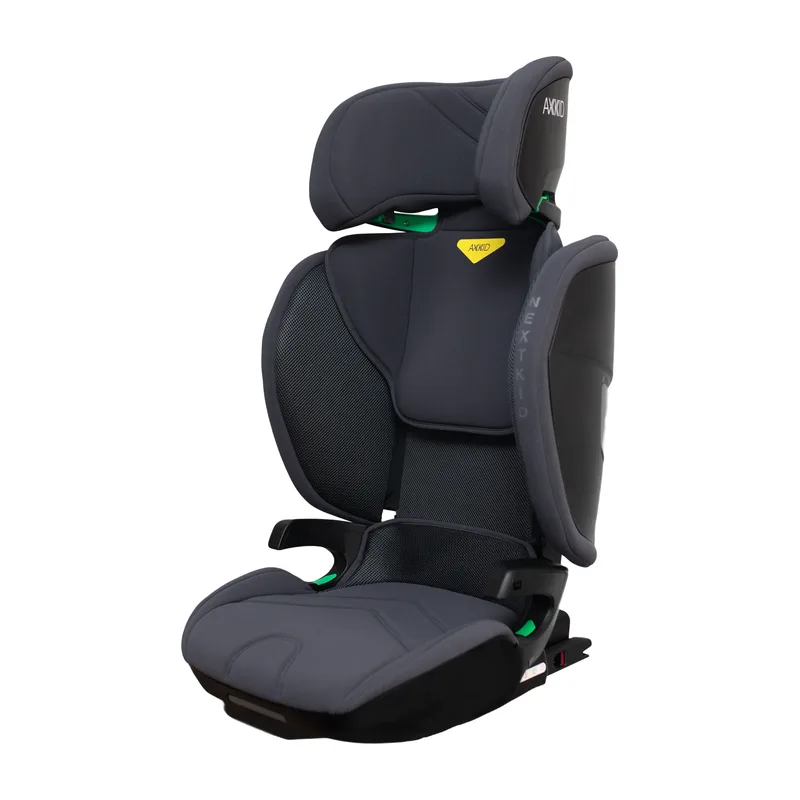
A seat without an independent result, like the Axkid Nextkid on this page, is not necessarily worse. We simply have no published evidence of how it performs beyond the legal minimum, so it cannot score above seats that have shown their results.
It also helps to read the comments behind each grade rather than the number alone. ADAC's short notes, such as very firm connection to the car or average risk in a frontal crash, tell you where a seat earned or lost points, and they are summarised in each seat's assessment on this page.
Side wings and an energy absorbing headrest are the main parts that protect in a side impact. When comparing seats in a shop, check that the wings sit level with your child's head and shoulders at the current headrest setting, not above or below them.
An older ADAC result is not a worse result, but it is not the same scale
ADAC changed its test programme in 2025, and it says results from before then are not directly comparable with newer ones. It also says that seats rated very good or good between 2020 and 2024 can still be recommended. Three of the seats ADAC graded here have results from that period: the Joie i-Traver from May 2021, the Kidfix i-Size from October 2022 and the RodiFix Pro² from May 2024.
We handle this by deducting five points from the crash protection score of each of those three seats. It is a judgement, and we state it openly: without the deduction the Kidfix i-Size would rank second and the gap at the top would widen slightly, but the Joie would still be first.
For you as a buyer, the practical point is to compare like with like. The Kidfix Pro and the Cybex Solution G2 were both rated under the current programme, so their safety grades of 1.7 and 2.3 can be compared directly. Comparing either with the Joie's 1.9 from 2021 is less precise.
Makers often update a seat without changing its name much, which is how the Kidfix Pro succeeded the Kidfix i-Size. When you buy, check that the seat on sale is the exact model ADAC graded; trim names such as Style or Signature usually only change the fabrics.
If you see a seat advertised with an ADAC grade, check the year. A grade of 1.9 from 2021 and a grade of 1.9 from 2025 were reached under different crash conditions, and the newer one is the more demanding of the two.
ADAC's own advice on its results page makes the same point, so this is not a reason to dismiss an older good result, only to weigh it a little less than a new one.
A seat that is easy to fit correctly is safer in daily life
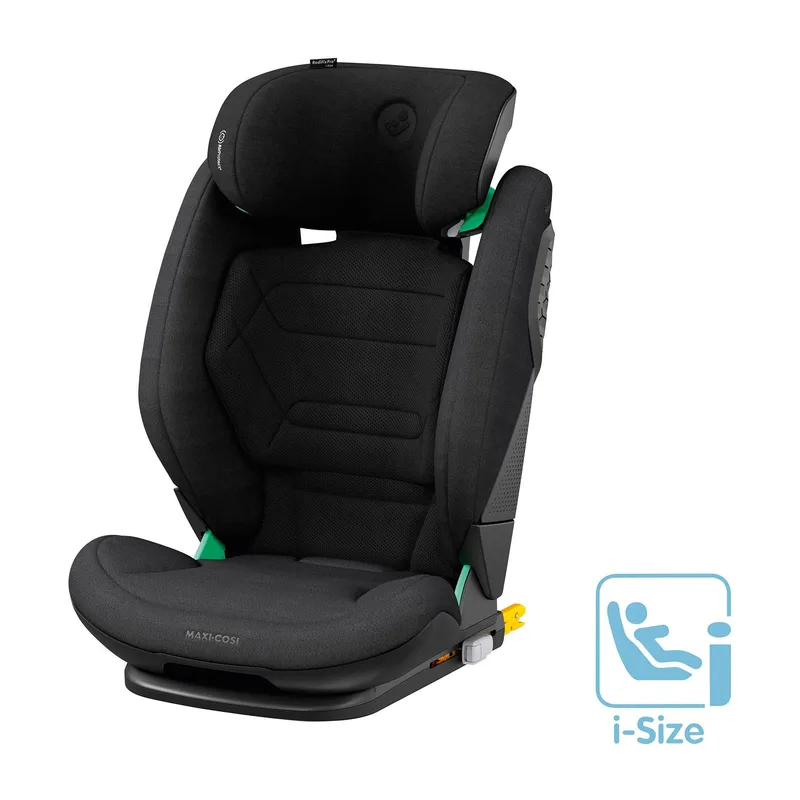
A booster only protects as well as it is fitted and buckled, and ADAC's operation grade measures exactly that: the risk of using the seat wrongly, how easy it is to buckle the child, how clear the instructions are and how heavy the seat is. The RodiFix Pro² leads here with 1.5, followed by the Cybex at 1.8 and the Joie and Kidfix i-Size at 1.9.
This matters most when a seat moves between cars, for example between two parents or to grandparents. Each move is a chance to route the belt wrongly or forget to tighten the ISOFIX connectors. If that is your situation, the RodiFix Pro²'s ease of use partly makes up for its weaker crash result.
For a seat that stays in one car, ease of use matters mainly on the first day and when the child grows. A one time careful fitting, checked against the manual, gets most of the benefit, and the crash result becomes the more important figure.
ADAC also notes whether the cover is easy to remove for washing. It found the Kidfix i-Size's cover difficult and the Cybex's and RodiFix Pro²'s a little fiddly. With a child eating in the car, that is a weekly consideration.
Buckling is the step children start to do themselves around school age. ADAC rated buckling easy on every graded seat here, which means a child can usually manage it, but an adult should still check that the lap belt sits low on the hips and the shoulder belt runs through the guide every time.
The best way to judge ease of use for yourself is to fit the seat in your own car before the first journey, following the manual step by step, and to let the person who will use it most do the same.
ISOFIX on a booster holds the seat, not the child
On a high back booster the car's own seat belt restrains the child. ISOFIX connectors, where fitted, hold the booster itself in place, so it does not move around when the child gets out or become a loose object in a crash when the seat is empty. ADAC noted that the Kidfix Pro connects very firmly to the car.
Retailers list optional ISOFIX for the Cybex Solution G2 and the Kidfix i-Size, ISOFIX guides on the Joie i-Traver and ISOFIX or belt fitting for the Axkid Nextkid. Optional means the seat can also be used in a car without ISOFIX points, held by the seat belt alone.
If your car has ISOFIX points in the back, use them: it makes the seat steadier and stops it sliding when the child climbs in. If you often move the seat to a car without ISOFIX, check that the seat is approved for belt only use, which is the case for the models listed with optional ISOFIX.
ISOFIX does not change the most important check: the seat belt should run across the child's shoulder, between neck and shoulder edge, and low across the hips. The headrest height controls where the shoulder belt sits, so adjust it as your child grows.
A booster with ISOFIX is also easier for a child to climb into, because the seat does not slide as they put weight on one side. That is a small daily benefit worth having if your car has the anchor points.
Belt only seats are also handy for taxis and hire cars, where you cannot rely on ISOFIX points being free or easy to reach.
Weight and size matter if the seat changes cars or the back seat is crowded
The seats here weigh from 5.5 kg for the Joie i-Traver to 7.5 kg for the Axkid Nextkid. That is light compared with toddler seats, but it adds up if you lift a seat in and out of a car every week. The Cybex Solution G2 also folds and has a carry handle, which helps with storage.
Width matters in small cars and for families with three children. ADAC rated the Kidfix i-Size, Kidfix Pro and RodiFix Pro² as taking up little room in the car, and the Joie i-Traver and Cybex as taking up more than average. Natural Baby Shower lists the Kidfix i-Size at 48 cm wide.
If you need to fit three seats across the back, measure the space and check the maker's fitting information for your car. A narrow booster in the middle seat is often the deciding factor.
The child's comfort also depends on size. ADAC rated space for the child as very good in the Cybex and good in the Kidfix, Joie and RodiFix seats, so a growing child should be comfortable in any of them up to 150 cm.
A light seat is also easier to move to the other side of the car when a younger sibling needs the place behind the passenger. With two children in different seats, being able to swap sides quickly is a practical advantage.
For a family car used by several drivers, a lighter seat also makes it more likely that someone will actually move it to the right place rather than leaving it where it is.
When to move to a booster, and when to stop using one
High back boosters are approved for children from 100 cm to 150 cm under R129, which ADAC and the retailers describe as roughly from three and a half or four years to about twelve. A child should stay in a harnessed seat until they reach the minimum height and are mature enough to sit still with the adult belt correctly placed.
UK law requires children to use a child car seat until they are 12 years old or 135 cm tall, whichever comes first. Many safety organisations recommend continuing to 150 cm, which is what all the seats here allow.
A backless booster cushion is not a substitute. It raises the child but offers no side impact protection or belt guidance at the shoulder. Every seat on this page has a back and side wings.
Your child has outgrown a high back booster when the headrest at its highest position can no longer keep the shoulder belt in the right place, or when they pass the seat's height limit. At that point, check that the adult belt fits correctly without a seat before moving on.
Many children move to a booster too early because they want to sit like older friends. If your child is near the 100 cm minimum but still fidgets or slips out of the shoulder belt, staying longer in a harnessed seat is the safer choice.
Measure your child in socks against a wall every few months. The 100 cm and 150 cm limits are what the approval is based on, and children grow in bursts.
Spending more buys a newer result, not always a better one
The price range here is narrow: from £100 for the Joie i-Traver to £149 for either Kidfix. Within it, price and crash protection are not neatly linked. The cheapest seat has the third best safety grade; the RodiFix Pro² costs more than the Joie and has the weakest grade of the seats ADAC graded.
What the Kidfix Pro buys over the cheaper Joie is a top safety grade under ADAC's current programme and a very firm connection to the car. The Cybex Solution G2, at £108, buys a 2025 result, a folding design and a three year warranty.
Over the life of a booster, the price differences shrink. A seat used from four to twelve is used for eight years, so the £49 gap between the Joie and the Kidfix Pro is about £6 a year.
Second hand seats are best avoided unless you know their full history. A seat that has been in a crash may be damaged in ways you cannot see, and makers generally advise replacing a seat after any significant collision.
Retailer prices for car seats move often, especially around Black Friday. The Kidfix i-Size and the Cybex were both on offer on the assessment date, so check the current price against the ones on this page before you decide.
If two seats are close in our ranking, choose the one that fits your car and your child best; a seat that fits well and is used correctly every day protects better than a higher graded seat that is fitted badly.
Washable covers and warranties: the details that make daily life easier
A booster seat gets dirty fast. ADAC records whether the cover can be machine washed and how easily it comes off. It found the Kidfix i-Size cover hard to remove and noted that the Joie i-Traver it graded could only be hand washed, while Natural Baby Shower lists the Signature version's covers as removable and machine washable.
Warranties vary from two years for the Joie and Kidfix i-Size, as listed by Natural Baby Shower, to three years for the Cybex. The Kidfix Pro, RodiFix Pro² and Axkid Nextkid have no warranty stated on the pages we read.
A spare cover is useful for long journeys and for families with more than one child. Check that the maker sells covers for your exact model before buying, since covers rarely fit across different seats.
Keep the manual in the car. Several of ADAC's criticisms concern instructions and warnings, and the manual is where you find the correct belt route and headrest setting for each height.
A cup holder, a recline or a choice of fabrics can make journeys more pleasant, but none of them changes how a seat protects your child. Decide on crash protection and fit first, then on extras.
Register the seat with the maker if it offers registration. It is the quickest way to hear about a recall, and some makers link the warranty to it.