In depth: toddler car seats explained
ADAC's weights explain why two seats with the same safety grade finish differently
ADAC's overall grade is a weighted average: safety 50 per cent, operation 40 per cent and ergonomics 10 per cent, with harmful substances able to lower it. The weights alone reproduce several of the grades here. The Pearl 360 Pro comes to about 2.1 (1.9 for safety, 2.4 for operation, 2.0 for ergonomics) and both the Sirona G3 and the Pallas G3 come to about 2.5.
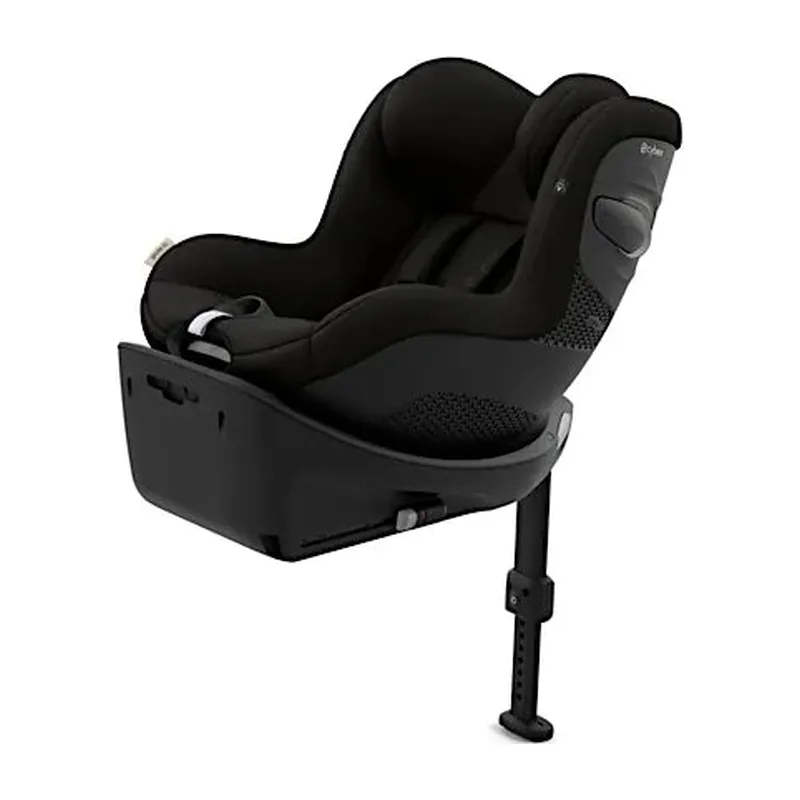
The Sirona G3 and the Pallas G3 have the same safety grade, 2.6, and the same overall grade, 2.5, but get there differently. The Sirona is better on operation (2.3 against 2.5) and the Pallas is better on ergonomics (1.9 against 2.3). The Pallas also has the cleaner cover, at 1.0 against the Sirona's 2.6, though ADAC's overall grade for the Sirona was not lowered by it.
The Minikid 4 Pro shows the other side. Its safety grade of 2.8 sits between the Sirona and the Silver Cross, and the weights alone would give about 3.2. ADAC's overall grade is 3.6, and it says the increased risk of misuse prevented a better rating. A seat's safety grade is therefore not the whole story, and a result that looks close on one line can still differ overall.
Our scores use the same grades but weight them differently: crash protection 35 per cent, ease of use 20 per cent, comfort 10 per cent, with price and the practical features making up the rest. That is why a seat can rank above another with a better ADAC overall grade, as the Sirona G3 does against the Pearl 360 Pro.
Sirona G3 against Pallas G3: £161 buys the ability to face backwards
These two Cybex seats are the closest pair in the comparison. ADAC gave both an overall grade of 2.5 and a safety grade of 2.6, with the Sirona's from October 2026 and the Pallas's from May 2026. The price gap is £160.96, from £162.99 to £323.95.
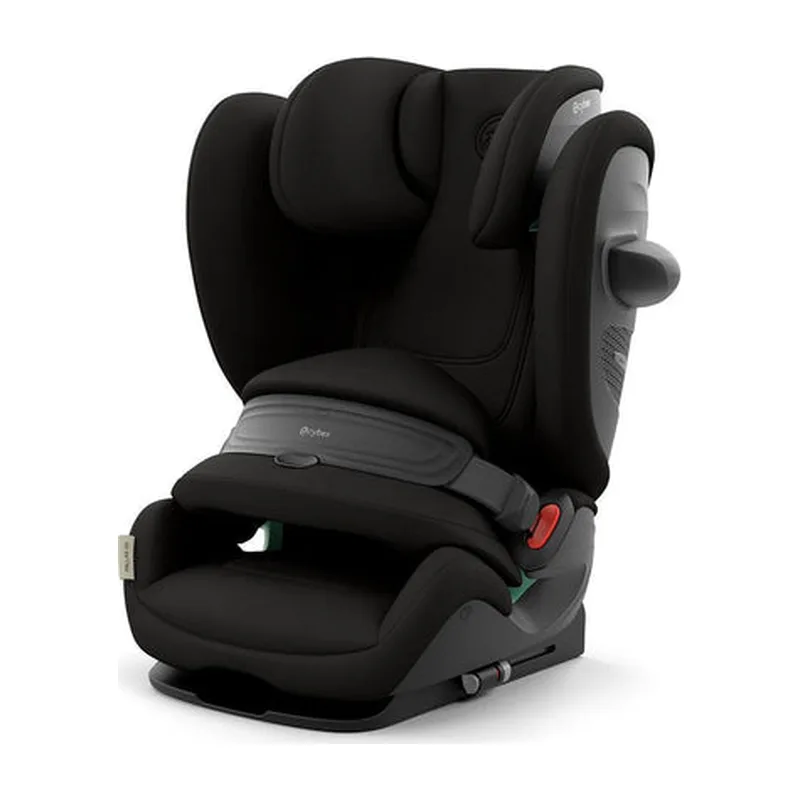
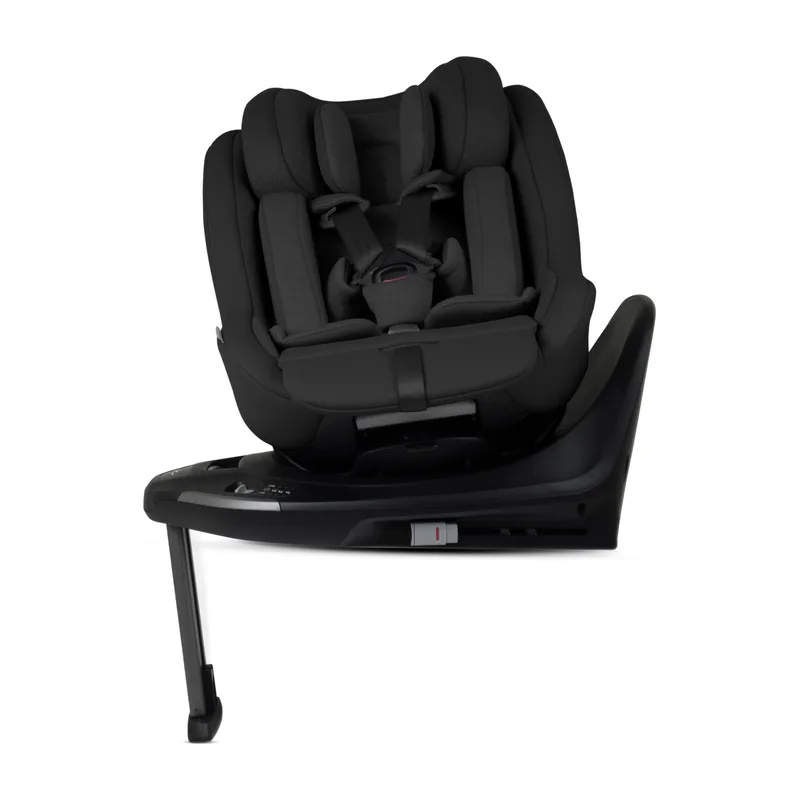
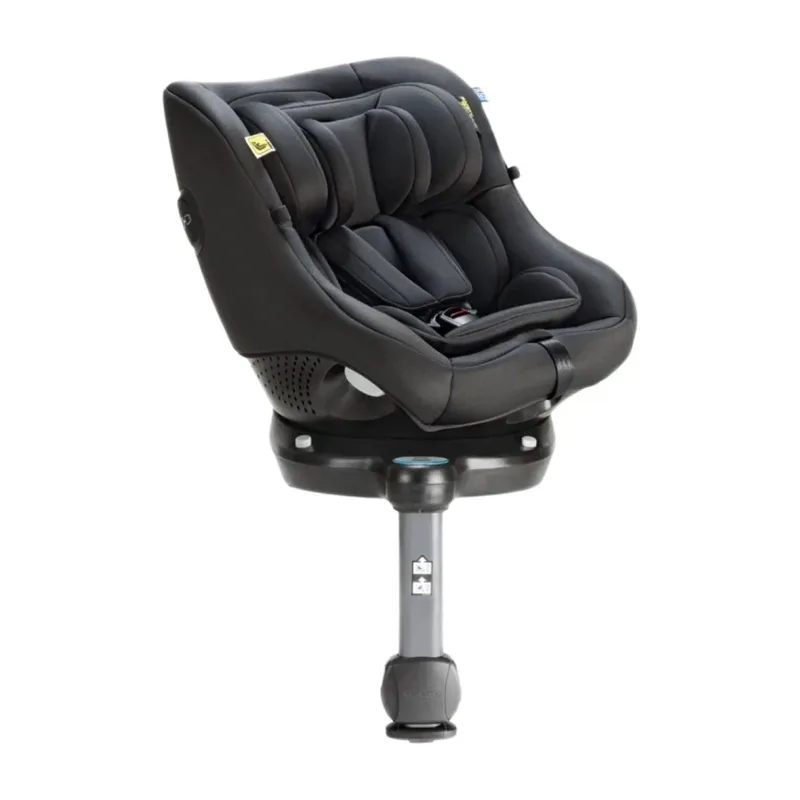
What that money buys is direction and a base. The Sirona G3 sits on a base and faces backwards from 61 to 105 cm, turning to face forward from 15 months. The Pallas G3 fits with ISOFIX and a top tether and faces forward only, from 76 to 105 cm with an impact shield and from 100 to 150 cm with the car's belt. The Sirona is therefore a seat for a child's first four years or so; the Pallas replaces both a toddler seat and a later booster.
In weight, the Sirona's shell is 6.8 kg and the Pallas is 8.9 kg. ADAC also notes that not every child accepts an impact shield and advises trying it with the child, which is something a harness does not require.
If your child is under 15 months, the Pallas is not an option, whatever the price. If your child is older and you plan to keep one seat for as long as possible, the Pallas costs less per year of use. Neither seat is the better choice for everyone, and the Sirona leads here because of the date of its result and its rear-facing range.
Seats we left out, and what ADAC found
Several seats with ADAC results did not make the six. The Cybex Sirona Ti was graded 2.5 in May 2026, but the Natural Baby Shower page showed stock incoming and shipping by 11 December, and out-of-stock seats do not count here. The Maxi-Cosi MobiFix Pro, a rear-facing-only seat for 61 to 125 cm, was graded 2.5 in October 2026, and the BeSafe Beyond 360 was graded 2.4 in October 2025. We could not confirm UK stock and price for them at a shop page we could read.
The Joie i-Irvana was graded 3.2 by ADAC in May 2026, for 76 to 150 cm. Smyths lists it at £119.99 with 4.7 out of 5 from 12 reviews, but its page did not show stock, so we left it out. It is a forward-facing seat in the same territory as the Pallas G3, which has a better ADAC grade and costs £43 more.
The Axkid Minikid Core and the Britax Baby-Safe Pro with the Vario Base 5Z failed in the same ADAC round. Neither is a toddler seat that belongs here, and the Core was recalled and withdrawn from sale, but they are a reminder that a maker's name does not carry a result from one model to another.
The ADAC database lists far more seats than we compared. We chose those with a result for the exact set sold in the UK, a current price and confirmed stock, which is why a well-known seat can be missing and why we may add others as stock and results change.
Buying guide: choosing the right toddler car seat
The best toddler car seat is the one that fits your car with the child in it
ADAC's own buying advice starts with the car, not the seat. Check the maker's vehicle list or the i-Size marking on your rear seats, and where you can, take the child and the car to a specialist shop. A seat that is graded well on a test rig can still be a poor match if it is a tight fit behind the front seats.
The six seats here differ in how much room they ask for. ADAC notes a large footprint for the Axkid Minikid 4 Pro, and says the Pearl 360 Pro needs more space than average and restricts the child's view out. The Minikid 4 Pro also has a harder rule: ADAC says it may only be used in cars on Axkid's approved list, so a car outside that list rules it out whatever its grade.
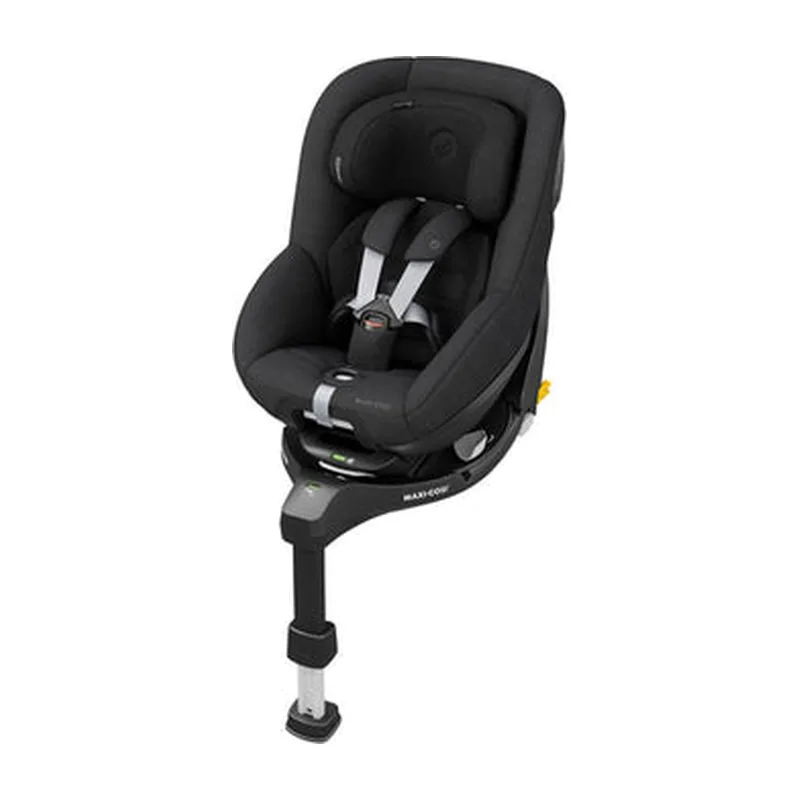
Rotating seats add a second check. ADAC advises making sure the seat does not hit the car's interior when it is turned sideways or the headrest is raised. For the Maxi-Cosi Pearl 360 Pro, ADAC also points to a side extension that can make buckling a small child easier, but says to check that it fits your door opening before you buy.
Fit matters most where the car is old or small. In a car with narrow rear doors, a seat that swivels may be easier to use than a fixed one, but the swivel is no use if the seat cannot turn fully before it meets the door frame. If you cannot take the car to a shop, read the maker's vehicle list and send a question to the retailer before ordering.
Rear-facing to 105 cm is common, to 125 cm is rare, and forward-facing only is a real trade-off
The rules for a child under 15 months are the same for every seat: ADAC says children of that age may only travel facing backwards. After that, the seats here split three ways. The Sirona G3 and the Pearl 360 Pro face backwards up to 105 cm and can later turn to face forward, which ADAC allows for the Sirona from 15 months. The Minikid 4 Pro only faces backwards, up to 125 cm, which ADAC puts at about six years. The Pallas G3 only faces forward.
ADAC's write-up of a different rear-facing seat, the Maxi-Cosi MobiFix Pro, says that facing backwards gives very good protection in a frontal crash, and also that large children have limited legroom. That is the trade-off in this group: the longer a child stays rear-facing, the larger and heavier the shell tends to be. The Minikid 4 Pro is the heaviest seat here at 9.5 kg.
A forward-facing-only seat such as the Pallas G3 does not suit a child under 15 months, and ADAC allows it only from that age. It also starts at 76 cm, so a small toddler may not meet the height limit for some time. It suits a child who has outgrown an infant carrier and is ready to face forward, and it has the advantage of continuing to 150 cm, where the Sirona and Pearl stop at 105 cm.
The rear-facing range carries half the weight of our practical score, because it is the feature that most separates the six. If your child is tall for their age, check the height limit as well as the age: the Pearl 360 Pro and the Sirona G3 both stop at 105 cm, while the Approach Plus 360 also stops at 105 cm but starts at 40 cm.
A crash grade from 2023 is not directly comparable with one from 2026
ADAC changed its programme in 2025 and says results from 2020 to 2024 are not directly comparable with newer ones, although it also says very good and good older results can still be recommended. That matters here because the Pearl 360 Pro's 1.9 safety grade is from October 2023 and the Sirona G3's 2.6 is from October 2026. A lower number is a better grade, but the two were earned under different rules.
We handle this with a fixed deduction of five safety points for any result from before 2025, applied to the Pearl 360 Pro only. Even with it, the Pearl scores higher on crash protection than the Sirona G3 and the Pallas G3, and its overall place is held back by price, where it is one of the three dearest seats here. That is why we show the date next to every grade.
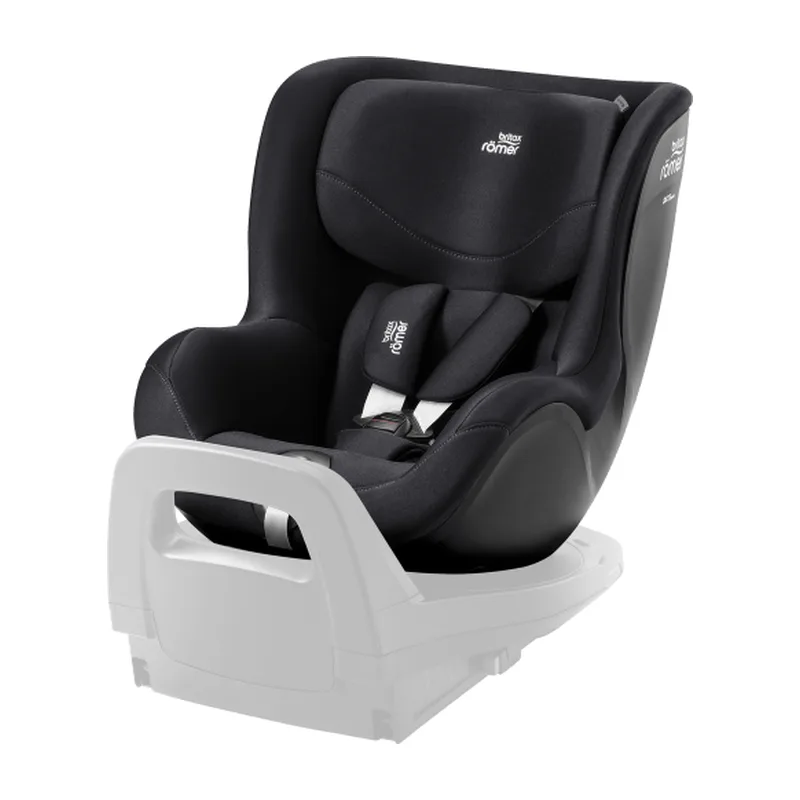
The Britax Römer Dualfix 5Z shows the problem in practice. ADAC graded it on the older Flex Base 5Z in October 2023, with a safety grade of 2.0 and an overall grade of 2.4. In May 2026 it graded the seat on the Vario Base 5Z, the set Little Peas sells, with a safety grade of 3.5 and an overall grade of 3.2, because of an increased injury risk in the frontal crash. The base, the year and the programme all changed, so the two results cannot be lined up.
The practical rule is to read the date first, then the grade. A 2026 grade for the set you are buying outweighs a 2023 grade for a similar set. Where the date is old, ask whether the seat has been revised since, and look for a newer ADAC page for the exact base that is sold with it.
A seat that is easy to fit wrongly is a safety problem, and the Minikid 4 Pro shows it
ADAC grades operation separately from crash protection and gives it 40 per cent of the overall grade, because a seat that is fitted or buckled wrongly protects less than its crash grade suggests. Five of the six seats here scored between 2.3 and 2.5 for operation. The Axkid Minikid 4 Pro scored 3.8, with ADAC listing laborious fitting, an increased risk of misuse and minor weaknesses in the instructions.
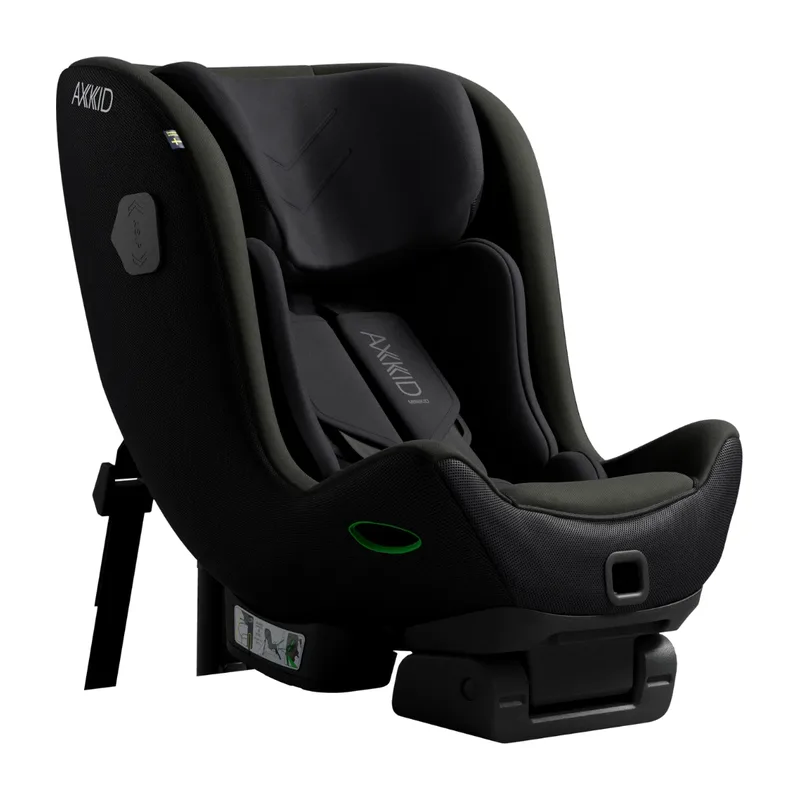
The reason is partly how it is held in place. The Minikid 4 Pro has no ISOFIX base: ADAC says it is fitted with the car belt, lower tether straps and a support leg. That saves a base, about £140 on the Sirona G3, but it moves the work to you. If you fit the seat once and leave it, that is a one-off effort; if you move it between cars every week, it is a recurring chance to get it wrong.
ADAC's general advice points the same way. It says two-part seats, a shell plus a base, are often easier to fit than one-piece seats, and that more adjustments and features can raise the risk of misuse. A rotating seat helps with buckling, which ADAC treats as a practical advantage.
The seats with the best operation grades here, the Sirona G3 at 2.3 and the Pearl 360 Pro and Dualfix 5Z at 2.4, all use a base. If you will fit a seat yourself without a specialist's help, that is a good reason to pay for one. If you have a fitting service nearby or a car that is always the same, the Minikid 4 Pro's long rear-facing range may still be worth the effort.
A base can add £140 to the price, so compare pairs rather than seats
Four of the six prices in this comparison are for a seat plus a base, and a seat's headline price can be misleading. At Little Peas the Sirona G3 seat is £184 on its own and the Base G3 is £139.95, so the pair is £323.95 and the base adds £139.95. Natural Baby Shower's bundle of seat and base at £307.70 showed stock incoming, so we did not use it. The Maxi-Cosi Pearl 360 Pro is £242.96 alone and £467.91 with its base, a difference of £224.95. In Car Safety Centre sells the Pearl 360 Pro seat at £269.99 and its base at £186.99, £456.98 as a pair and £10.93 less than Natural Baby Shower.
That is why the Pallas G3 and the Minikid 4 Pro, which need no base, look better value than they do on a seat-only basis. The Pallas is the cheapest seat here at £162.99, £160.96 below the Sirona pair. But it is forward-facing only, so the saving buys a different kind of seat, not the same seat with the base removed.
ADAC advises buying the seat and base together, because not every base fits every seat of the same make. The prices here follow that: each is for a seat and the base ADAC graded it with, or for a seat that needs none.
Spread over time, the cost per year falls quickly. The Sirona G3 pair at £323.95 is about £81 a year over four years, against about £124 a year for the Approach Plus 360 at £495 over the same period. Four years is an illustration, not a lifetime: the Sirona is approved to 105 cm, and a child may outgrow it sooner or later than that. The Pallas G3 continues to 150 cm, so one purchase may cover what the others need two seats for.
The lightest shell is not always the easiest seat to live with
ADAC warns not to underestimate seat weight if you change cars often. The Dualfix 5Z has the lightest shell here at 5.2 kg, and the Sirona G3 follows at 6.8 kg, then the Pearl 360 Pro at 7.1 kg and the Approach Plus 360 at 7.9 kg. The Pallas G3 weighs 8.9 kg and the Minikid 4 Pro 9.5 kg, which is 4.3 kg more than the Dualfix shell.
A shell's weight is only half the picture when it sits on a base. The Dualfix 5Z's base weighs 8.1 kg, the Pearl 360 Pro's 8.6 kg and the Sirona G3's 6.9 kg, so the Dualfix pair is the lightest at 13.3 kg, ahead of the Sirona's 13.7 kg, the Approach Plus 360's 14.2 kg and the Pearl's 15.7 kg. Those totals are our own sums of ADAC's figures. If one base stays in the car and only the shell moves, the shell weight matters most; if you swap everything between two cars, add the two numbers.
Weight also decides who can move the seat. A 9.5 kg shell is a lot to lift in and out of a car with a bad back, and ADAC notes the Minikid 4 Pro needs a lot of space as well. For a seat that never leaves the car, weight matters much less than the grades for protection and ease of use.
Guarantee length is the other practical difference. Natural Baby Shower gives three years for the Sirona G3 and the Pallas G3, and Silver Cross gives three for the Approach Plus 360. The Pearl 360 Pro has two years at both John Lewis and Natural Baby Shower. For the Axkid and the Dualfix, we did not find a length on the pages we read, and it is shown as not stated.
Cheap seats from online platforms are where ADAC found the failures
ADAC's autumn 2026 round included seats that failed outright. Two received its lowest verdict, the Axkid Minikid Core and the Britax Baby-Safe Pro with the Vario Base 5Z. ADAC also says three seats from online platforms outside Europe failed, two of them without R129 approval. The Minikid Core was withdrawn from sale and recalled by Axkid, which offers an exchange for the Minikid 4 Pro that ADAC graded separately.
None of the six seats here is among the failures, but the lesson applies to any seat you are considering. The Minikid Core and the Minikid 4 Pro are different seats with different grades, and so are the Britax Baby-Safe Pro, an infant seat, and the Dualfix 5Z. A result belongs to one model on one base in one year.
ADAC also grades harmful substances in the cover. The Sirona G3's cover was graded slightly raised at 2.6 in October 2026, the weakest grade here, while the Approach Plus 360 and Dualfix 5Z were graded 1.9 and the others 1.0. Since 2025 ADAC has added a PFAS grade, and all five seats that have one scored 1.0. Harmful substances carry only 5 per cent of our score, because the grades differ little, although ADAC says a poor result can lower a seat's overall grade.
If you are buying from a marketplace, check that the listing names the exact model, shows the R129 approval and comes from a seller who offers a guarantee. If the price is far below the £163 we found for the cheapest seat here, ask why. Two other pages on this site cover neighbouring seats: our swivel car seat comparison for rotating seats that start at birth, and our high-back booster seat comparison for children who have outgrown a toddler seat.