In depth: car phone mounts explained
What the independent groups actually checked, and what they only rated
The four groups behind this ranking asked different questions. Auto Express's March 2024 group of wireless charging holders was the most measured. It started a Samsung S10 at about 50 per cent, charged it for 30 minutes with no load, then charged it again while driving with a sat-nav app on 4G, and combined the two into one figure. Baseus won with 40 per cent, ESR's HaloLock reached 33, the Olixar 31, the Xiaomi 33 and the Halfords wireless holder 17. Mounting ease, stability and price were judged on top.
Auto Express's September 2025 group of plain holders measured nothing in numbers. The magazine tried them on several cars, suction and vent types alike, and checked solidity, practicality, whether the holder covered phone buttons, ease of attaching and adjusting, and value. The Mous Suction Mount won with five stars, Miracase's vent holder was praised for value and Quad Lock for quality. The ratings are an editor's judgement, not a force reading.
CAR magazine put each mount in a 2018 Volvo V60 and scored usability, strength, quality, rough-road performance, charging and fit. Its best magnetic mount was a Mous charging unit with an adhesive arm that it rated 4.5 out of 5, with stability and build quality both 5.0. The magazine's non-charging Mous vent holder was rated 4.0 out of 5 and called the same product in different equipment levels. Macworld's review of the Anker Prime tried it in several cars and described the magnet and the mounting but no rough-road run. What Car? rated eight holders on a Mini, and Expert Reviews fitted nine to a small SUV for three days to a week. What Car? shows how arm length can matter. Its reviewers saw stability drop on a Blukar holder as the arm was extended and the phone rotated, and said movement at an Apps2Car windscreen holder with a long arm was too great for the display to be useful. Both were rated 3 and 2 out of 5. A magnetic mount on a vacuum or adhesive base, the Miracase for MagSafe, was marked highest at 5 out of 5. Those two groups do not include any of our six models, and they are used here only for context on vent fit and case effects.
The two Mous mounts differ by £1 and by what they grip
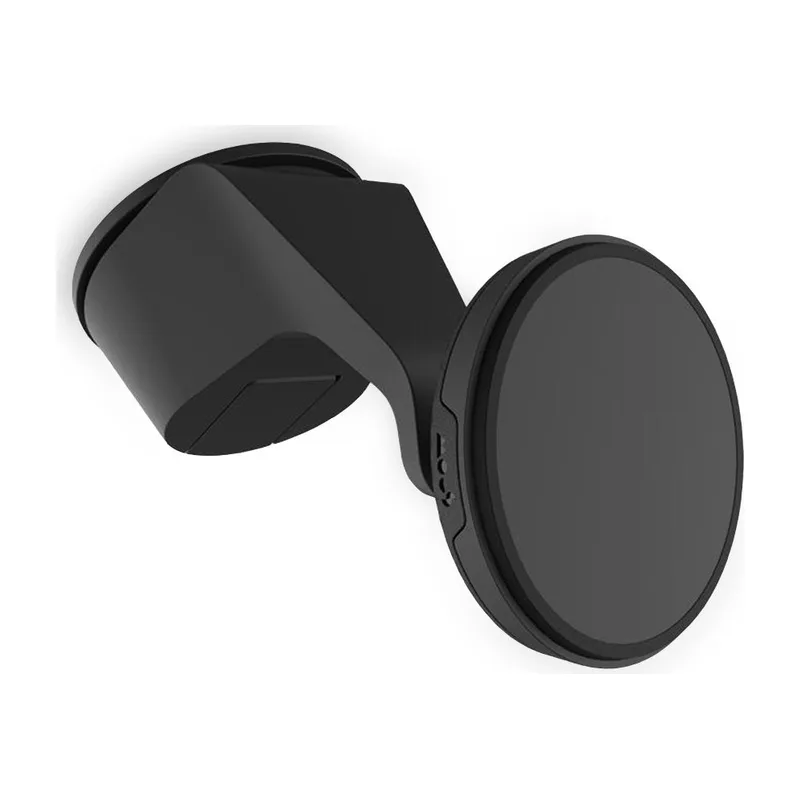
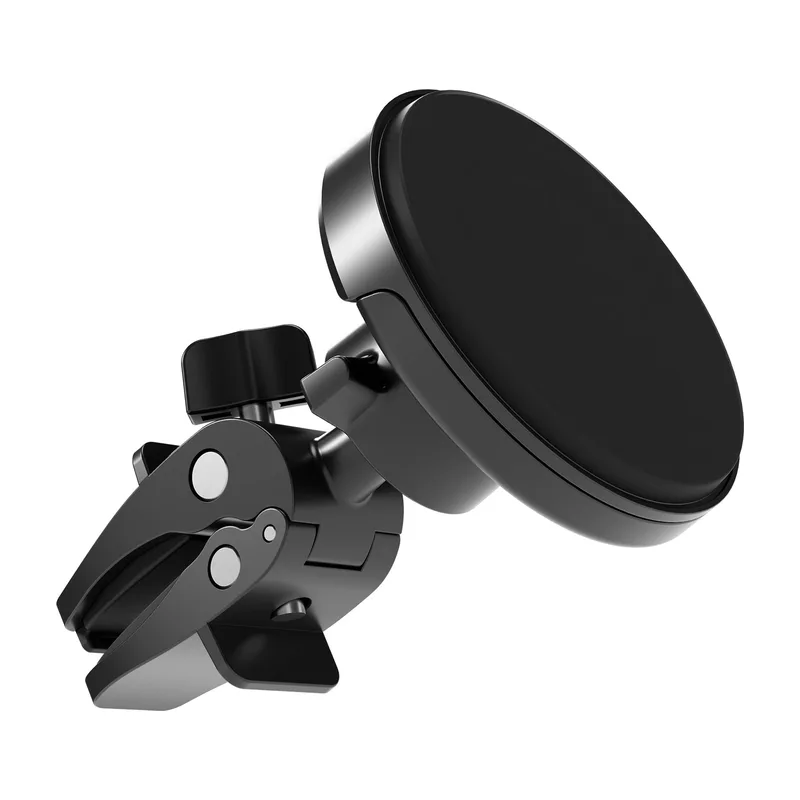
The Mous Suction Mount costs £17.99 and the Mous Car Vent Mount £18.99, a gap of £1. Both use magnets, both carry a limited lifetime warranty and both are non-charging. The suction mount weighs 76 g and the vent mount 71.5 g assembled. The suction mount has the stronger independent evidence, with a five star winner's rating from Auto Express in 2025 against 4.0 out of 5 from CAR for the vent version, and 4.8 out of 5 from 438 reviews against 835 reviews of which 704 are five star.
Customer reviews run the other way on volume. The vent mount's 704 five star ratings are 84 per cent of 835. The suction mount's 4.8 average cannot be turned into a five star share because Mous shows only the average. If your car has slatted vents the vent mount is the easier fit. If the dashboard is smooth or the windscreen is flat near where you sit, the suction mount's independent evidence is stronger. For a family that swaps cars the suction mount's easy move between cars, noted by Auto Express, is the tie-breaker.
One more difference is the phone list. Mous's suction page names the iPhone 12 and 13 series and some Mous cases, while the vent page names Qi2, MagSafe and Pixelsnap devices including the iPhone 17 and Pixel 10. Whether the suction page is simply out of date we cannot say from the sources, so a newer phone owner should check with Mous before buying it.
Why the Anker Prime ranks fourth despite the best charging
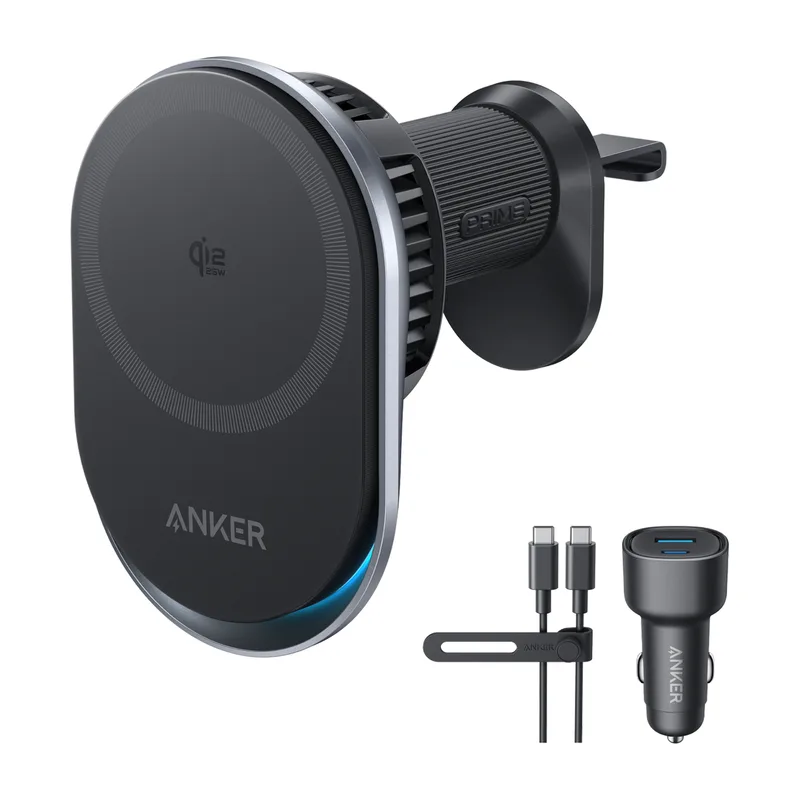
The Anker Prime scores the highest of the six for charging, at 25 W for iPhone 16 and 17, and it includes a car adapter. It ranks fourth because it scores lowest on fit and price. At £79.99 it costs £17 more than the Mous Qi2 vent charger, which reaches 15 W, and £69.99 more than the Olixar, which also quotes 15 W and mounts three ways. The extra 10 W only matters if you have an iPhone 16 or 17.
Macworld's reviewer gave it an Editors' Choice badge but could not fit it to the vents of a Mini, and Anker's own limits on blade depth and car makes apply. The adapter is also quoted differently: Anker's UK page says 60 W with two ports, while Macworld says 45 W with a USB-C and a USB-A port. Neither source contradicts the charging figure for the phone, but a buyer should check the box. If your car's vents suit it and you have an iPhone 16 or 17, it is the one mount here that charges at the highest rate, and the 24 month warranty is longer than the Olixar's, which is not stated.
The Mous Qi2 vent charger is the cheaper way to 15 W on a vent. It has 32 reviews and no independent review of this exact unit, and it ranks last for that reason. A reader who values the evidence base over charging speed should skip both and choose the Olixar or the Mous Suction Mount.
Buying guide: choosing the right car phone mount
A vent mount only works if your vents are the right shape
Three of the six mounts here clip onto an air vent, and for them fit comes before everything else. What Car? fitted eight holders to a Mini in 2026 and found that a Miracase vent mount did not fit its vents at all, while a magnetic vent mount from Yosh blocked the vent and fitted in only one position. Neither is in this ranking, but the lesson applies to the Mous Car Vent Mount, whose maker warns that round or unusually shaped vents may not take its clip.
The Anker Prime is the strictest. Anker says the blades must be 10 to 24 mm deep and that Tesla, Mercedes-Benz and round vents are out, and Macworld's reviewer could not fit it in a Mini. A vent clip that works in one car can therefore fail in the next, which matters if you swap between a family car and a hire car. Suction mounts and the Olixar's windscreen and dashboard options avoid the vent altogether.
A vent mount does not suit you if the vents sit low, are round or are needed for the heating while you charge a phone. Measure a slat before buying, because the Anker's 10 to 24 mm limit is a number you can check with a ruler.
Suction holds well on glass and badly on the wrong surface
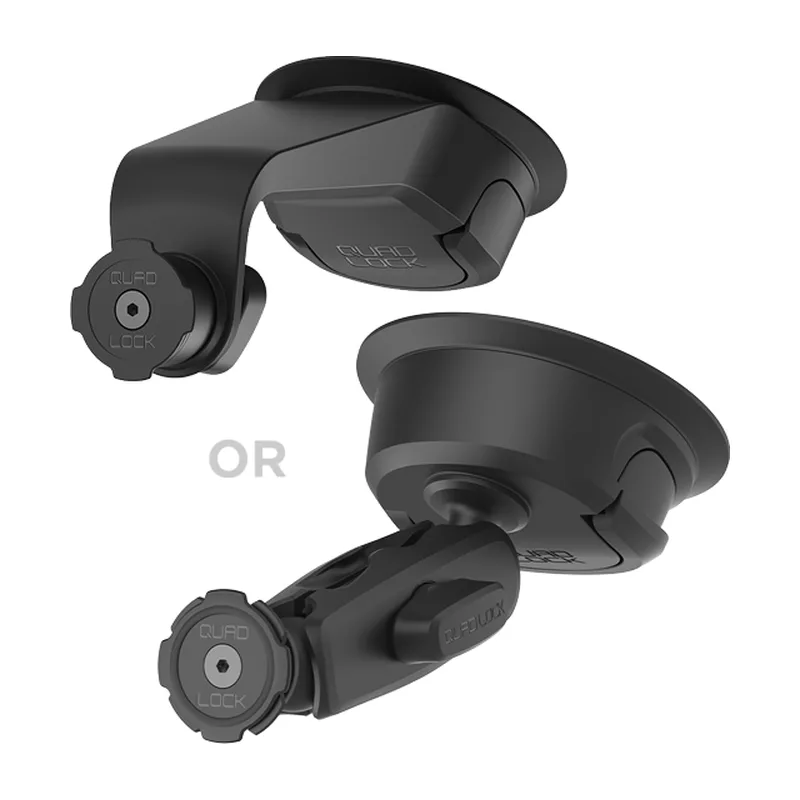
Auto Express's September 2025 group named the Mous Suction Mount its winner and called the suction rock solid, and rated the Quad Lock Suction Mount 4.5 out of 5 for holding steady on rough roads. Both depend on a smooth surface. Mous says its cup is for smooth, shiny surfaces and that reviewers find it works best on flat glass rather than curved areas, so a curved windscreen corner or a grained dashboard is a poor match.
The practical gap between the two is price and the phone. The Mous costs £17.99 and holds a magnetic phone, while the Quad Lock costs £28 and needs a Quad Lock case or adapter first. Auto Express warns that those extras can double the cost, so someone starting from a bare phone should treat the Quad Lock as the pricier route by a margin the shop page does not show.
Moving a suction mount between cars is the use Auto Express singled out for the Mous, and it is the one place where suction beats a vent clip that has to be matched to each car's slats. The Quad Lock is more permanent in practice, because a case sits on the phone all the time. Choose by how often the mount moves: a daily car favours either, while a mount shared between a family car and a hire car favours the Mous.
Suction is not for you if your windscreen has a stuck-on sensor area or a textured dashboard, or if you rarely clean the glass. The Olixar can use the same positions and also grips phones that carry no magnet, which is why it ranks first.
A magnet is only as strong as the phone behind it
Magnetic holders rely on the phone or its case having a magnet ring or a plate. The Mous suction page lists the iPhone 12 and 13 series and some Mous cases, and says the Limitless 3.0 case does not work. The newer Mous vent mount page lists Qi2, MagSafe and Pixelsnap phones and phones in magnetic cases. Anker's Macworld review counts a 13 N magnet and says full 25 W charging needs an iPhone 16 or 17.
Magnet counts are marketing numbers and cannot be compared across brands: Mous quotes 35 for the suction mount and 36 for the vent mount, and Anker quotes force. What matters is the case. Expert Reviews noted in 2024 that the ESR HaloLock held less well when the phone was in a silicone case, and Belkin's UK pages say Samsung and Google phones need a magnetic case. The case you use changes the grip.
The phrase MagSafe car mount covers two different products. A magnetic car phone holder that only holds, like the two Mous mounts, costs £17.99 or £18.99 here, while the charging ones, the Mous Qi2 vent charger and the Anker Prime, cost £62.99 and £79.99. The gap is the price of charging and cooling, not of a stronger hold, because no group we read reports that charging models grip harder.
If your phone has no magnet and you do not want to add a case, the Olixar's spring arms are the better fit, and the Quad Lock needs its own case anyway. Magnetic holders suit you when you already use a MagSafe case and move the phone in and out often.
Wireless charging costs £44 more for the same vent clip
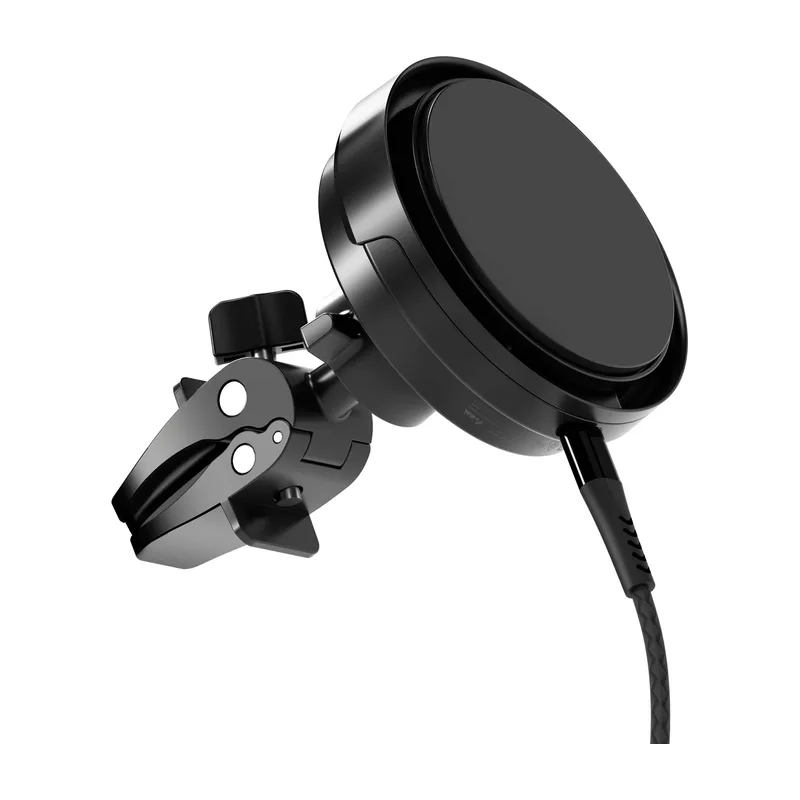
The Mous Qi2 vent charger and the Mous Car Vent Mount use clips of the same size, 57.4 x 45.3 x 32.6 mm and 32 g by Mous's own figures, so the extra cost is the charging head. At £44 more, you get up to 15 W for Qi2 phones, a 55 mm fan, a two year warranty and 132 g of assembled weight instead of 71.5 g. Spread over the warranty that is about £31.50 a year.
Charging in a car is slower than it sounds. Auto Express's 2024 group charged a Samsung S10 for 30 minutes idle and again while driving with a sat-nav app, and the combined figures ranged from 17 per cent to 40 per cent. TechRadar's 2024 review of the ESR HaloLock recorded a charge of an iPhone 13 Pro from 0 to 40 per cent in 30 minutes and noted that the phone gets warm. If the phone is on a sat-nav the whole drive, charging simply keeps it level.
Charging is not worth the extra if you already have a cable in the car, because a cable costs little and avoids a warm phone. It is worth it if you drive with the screen on for long journeys and want no cable to plug in each time.
Spring arms suit more phones than magnets, at the price of fiddling
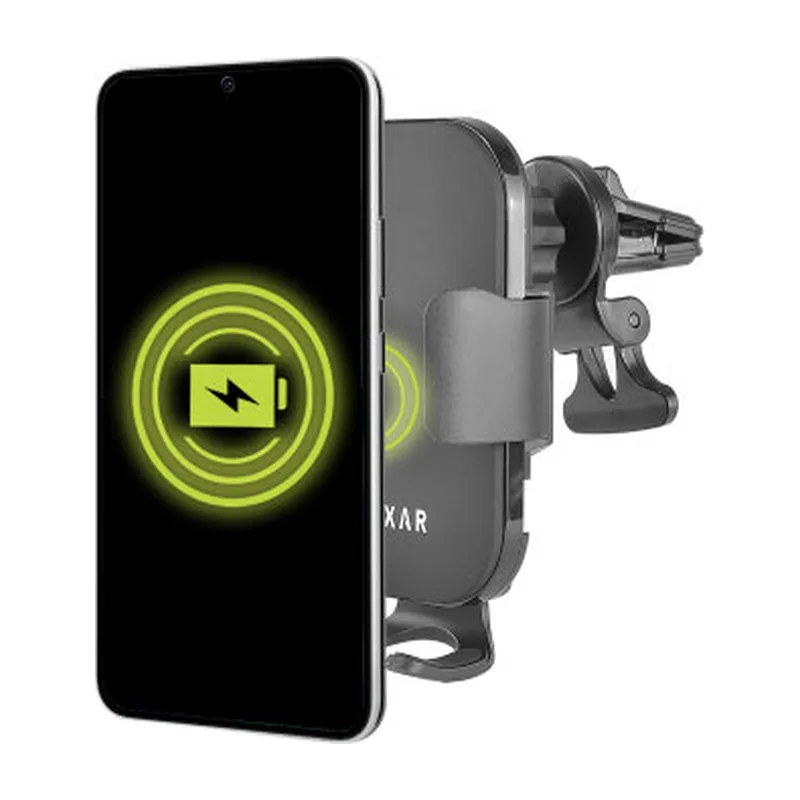
The Olixar's arms close by themselves when the phone is placed between them and open with side buttons, according to Auto Express and to reviewers at Mobile Fun. That suits most phones and cases and costs £10. The cost is bulk and a few complaints: one reviewer reports rattling when the cradle is empty, and several want a longer cable.
Magnets remove the moving parts, so the Mous mounts are smaller, but they need the right case. Quad Lock sits between the two: nothing to open, but a case that cannot be skipped. Auto Express's September 2025 group also noted that spring-arm holders such as the Halfords One Touch grip well only for phones that are not too big or in thin cases, so the arm's range matters.
A clamp is the wrong choice for a phone with a very thick case, and a magnet is the wrong choice for a phone with no case. Check the maximum width: Mobile Fun does not state it for the Olixar, so look at the version listed for your phone.
The law is about your hands, not about the holder
Rule 149 of the Highway Code says you must not hold and use a phone while driving, even if its communication features are switched off, and you must not pick it up to dial and then put it in a holder during the call. Exceptions are an emergency call to 999 or 112 when stopping is not safe, and a contactless payment while stationary. A mount does not change that: it exists so that the phone is never in your hand.
The same page warns that hands-free equipment can still distract and that it is safer not to use a phone at all while driving, and rule 148 lists reading maps and changing music or radio settings among distractions. A mount helps for a sat-nav set before a journey. It does not turn texting or scrolling into something allowed. We have not checked rules on where a device may be placed in the driver's view, so check the current guidance for your vehicle.
A mount is not for anyone who expects it to make using a phone at the wheel legal. For a journey, set the route first, mount the phone, and leave it alone.
Independent reviews of car phone mounts are thinner than the lists suggest
Only a handful of magazines describe using the mounts in cars. Auto Express rated eight wireless charging holders in 2024 and eight plain holders in 2025, CAR magazine used its picks in a 2018 Volvo V60, What Car? fitted eight holders to a Mini in 2026 and Expert Reviews fitted each to a small SUV in 2024 and used it for three days to a week. Macworld tried the Anker Prime in several cars. Each group covers different models, so a single model rarely appears in more than one.
That is why this ranking weighs customer ratings too. The Mous Car Vent Mount has 835 reviews, the Mous Suction Mount 438 and the Olixar 39 at Mobile Fun. Volume cuts both ways: a manufacturer's own shop collects the reviews and may not show the poor ones, so a count there is weaker evidence than the same count on a neutral site.
Star ratings in these groups spread widely, so read them against the price. In Auto Express's 2025 group the cheapest holders, at about £4.21 and £5.49, were rated four and 3.5 stars, while the Quad Lock at about £39.99 got 4.5 and the Mous suction mount at about £14.99 got five. In the 2024 group the ratings ran from five stars for the Baseus down to two for the Halfords wireless holder at about £17. A higher price did not guarantee a higher rating, which is why price is a separate criterion here.
The ranking is not for readers who want a measured hold force in newtons or a vibration figure, because none of the groups we read published one.
Frequently asked questions
What is the best car phone mount?
The Olixar 15W Windscreen, Dash & Vent Car Holder is our top pick at £10 from Mobile Fun. It mounts on the windscreen, dashboard or vent, clamps a phone without a magnet and charges at 15 W. The Mous Suction Mount at £17.99 comes second, with the strongest hold evidence and no charging. The ranking compiles published reviews and customer ratings.
Is a magnetic car phone holder better than a clamp?
A magnetic holder has no arms to open, but it needs a phone or case with a magnet. A clamp such as the Olixar works with any phone that fits between its arms. Mous quotes 35 magnets on its suction mount and 36 on its vent mount, but magnet counts cannot be compared between brands, so the case matters more than the number.
Does a MagSafe car mount work on Android phones?
Only with a magnetic case. Belkin's UK pages state that Samsung and Google phones need a Qi2 or MagSafe-compatible magnetic case, and Mous says phones in magnetic cases work with its vent mount. Full 25 W charging on the Anker Prime needs an iPhone 16 or 17, so an Android phone charges more slowly on it.
What does Qi2 mean for a car charger?
Qi2 is a wireless charging standard that Macworld discusses alongside MagSafe. Macworld notes that certified Qi2 or MagSafe chargers deliver 15 W, while models that are only MagSafe compatible deliver 7.5 W. The Mous Qi2 vent charger quotes up to 15 W for Qi2 phones and 7.5 W for older Qi phones in a magnetic case.
Do car phone holders damage air vents?
None of the sources we read reports vent damage. The risk is a poor fit: What Car? found a Miracase vent mount did not fit a Mini's vents and a Yosh mount blocked the vent. Anker says its charger needs blades 10 to 24 mm deep and does not fit Tesla, Mercedes-Benz or round vents. Check the maker's vent limits first.
Is it legal to use a phone holder in the car?
A holder is how you avoid holding the phone. Rule 149 says you must not hold and use a phone while driving, even with its communication features off, and you must not pick it up to dial and then put it in a holder. Rule 148 lists distractions such as changing music settings, so set the route before you set off.
Will a suction mount stay on the windscreen?
Auto Express called the Mous Suction Mount rock solid in September 2025, and rated the Quad Lock Suction Mount 4.5 out of 5 for holding steady on rough roads. Mous says its cup works on smooth, shiny surfaces and best on flat glass rather than curved areas. A curved patch of windscreen is the area to avoid.
Is wireless charging in the car worth it?
It is worth it on long drives with the phone on a sat-nav screen. In Auto Express's 2024 group the combined charge figures ran from 17 per cent to 40 per cent, and TechRadar noted that a phone gets warm while charging in a holder. A cable avoids both problems and costs little. The extra cost of charging on the Mous vent clip is £44.
Should I choose a vent mount or a windscreen mount?
Choose by your car. Vent clips depend on slat shape: What Car? found one did not fit a Mini, and Anker excludes Tesla, Mercedes-Benz and round vents. Suction cups need smooth glass or dashboard, and the Mous works best on flat glass. The Olixar is the only holder here that mounts on the windscreen, dashboard or vent.
Does a thick phone case affect a car mount?
It can. Expert Reviews found in 2024 that the ESR HaloLock gripped less well through a silicone case, and Auto Express says the Halfords One Touch grips well only for phones that are not too big or in thin cases. Mous lists compatible cases for its suction mount, and says its Limitless 3.0 case does not work with it.
How much should a good car phone mount cost?
The six here run from £10 to £79.99. The three non-charging mounts, Mous suction, Mous vent and Quad Lock, cost £17.99, £18.99 and £28. Quad Lock's price is for the mount alone, because Auto Express says the case and other extras can double the cost.
Which car phone holder suits a MagSafe iPhone?
For a MagSafe iPhone the Mous Car Vent Mount, the Mous Suction Mount or the Anker Prime all use magnets. Mous lists MagSafe and Qi2 phones, and the Anker Prime gives 25 W to an iPhone 16 or 17 according to Macworld. If you want charging as well, the Anker is the fastest and the Mous Qi2 vent charger the cheaper route.