In depth: dash cams explained
ANWB and TCS measured different things, so their scores cannot be added together
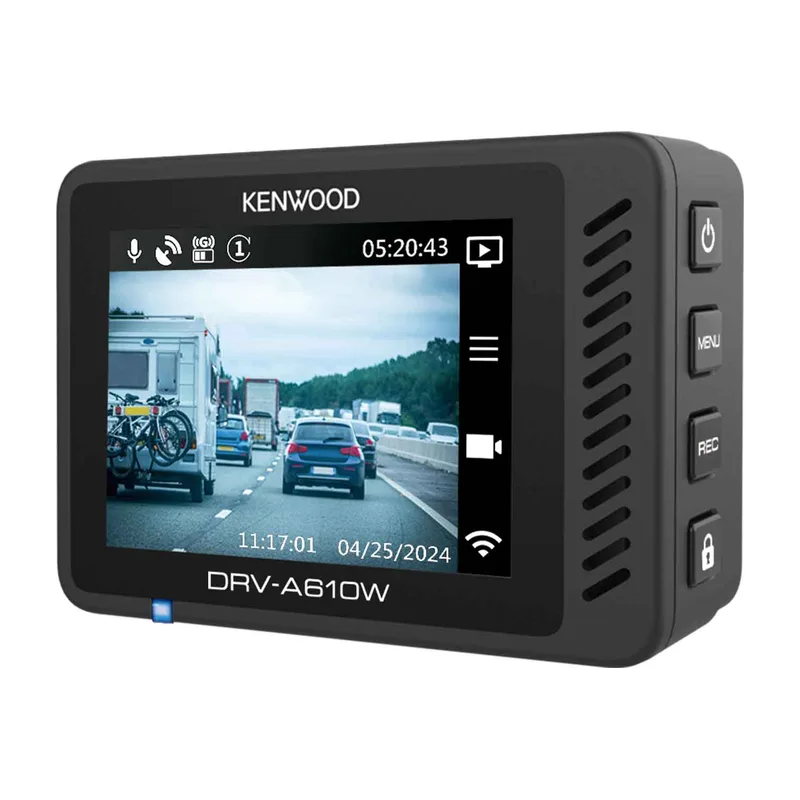
ANWB's Dutch ranking covers ten dash cams and scores each from 6.7 to 8.0, with separate marks for day and night. The Viofo A329S 2CH won with 8.0 (9.0 day, 8.0 night), the Kenwood DRV-A610W was second with 7.8 (8.5 and 7.5), and the Nextbase 622GW, which we could not include for stock reasons, scored 7.2. ANWB's pros for the winner were the best pictures day and night, the only 60 fps in the ranking and the most parking options; the page called the package quite expensive, and prices in the ranking were in euros.
TCS's Swiss comparison of seven models in 2025 uses percentages: Viofo A229 Pro 2CH 85, Vantrue N4 Pro 84, Viofo A119 Mini 2 79, Garmin Mini 3 76, Nextbase 522GW 72. The page lists strengths and weaknesses per camera in prose, but not the criteria weights, so we read the percentages as an overall ranking and nothing finer. A 79 from TCS and an 8.0 from ANWB are not on the same scale, and the two organisations did not test the same lineup. The A329S is not in TCS's list, and the A229 Pro is not in ANWB's.
This is why we scored picture quality by order and description rather than by averaging numbers. The A329S leads because ANWB's marks are the highest of any model here and the text says why. The A229 Pro 2CH follows because TCS put it first of its seven. The Kenwood and the A119 follow, and the A229 Plus 2CH comes last because it has no result of its own. Each of these placements is a judgement from two foreign sources, so a UK reader should treat the order of close neighbours as soft.
The A119 Mini 2 has the longest paper trail, and also the oldest
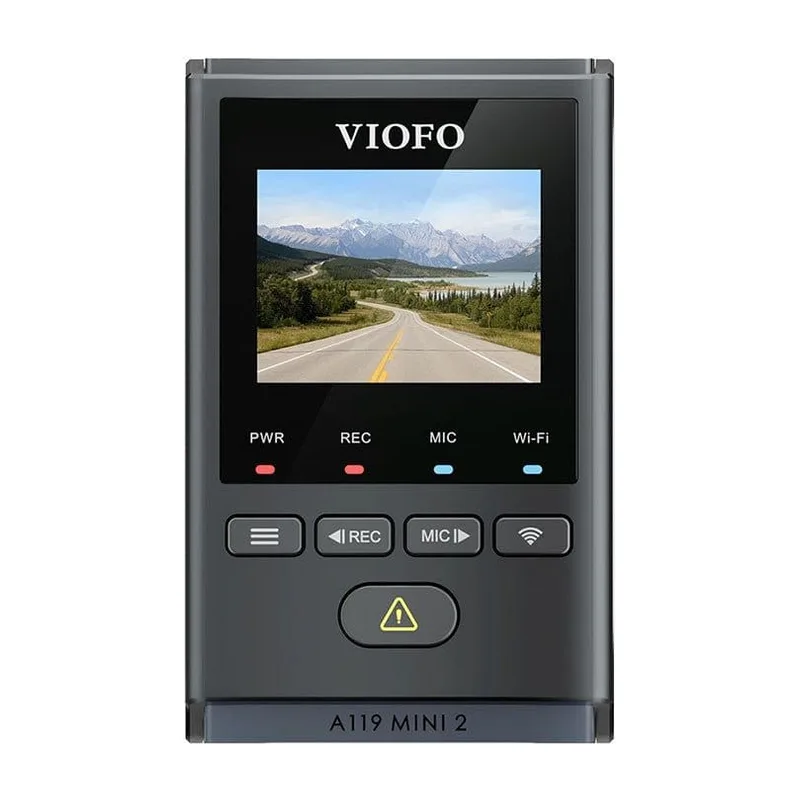
PCWorld's review of the A119 Mini 2 dates from August 2023, when the reviewer, Jon L. Jacobi, put the price at $149.99. He found day captures slightly favouring smooth over sharp, with more detail in bright conditions when the optional polariser is fitted, and good colour and decent handling of headlight flare in a night shot taken without it. He also found that the date was right while the time zone was wrong even with GPS, and that the mount is not adjustable. His verdict was that it competes well with Garmin's compact models.
TCS rated the same camera two years later, in 2025, at 79 per cent and CHF 119, listing good day and night footage thanks to the Sony STARVIS sensor, Wi-Fi app control and card support up to 512 GB among the strengths. Its weaknesses were the small display that cannot be swivelled and the front-only design. Two independent reviews two years apart that agree on most points make it the best-documented model here, and the UK price of £119.95 makes it the obvious budget choice.
The caveat is firmware. A review from 2023 describes the camera as it shipped then, and Viofo may have changed software since. TCS does not name a version beyond the model name either. If the time-zone quirk matters to you, it is a reason to check the camera's settings when you fit it, not a reason to avoid it.
Fitting is the other lesson from that review. The reviewer found the date correct but the time zone wrong, so a first-drive checklist makes sense: set the time zone by hand, confirm that the card is recording, and look at a short clip at full size on a computer rather than on the phone. A phone screen flatters every dash cam, and the first clip you review should be one that shows a number plate at some distance.
Kenwood against the A229 Plus 2CH: same price, opposite bets
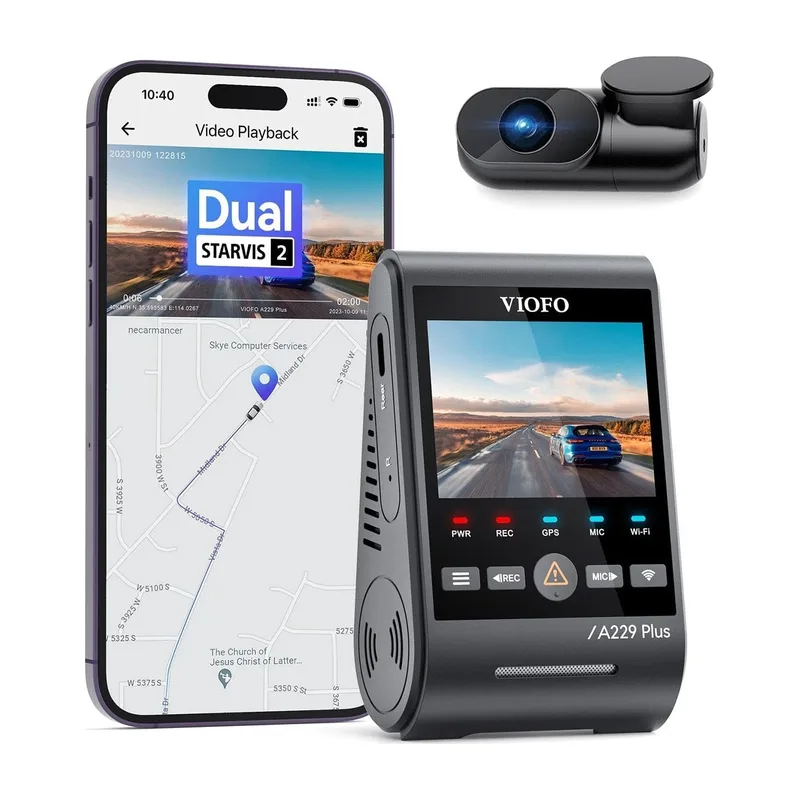
At £229.95 each, the Kenwood DRV-A610W and the Viofo A229 Plus 2CH are the cleanest either-or on the list. The Kenwood records 4K at 30 fps from one camera, includes a 64 GB card and weighs 65 g. The A229 Plus records 2K at 60 fps at the front and 2K at 30 fps at the rear, with a 2.4 inch display and voice control, and includes no card or filter.
If your priority is the widest evidence of what happened, including behind you, the A229 Plus gives you two angles at the same price, at the cost of a second cable. If your priority is the sharpest single view of the road ahead, the Kenwood has the independent result: ANWB ranked it second of ten, while no independent source we found covers the A229 Plus. That asymmetry decided the order. It is not a verdict that the Kenwood is better hardware, only that more is known about it.
One more difference is the add-on. Kenwood lists a KCA-R210 rear unit that would turn the Kenwood into a front and rear 4K and 2K system, although the add-on's price is not in our data. If it turned out to be cheap, the Kenwood would cover both jobs, and the A229 Plus would lose its main advantage. It is worth checking before you decide.
The A329S against the A229 Pro: £70 for 60 fps, Wi-Fi 6 and a faster transfer
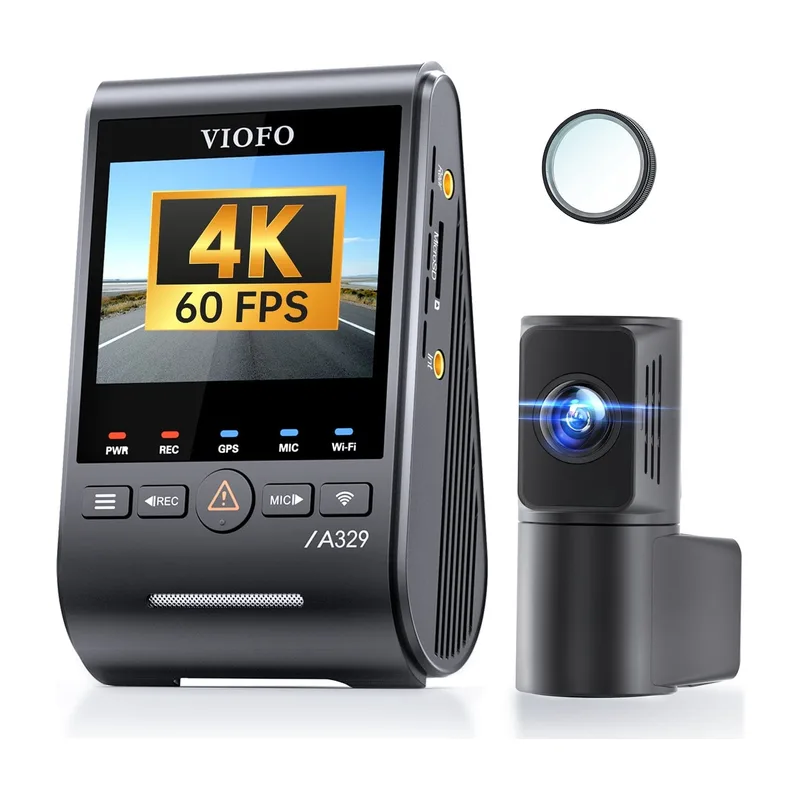
The two top Viofos share a lot. Both use an 8 MP Sony IMX678 at the front and a 5 MP IMX675 at the rear, both have 140 degree front and 160 degree rear lenses, both include a front polarising filter, both have a supercapacitor and both carry an 18-month warranty. The A329S adds 4K at 60 fps with HDR off, Wi-Fi 6, USB 3.0 transfer at up to 55 MB/s, GPS with BeiDou, Galileo and GLONASS, and Hybrid Parking behind the HK6 kit.
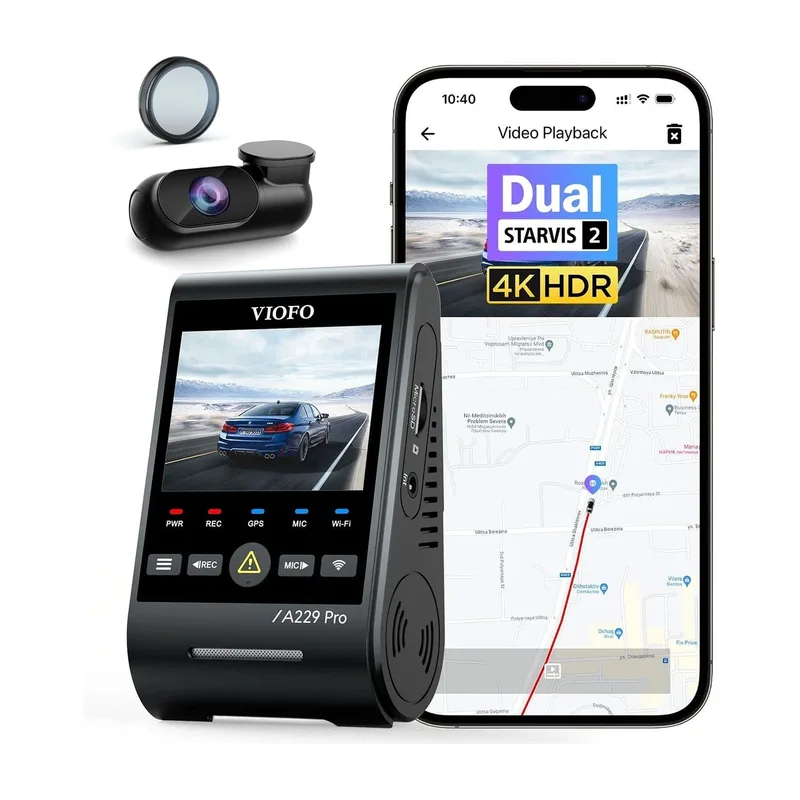
The A229 Pro 2CH has HDR on both cameras at 4K and 2K 30 fps, dual-band Wi-Fi and the HK4 kit for parking. TCS ranked it first in a field that did not include the A329S, so we do not know whether TCS would rank the A329S higher. ANWB ranked the A329S first in a field without the A229 Pro. Both are first in their own comparison, and the A329S costs £70 more. If you transfer large files often or park for long periods, that premium looks sensible. If you drive and review clips occasionally, the A229 Pro covers nearly everything.
Put in terms of a buyer's week, the A329S suits someone who uploads clips to a phone after every incident and wants the camera to keep watching for days on a hardwire kit. The A229 Pro 2CH suits someone who mainly wants the evidence and has no need for the faster link. Both need a card bought separately according to the listings, and both need a rear cable fitted. The extra £70 is the whole decision, and the evidence does not show a difference in picture quality that you could rely on, because the two cameras were never compared by the same organisation.
Buying guide: choosing the right dash cam
A front camera is enough for most commutes, and a Viofo pair costs £110 to £240 more than the cheapest front camera
The first decision is whether you want one camera or two, and the prices here make it concrete. The cheapest front-only model is the Viofo A119 Mini 2 at £119.95. The cheapest pair is the A229 Plus 2CH at £229.95, so the second camera and the better rear coverage cost £110 on that route. At the top, the A329S 2CH with a 2K rear camera costs £359.95, £240 more than the A119.
A rear camera earns its price if you park on a busy street, if you are rear-ended in queues or if you want evidence of what followed you. It earns less if your driving is mostly motorway miles with the road ahead as the main risk. The Kenwood DRV-A610W shows the middle path: it ships as a front camera and the manufacturer lists the KCA-R210 rear unit as an optional add-on for 4K front and 2K rear recording. You can start at £229.95 and add a rear camera later, though the add-on's price is not in our data, so do the sum in the shop.
Two-camera systems are not a free upgrade in effort. Both Viofo pairs have a rear unit with its own cable, and TCS, which ranked the A229 Pro 2CH first of seven in 2025, lists the more involved installation and the bulkier dual unit as its weaknesses. If you are fitting the camera yourself, a single unit that plugs into the cigarette-lighter socket is a simple afternoon, whereas a rear unit means routing a cable along the headlining to the tailgate. Where a front-only camera is the right call is a leased car you hand back, or one you share with a partner who dislikes visible wires.
A 4K label matters less than the frame rate and what HDR does to it
All five models list a 4K or 2K resolution that sounds like a clear ranking, but the details change the order. The Viofo A329S 2CH records 4K at 60 fps with HDR off and drops the front camera to 4K at 30 fps when HDR is on, according to Viofo UK. ANWB found it the only camera in its ranking that records at 60 fps, and gave it the best day and night marks (9.0 and 8.0). The A229 Pro 2CH records 4K at 30 fps with HDR, so the £70 between them buys the faster frame rate, Wi-Fi 6 and USB 3.0 transfer rather than a bigger picture.
Frame rate matters for readable number plates on passing cars, because fewer frames means a longer gap between captures. Sensor and processing count as much as pixels, which is why the Kenwood's 4K does not simply beat a 60 fps 2K camera. The Kenwood DRV-A610W has a 4K, 8.29 MP, 1/2.8 inch sensor with HDR at 30 fps; ANWB scored it 8.5 for day and 7.5 for night, which is half a point behind the A329S on both day and night.
The 2K models are not poor relations. The A119 Mini 2 records 2K at 60 or 30 fps from a Sony STARVIS 2 sensor, with HDR only at 2K and 30 fps. PCWorld described its footage as smooth rather than sharp, good enough for legal purposes, with good colour and detail in a night shot taken without the filter. TCS rated its day and night footage as good, and put it third of seven. The A229 Plus 2CH records 2K at 60 fps at the front, though without an independent result of its own we cannot say how it compares. If your sums say 4K is not worth £110 extra, the A119 is a sound answer, and the same argument turns around if you want to read a plate at some distance.
Every model here needs an extra kit before parking mode works properly
Parking mode is the feature that most often disappoints, because the camera needs power when the engine is off. All five listings say the full parking features need extra equipment. The A119 Mini 2, A229 Pro 2CH and A229 Plus 2CH need the HK4 hardwire kit or a Viofo battery pack. The A329S 2CH lists Hybrid Parking and battery cut-off behind the HK6 kit, and the Kenwood needs the CA-DR1130 hardwire kit. None of these prices is in our data, so budget for it before you compare camera prices.
What you get after that differs. The Viofo models offer buffered event detection, which records the seconds before an impact; the A119 Mini 2 is listed at 15 seconds before and 30 after. They also offer time-lapse recording at 1, 2, 3, 5 or 10 fps and a low-bitrate mode. The A329S 2CH adds Hybrid Parking and Low Power Impact Detection, which needs a card inserted, and ANWB gave it the most parking options of its ranking. The Kenwood offers vibration, motion or time-lapse. PCWorld's reviewer found that an OBD-II power source also worked for the A119 Mini 2, since the camera only needs to sense voltage, although Viofo states the hardwire kit is required.
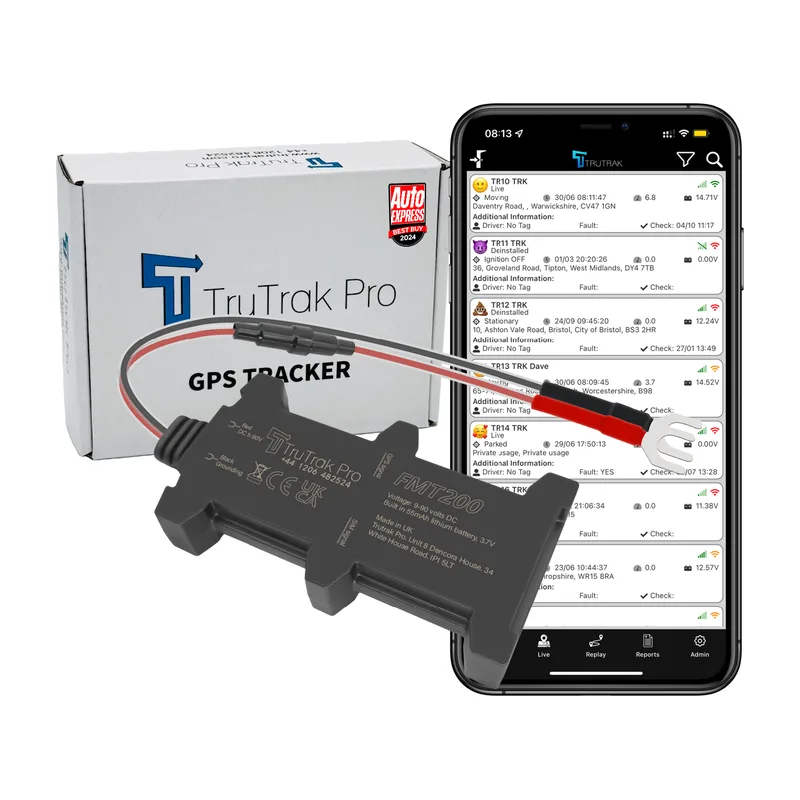
If you will park the car for days at an airport or leave it on a street where it is often bumped, parking mode becomes a core feature and it tips the choice towards the A329S. If your car is mostly in a driveway, it matters much less, and the money is better spent on picture quality. A related option is a separate tracker: our guide to the best car GPS tracker at /car-bike/gps-tracker-for-car/ covers locating a stolen car rather than recording what happened.
A supercapacitor is a better bet in a hot car than a lithium battery
A dash cam sits against the windscreen, where cabin heat peaks, and the power reserve inside it matters. Viofo lists a supercapacitor and no internal lithium battery on all four of its models here, and quotes an operating range of -20 to 65 degrees Celsius for the A329S. TCS singled out the supercapacitor on the A229 Pro 2CH as keeping it reliable in heat. The Kenwood's listing does not state its power reserve, so we cannot say how it compares and have scored it neutrally on that point.
The practical difference is what happens at the end of a drive. A supercapacitor takes the place of the small battery that some cameras use. If you live somewhere with hot summers or leave the car in the sun, that is a factor. If your car stays in a garage, it is less important. The manufacturer's figure is the only evidence here, because neither ANWB nor TCS measured heat behaviour in a way we could read.
The same logic applies to the screen. The A119 Mini 2 has a 1.5 inch LCD, which TCS criticises as small and not swivelling. The three Viofo pairs list 2.4 inch displays and the Kenwood a 2.0 inch colour screen. If you want to review footage on the camera itself and not on a phone, any of those four is better placed than the A119.
The memory card is the line on the bill that most buyers forget
Only the Kenwood DRV-A610W includes a card, a 64 GB microSDXC, and the camera accepts 8 GB to 256 GB. The Viofo A119 Mini 2 lists the card as not included, ANWB notes the A329S ships without one, and Viofo UK lists the A229 Pro 2CH and A229 Plus 2CH as sold without one. The Viofo models take up to 512 GB, eight times the Kenwood's included card, and the A329S also accepts an external SSD up to 4 TB sold separately. We have no verified card prices, so we do not add them to the totals.
Capacity matters if you record continuously and want days of footage, and it matters less if the camera overwrites the oldest files and you save incidents when they happen. Viofo recommends high-endurance cards on the A229 Plus 2CH listing, and since a dash cam writes all day, ordinary cards wear faster. Whatever the model, check now and then that the camera is still recording, because a card that has stopped writing is an easy way to lose the footage you need.
On the sums, a Kenwood at £229.95 with a card in the box is cheaper in practice than its price gap suggests, and the A119's lead over it of £110 shrinks once you buy a card for it. The size of that shrinkage depends on a card price we have not verified, so we leave it out of the ranking.
A polarising filter is in the box on two Viofos and an extra on the others
A polarising filter cuts the reflection of the dashboard on the windscreen, and it is the cheapest picture improvement on a dash cam. The A329S 2CH and A229 Pro 2CH include a front CPL-200 filter. The A119 Mini 2 sells its CPL-100 separately, and the A229 Plus 2CH sells the CPL-200 and CPL-300 separately. The Kenwood's listing does not state a filter. The rear cameras mostly look through a smaller, shaded window, so the optional rear filters (CPL-300 on the A229 Pro and CPL-600 on the A329S) are a lower priority.
PCWorld's reviewer is the useful voice here. He found that the optional filter improved the A119 Mini 2's daytime captures, because detail in bright areas can suffer without it, and he advised leaving it on, since swapping it in and out is a pain and the daytime gain outweighs a slight loss of brightness at night. That is a reminder that a filter is a trade-off: it helps in daylight and costs a little light in the dark. If you commute in daylight, it is worth fitting. We have no price for any of the filters, which matters when comparing the A119 with the A229 Pro.
Warranty terms are close, and the Kenwood's is the shortest
Viofo UK lists an 18-month warranty on all four of its cameras here, extendable to 24 months with registration, plus a 30-day money-back guarantee on the pages that state it. The Kenwood UK shop lists a one-year warranty on parts and labour, with an optional three-year extension at a price that is not stated. On paper that is a six-month gap, or twelve months if you register the Viofo.
The warranty matters because a camera that lives behind a windscreen takes heat and vibration every day. If you want maximum cover on a four-year ownership plan, the Viofo terms start from a better place. The Kenwood's counter-argument is the shop it comes from: a manufacturer-run UK shop, with 12 items left on the day we looked and a delivery time that is not stated. Viofo UK shows hundreds in stock for each model, which we count as a better sign of steady supply.
No source we read followed reliability over years, so warranty terms are a stand-in for confidence rather than evidence of it. Treat them as one input among several, and buy from a shop with a clear returns policy, because a returns window is the only safeguard that applies if the footage turns out poorer than you hoped.
Stock counts and delivery terms tell you which shop is easiest to buy from
Stock was the filter that shaped this list. Viofo UK showed 198 of the A329S 2CH, 269 of the A229 Pro 2CH, 255 of the A119 Mini 2 and 206 of the A229 Plus 2CH on the day we looked, and Cen.uk listed the same four at the same prices. The Kenwood UK shop showed 12 items left. Nextbase's own UK shop listed every dash cam on its range page as sold out, which is why none of its cameras appear here even though TCS ranked the 522GW fifth of seven and ANWB placed the 622GW seventh of ten.
Delivery terms are thinner than the stock counts. Viofo UK says it ships across the UK by Royal Mail without naming a timescale, and the Kenwood shop offers free DPD delivery to mainland England, Wales and Scotland only, with no delivery time stated. If you live in Northern Ireland or on an island, read the Kenwood shop's terms before you order. If you need the camera before a long trip, ask the shop for a delivery date, because none of the listings gives one.
A manufacturer's own shop is not automatically the cheapest. We checked Cen.uk against Viofo UK for four of the models and found identical prices, so there was no cheaper verified shop for any of them. For the Kenwood we found no second UK shop with a readable price. Large retailers such as Argos, Currys and Amazon could not be read automatically, so a lower price may exist there that we cannot verify, and we do not rank on unverified prices.