In depth: cat gps trackers explained
Three reviewers, three very different cats
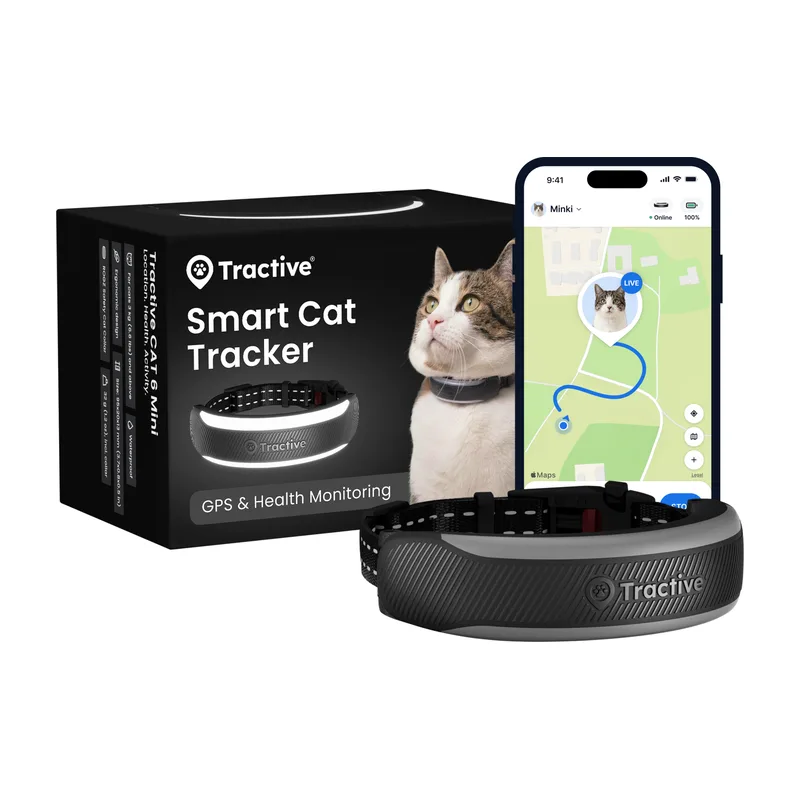
The independent evidence for this category is thin and uneven, and it helps to know what each review actually covered. The cats.com review of the Tractive CAT 6 Mini, published in September 2026, was carried out on an indoor cat. The reviewer could check that the collar was comfortable, that Radar mode found the cat around the house and that the map followed the collar when a family member drove away with it, but not how the tracker copes with a cat moving through gardens and over walls. cats.com also states that it received the product free.
The cats.com Pawfit Lite review from August 2026 used outdoor cats, which makes its findings on lag in weak signal areas and the reasonably accurate positions in open ground more relevant to a typical British outdoor cat. The Irish Times review of the Weenect XS from February 2024 is the only one of the three by a newspaper reviewer, on her own young rescue cat, and the most critical: positions sometimes landed a field away or several houses off, better in clear weather and poor indoors.
Tek.no's Norwegian group review sits further back. Its cat verdicts date from 2021, and the Weenect XS and MiniFinder Atto it covered were used on dogs. The Weenect came out well for precision and less well for customer service; the MiniFinder was rated weakest for tracking with a buggy app. Because that is more than four years old and whether the Atto has changed since is not stated, it informs this page but does not settle the MiniFinder's place on its own.
Taken together, the reviews support the order at the top, with Tractive and Pawfit drawing on 2026 use and Weenect on 2024, but none of them measured battery life on a roaming cat or timed an escape alert. Those gaps are why the battery and alert criteria still lean on manufacturer figures.
Gato or Atto: the newer MiniFinder is the better cat tracker
MiniFinder sells two cat trackers, and on the specifications the Gato wins most comparisons. Both quote 35 hours at a five-minute interval, 0 to 5 metres under open sky, IP67 and a three-year warranty, and both run on the same MiniFinder Live plans at 84 euros a year for Basic. The Gato weighs 27 g to the Atto's 39 g and measures 40 x 18 mm against 65 x 35 x 16 mm, and it costs £60 less.
The Atto's advantages are evidence and extras. It has 30 reviews averaging 4.97 out of 5 in MiniFinder's shop against the Gato's 7 at 4.43, and an LED that shows GPS, LTE and power status. Its 850 mAh battery is more than twice the Gato's 400 mAh, yet MiniFinder quotes the same runtime, so the larger cell does not buy longer use on paper.
For a cat of average size, the Gato makes more sense: lighter, smaller and cheaper, with the same plans. The Atto suits an owner who wants a tracker with a longer track record in MiniFinder's shop and a cat comfortably above 3 kg. Neither escapes the main drawbacks, the daily charging and the euro plans, which is why both sit below the three top trackers. MiniFinder also sells the Atto Pro, the dog version of the same hardware, at the same price; for a cat the Atto or the Gato is the one to buy.
Charging, cleaning and collar checks keep the tracker on the cat
A tracker on the charger or in a hedge protects nothing, so the routine around it matters as much as the specifications. Weenect says a full charge of the XS takes two hours and that no mains adapter is supplied, only the magnetic cable, with a 5 V 1.5 A adapter required. Tractive supplies a magnetic charging cable with the CAT 6 Mini, and MiniFinder sends low battery warnings through its app on both plans.
Waterproof ratings describe rain and puddles, not a habit. IP68 on the Tractive, Weenect and Pawfit means the makers rate them beyond 1 metre of water, with Weenect stating 1.5 metres for 60 minutes and Pawfit 3 metres for 30 minutes. IP67 on the MiniFinder pair and the AirTag is the standard rating for 1 metre for 30 minutes. For a cat that only walks through wet grass, either is enough; for a cat that falls into ponds, the IP68 trackers have more margin.
Guarantees vary widely. Weenect offers a lifetime guarantee on manufacturing defects, repairing or swapping for a refurbished unit, and a long-term Weenect customer reports one repair that took several weeks. MiniFinder gives three years and one Atto owner in its shop mentions a loan unit while theirs was serviced. Pawfit gives 18 months; Tractive and Apple state no period on the pages consulted.
Check the collar weekly whichever you choose. Elastic bands stretch and, according to one Weenect owner, eventually break, and a breakaway clasp that has been opened many times can loosen. A tracker found in a hedge with the collar still attached is a nuisance; one lost with it is a gap in protection until a replacement arrives.
Buying guide: choosing the right cat gps tracker
The plan costs more than the tracker within a year
Every GPS tracker here carries a SIM card and needs a plan before it shows a position, and on four of the five the plan overtakes the tracker within twelve months. The Weenect XS costs £23.99 on its current offer, while its yearly plan works out at £6.67 a month; by the fourth month the service has cost more than the device. The Pawfit Lite at £42 follows the same pattern on its £71.88 Basic year. Only the MiniFinder Atto, at £110 against 84 euros a year, keeps the hardware as the bigger cost for longer.
That makes the commitment period the real choice. Rolling monthly plans exist from Weenect at £13 and Pawfit at £9.99, which over two years would come to £312 and £239.76 respectively, roughly double the prepaid two-year plans of £110.16 and £95.76. Monthly billing only makes sense if you are unsure the cat will tolerate a collar at all; once it does, the prepaid plans save money. Tractive offers no monthly plan, so with the CAT 6 Mini you commit to a year at £84 or two years at £108 from the start, with a 30-day refund if it does not work out.
Plan tiers matter too. Tractive's Basic keeps 24 hours of location history and leaves out family sharing; Premium at £150 for two years adds both and raises the CAT 6 Mini's two-year total from £167 to £209. Pawfit's Premium mostly buys Ordnance Survey maps and longer walk recordings. MiniFinder puts a full year of history and sharing in Basic, but reserves global coverage for Premium, and its plans are quoted only in euros, so the pound cost moves with the exchange rate and your card provider's fees.
The AirTag avoids all of this at £29 with no plan. That is a fair trade only if you accept a tag rather than a tracker, which a later section explains. For a cat that roams beyond the houses around you, budget for the plan from the outset and compare the two-year totals in the summary above rather than the shelf prices.
A few grams matter more on a cat than on any dog
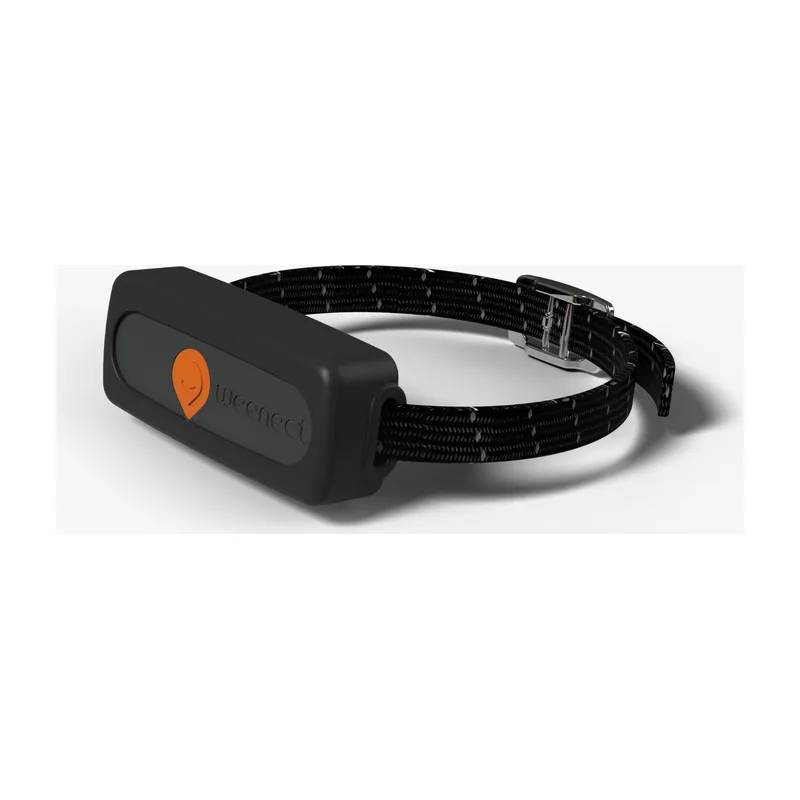
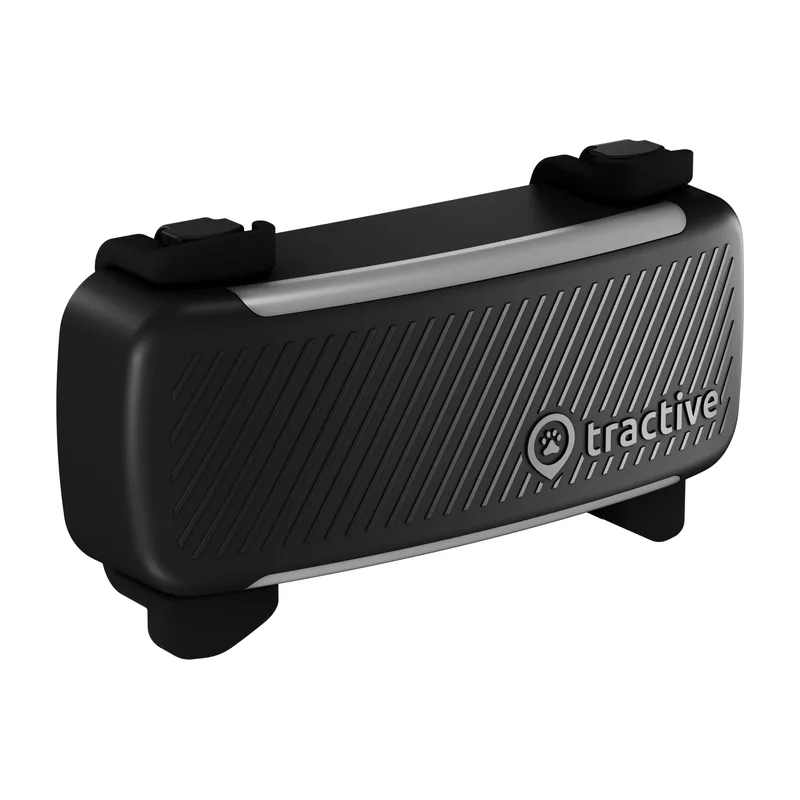
A tracker that suits a spaniel can be a burden on a 3.5 kg cat, which is why weight carries a fifth of the score here rather than being folded into durability. The range in this comparison runs from 11.8 g for the AirTag before its holder to 39 g for the MiniFinder Atto before any collar. Between them sit the Pawfit Lite at 17.6 g, the Weenect XS and MiniFinder Gato at 27 g each and the Tractive CAT 6 Mini at 32 g, a figure that already includes its collar.
Makers give useful floors. Tractive designs the CAT 6 Mini for cats of 3 to 8 kg, Weenect says the XS fits cats from 3 kg and MiniFinder recommends the Atto from 3 kg; Pawfit lists the Lite as best for pets over 2.7 kg and MiniFinder states no minimum for the Gato. None of the five GPS trackers is pitched at cats much below 3 kg, so a young cat may need to wait. Cats.com advises against the CAT 6 Mini for cats under about 7 lb, which is in line with Tractive's own floor.
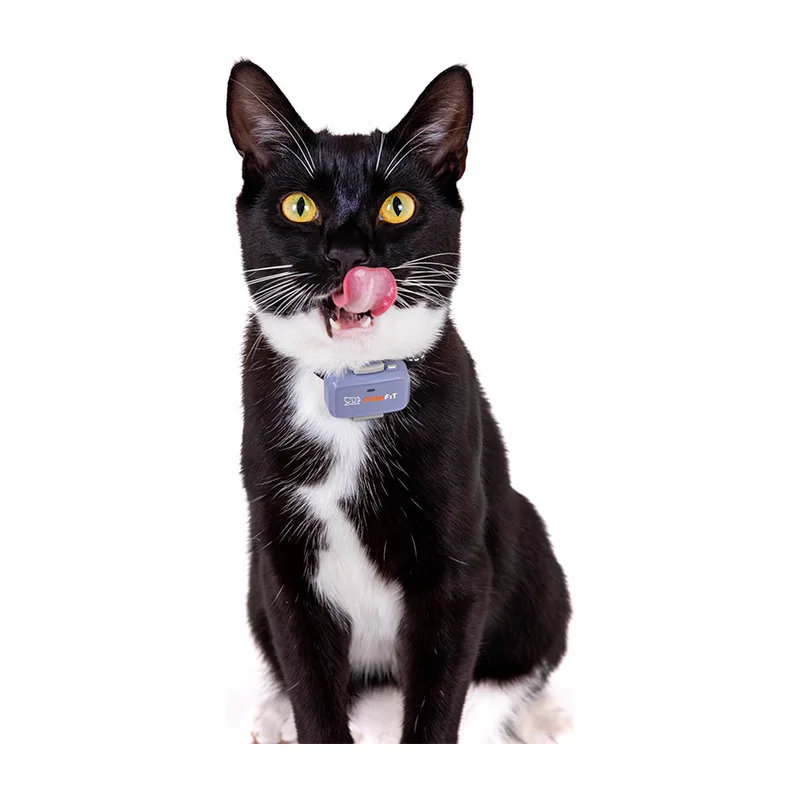
Size matters as much as grams. The Atto's 65 x 35 x 16 mm case is a large block under a small chin, while the Gato's 18 mm width and the Pawfit's 41.5 x 25 mm case sit closer to the size of a large collar tag. For a slim, fine-boned cat the best cat GPS tracker is usually the lightest one with an acceptable battery, which points to the Pawfit Lite; for a heavy outdoor tom over 8 kg, the CAT 6 Mini is the one model that may simply not fit.
The heaviest models suit a different buyer. The Atto makes sense for a large, calm cat whose owner values MiniFinder's three-year warranty over grams, and the CAT 6 Mini's collar spreads its 32 g around the neck rather than hanging it under the chin. A tracker that keeps slipping round to the throat, as clip-on units can on a loose collar, is uncomfortable whatever it weighs, so check the fit as the makers' instructions describe. If you also have a dog, our comparison of dog GPS trackers at /pets/dog-gps-tracker/ covers heavier units with longer batteries that would be wrong for a cat.
A collar that does not let go is the bigger risk
A tracker is only as safe as the collar holding it, and the six products here handle that very differently. Tractive builds the CAT 6 Mini into its own collar with a safety release, so the tracker cannot slide round or be fitted to an unsuitable collar; the downside is the fixed neck range of 19 to 22.9 cm. Weenect supplies an elastic collar designed to let a snagged cat pull free, plus a silicone case if you prefer your own. Pawfit includes a quick-release collar that comes undone when tugged hard.
MiniFinder takes the other route. The Gato clips to most existing collars and the Atto attaches to the collar your cat already wears, with a £7 cat collar sold separately; whether that collar has a safety release is not stated on the product pages. If you buy a MiniFinder, choose a breakaway collar yourself and check that the added weight still lets it open. The same applies to the AirTag, which needs a holder bought separately.
Fit is also about acceptance. The cats.com reviewer's Pawfit cat, which normally wears no collar, objected at first and settled after a short time, and Weenect owners on its own product page mention cats tolerating the size and weight. One long-term Weenect customer reports that the elastic bands eventually break, so a spare collar is a sensible small purchase whatever you choose.
A collar integrated tracker such as the CAT 6 Mini does not suit a cat that already wears a microchip cat flap tag or a collar you want to keep, because the whole collar has to change. In that case a clip-on design like the Gato or the Weenect's silicone case is the easier swap.
Battery claims assume your cat sleeps at home
Every headline battery figure here is measured at the kindest setting the maker offers. Tractive's 7 days for the CAT 6 Mini depend on a power saving zone at home, a wifi or Bluetooth anchor that lets the tracker rest while the cat is indoors; without it the claim is 4 days. Weenect's 7 days for the XS likewise rely on wifi zones and fall to about 2 days of continuous tracking. A cat that spends most nights out will see figures nearer the lower number.
MiniFinder is more literal and quotes 35 hours at a five-minute update interval for both the Atto and the Gato, which sounds worse than the others partly because it describes a cat that is always being tracked. Even so, one Gato owner in MiniFinder's shop had 31 per cent left after 16 hours, so a daily charge is realistic. Pawfit's up to 3 days for the Lite sits in between, and the cats.com reviewer notes that live tracking drains it faster.
Turn those figures into a routine. Over a month, a CAT 6 Mini with a home zone needs about four charges, a Weenect XS between four and fifteen depending on how much the cat roams, a Pawfit Lite ten or more and a MiniFinder about twenty. Each charge means catching the cat and taking the tracker off, and every hour it spends on the charger is an hour without protection, so a cat that likes to slip out at dusk is better served by the longer runtimes.
Long life is not everything, though. The AirTag's year on a coin cell is unbeatable, but it reports only when an Apple device passes, so the battery figure says nothing about how often you will actually see your cat's position.
GPS needs signal from the sky and from a mast
Each cellular tracker works out where it is from satellites and then sends that position over the mobile network, so it needs both a clear view of the sky and phone signal. That is why reviewers report weak spots indoors and under cover: The Irish Times found the Weenect XS unreliable inside, and the cats.com Pawfit reviewer saw lag where coverage was weak. A cat asleep in a neighbour's shed or under a car may show an old position or a wide circle.
Close-range modes fill the gap. Tractive's Radar mode and Pawfit's Find Nearby use Bluetooth to guide your phone to the cat once you are close, and the Weenect's ring, vibrate and flashlight help you spot it in a hedge at night. MiniFinder lists an LED on the Atto, but a light or sound for finding the cat is not stated for the Gato.
Network names matter in rural Britain. Weenect is the only maker here that names its UK operators, Vodafone, EE and Telefónica, and a multi-network SIM can fall back to whichever is strongest. Tractive and Pawfit describe multi-network access without naming operators, and MiniFinder states neither the network nor which countries its Basic plan covers. If you live where one operator is weak, a tracker that roams across several gives you a better chance; ask the maker before buying if the product page is silent.
None of this helps an AirTag in open country. It has no GPS and no SIM, and relies on Apple devices passing within Bluetooth range, so it suits a cat that roams between terraced houses far better than one that hunts along field margins.
An AirTag answers a different question from a GPS tracker
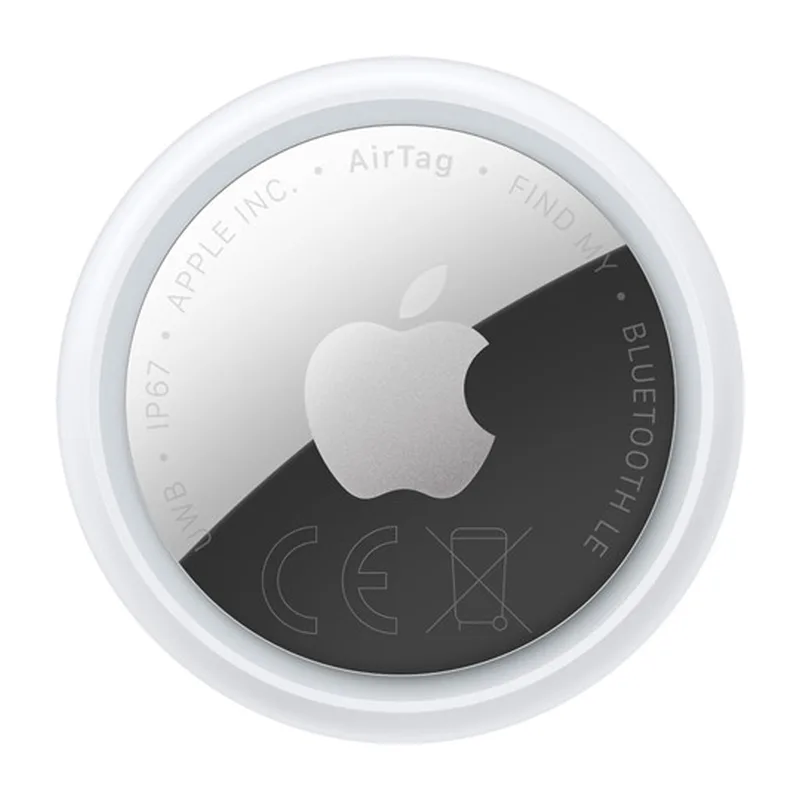
Many owners search for a cat tracker with no subscription, and the honest answer is that a true GPS tracker needs a SIM and therefore a plan. The AirTag at £29 is the common alternative, and it does some things well: it weighs 11.8 g, runs more than a year on a replaceable coin cell, and Expert Reviews measured more than double the first generation's finding range in February 2026.
What it cannot do is tell you where your cat is right now. It updates only when an iPhone or other Apple device passes close by, shows no live trail and has no virtual fence, so you will not get an alert as the cat leaves the garden. Apple markets it for keys and bags, and an Android household cannot use it at all.
It fits one situation reasonably: an indoor cat in a built up area that occasionally slips out and is usually within a few streets of home. For an outdoor cat that roams, the best cat GPS tracker is still a cellular one, and the gap in two-year cost between the AirTag and the Weenect XS, £105.15, is what you pay for live positions and escape alerts.
If cost is the main worry, the Weenect XS on a two-year plan is the cheapest way into live tracking here, and the Pawfit Lite is close behind at £137.76 over the same period. Put another way, the step from no plan to live tracking is about £4.59 a month with Weenect, and the step from Weenect to the CAT 6 Mini a further £32.85 over two years for a longer battery, an integrated collar and a fuller app.
Frequently asked questions
What is the best cat GPS tracker in the UK?
The Tractive CAT 6 Mini is our top pick: it weighs 32 g including a safety release collar, runs up to 7 days per charge with a home power saving zone and was the top choice in cats.com's 2026 guide. The Weenect XS is the cheaper alternative at £134.15 over two years, and the Pawfit Lite is the lightest GPS option at 17.6 g.
Is there a cat GPS tracker with no subscription?
Not among true GPS trackers, because each one carries a SIM card that needs a plan to send positions to your phone. The Apple AirTag costs £29 with no plan, but it relies on passing Apple devices rather than GPS, so it shows no live position and sends no escape alerts.
How much does a cat GPS tracker cost per month?
On a two-year prepaid plan, Pawfit Basic works out at £3.99 a month, Tractive Basic at £4.50 and Weenect at £4.59. Rolling monthly plans cost more: £9.99 with Pawfit and £13 with Weenect, while Tractive offers no monthly option. MiniFinder bills 7 euros a month on a yearly Basic plan or 9 euros month to month.
How heavy can a cat tracker be?
The makers set the limits rather than a general rule: Tractive designs the CAT 6 Mini for cats of 3 to 8 kg, and Weenect and MiniFinder recommend their trackers from 3 kg. In this comparison weights run from 17.6 g for the Pawfit Lite to 39 g for the MiniFinder Atto, so a small cat is better served by the lighter end.
Can I use an AirTag on a cat?
You can attach one with a separately bought holder, but Apple sells AirTag for items such as keys and bags. It only updates when an Apple device passes within Bluetooth range, which works in busy streets and poorly in the countryside. It needs an iPhone, and it should only go on a breakaway collar.
Do cat GPS trackers work indoors?
Poorly, because GPS needs a view of the sky. The Irish Times found the Weenect XS unreliable indoors, which is why several trackers add Bluetooth modes for close-range searches: Tractive's Radar mode and Pawfit's Find Nearby guide your phone to the cat once you are nearby.
How long does a cat GPS tracker battery last?
Makers quote up to 7 days for the Tractive CAT 6 Mini and the Weenect XS, both with a power saving zone at home, up to 3 days for the Pawfit Lite and 35 hours at a five-minute interval for the MiniFinder Atto and Gato. Live tracking shortens all of these, and without a home zone Tractive quotes 4 days and Weenect about 2.
Will a cat GPS tracker work in rural areas?
Only where there is mobile signal, because positions are sent over the phone network. Weenect is the only maker here that names its UK operators, Vodafone, EE and Telefónica. The other makers describe multi-network access without naming operators, so ask before buying if one network is weak where you live.
Are GPS cat collars safe?
They are safest on a collar that releases when caught. Tractive builds the CAT 6 Mini into a safety release collar, Weenect supplies an elastic anti-strangulation collar and Pawfit includes a quick-release collar. MiniFinder's trackers fit your own collar, and whether its £7 cat collar has a release is not stated, so choose a breakaway collar yourself.
Can I track two cats on one account?
Yes with all four GPS brands here, but every tracker needs its own subscription because each has its own SIM. Weenect allows unlimited trackers on one account and Pawfit up to 20 pets. Family sharing is included on Pawfit and MiniFinder plans, while Tractive reserves it for Premium.
Do I need a GPS tracker if my cat is microchipped?
A microchip and a tracker do different jobs. The chip lets a vet or rescue identify the cat and contact you once it has been found, while a GPS tracker shows where the cat is before anyone finds it. Weenect makes the same point on its product page, and none of the trackers here replaces the chip.
Tractive or Weenect for a cat?
The Tractive CAT 6 Mini has the better app, an integrated collar and longer quoted battery life, and it ranks first. The Weenect XS costs £32.85 less over two years at its current price, names its UK networks and carries a lifetime guarantee, but The Irish Times found its positions sometimes well off.