Product comparisons built on facts 52 comparisons, open criteria and named sources

ProductPick

Best power bank 2026

The best power bank for most people is the Anker Laptop Power Bank 25K (A1695), our top pick at £89.98: 25,000 mAh, three 100 W USB-C ports and two built-in cables, with 70 W recorded into a laptop by Expert Reviews. The budget choice is the INIU Pocket Rocket P50 at £32.99. This ranking compiles published reviews, manufacturer specifications and UK shop prices checked on 19 November 2026.

We don't test the products ourselves. The scores are based on manufacturer information, independent tests and customer reviews, weighted by open criteria. How we compared

Anker Laptop Power Bank 25K 165W (A1695)

Our top pick

Anker Laptop Power Bank 25K 165W (A1695)

7.9out of 10

Suits you if you travel with a laptop, a phone and a console and want one 25,000 mAh bank with its own cables; it is too bulky for a jacket pocket.

  • Two built-in cables and three 100 W USB-C ports
  • 70 W into a laptop in Expert Reviews' readings
  • £3.60 per 1,000 mAh, far below the Prime
£89.98 at Anker UKView price at Anker UK

More recommendations

The ranking: all 5 power banks

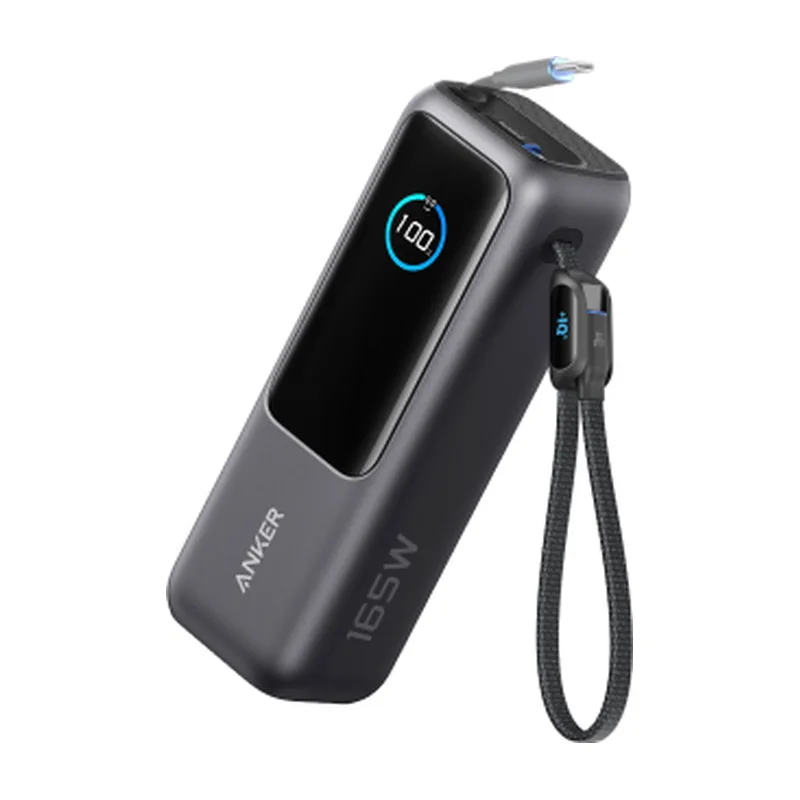
  1. 1Our top pickAnker Laptop Power Bank 25K 165W (A1695)Suits you if you travel with a laptop, a phone and a console and want one 25,000 mAh bank with its own cables; it is too bulky for a jacket pocket.7.9out of 10£89.98View price at Anker UK
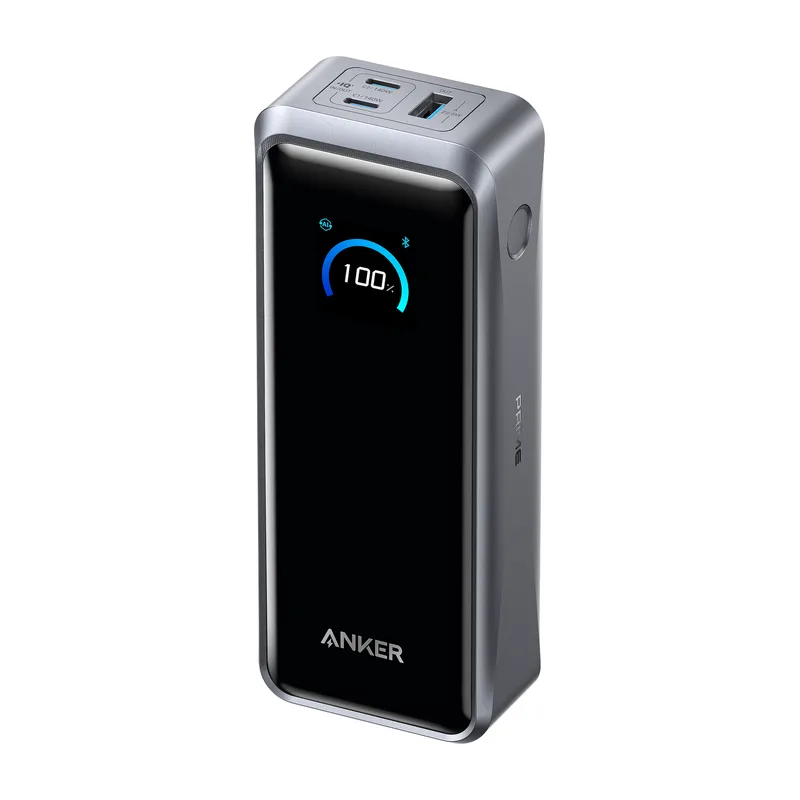
  2. 2Highest outputAnker Prime Power Bank 26K 300W (A110A)Suits you if you charge a laptop and a phone at once and want a bank that refills almost fully in half an hour; it is the dearest model here and not a pocket item.7.1out of 10£179.99View price at Anker UK
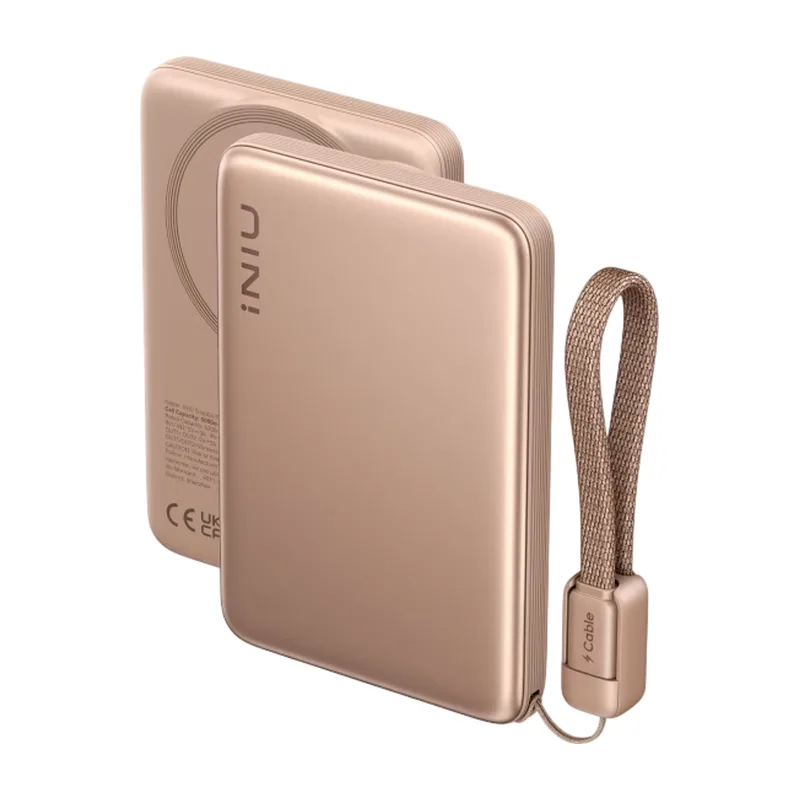
  3. 3Best for iPhoneINIU SnapGo Air 10000mAh Qi2.2 (P781)Suits you if you own a recent iPhone or another Qi2.2 phone and want a thin 10,000 mAh bank that charges wirelessly; wireless speed disappoints on slower Android phones.7.0out of 10£49.99View price at INIU UK
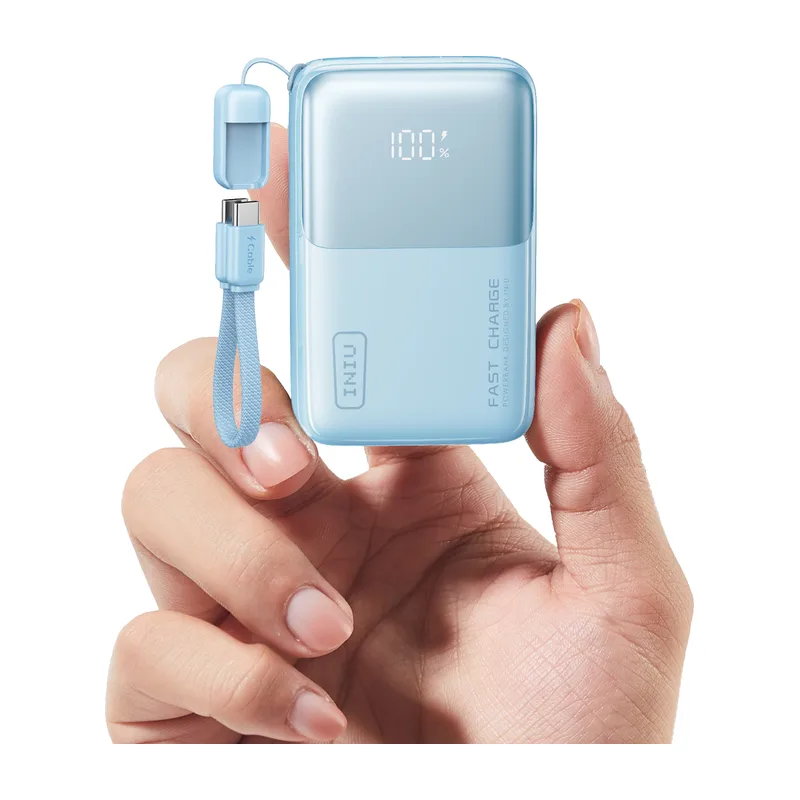
  4. 4Best valueINIU Pocket Rocket P50 10000mAh 45W (P50-E1)Suits you if you want the cheapest and lightest bank here for phones and earbuds and can accept that no review we could read recorded its output.6.9out of 10£32.99View price at INIU UK
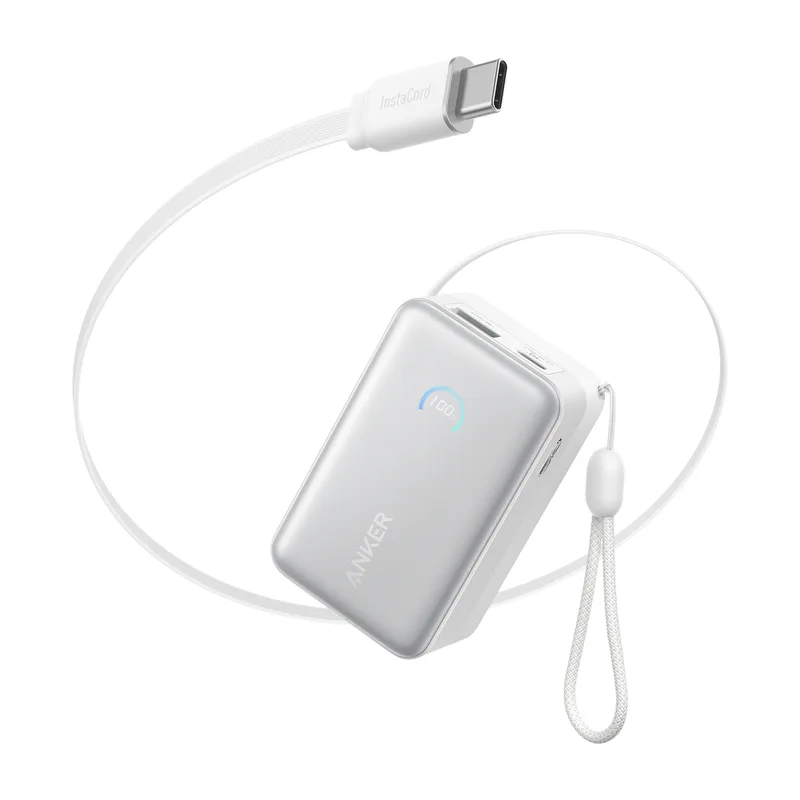
  5. 5Anker Nano Power Bank 10K 45W (A1638)Suits you if you want a pocket bank with a retractable cable and a display for phone top-ups; laptops are outside its range.6.4out of 10£49.99View price at Anker UK

Five power banks from £32.99 to £179.99 fall into two groups: two large banks for laptops and three pocket-sized 10,000 mAh models. The A1695 ranks first because it sits between the extremes. It stores 25,000 mAh, only 1,250 mAh less than the Prime A110A's 26,250 mAh, yet costs £90.01 less. That is £3.60 per 1,000 mAh against £6.86 for the Prime. Expert Reviews recorded 70 W into a laptop from the A1695 and 62.8 W from the Prime into a 65 W laptop, so the extra money buys a much faster refill of the bank itself and 300 W in total, not a faster laptop top-up for most people. Among the small banks the gaps are smaller but real. The P50 is £17 cheaper than the SnapGo Air and about 35 g lighter, but only the SnapGo adds a 25 W Qi2.2 wireless pad, which is what the best power bank for iPhone buyers should look at first. The Anker Nano A1638 costs the same as the SnapGo Air and weighs 72 g more than the P50, so it finishes last. The top three placements rest on Expert Reviews' own readings, the fourth on T3's account of daily use and the fifth on TechRadar's review.

Every model in detail

Anker Laptop Power Bank 25K 165W (A1695)

Rank 1 of 5Our top pick

Anker Laptop Power Bank 25K 165W (A1695)

7.9out of 10

Suits you if you travel with a laptop, a phone and a console and want one 25,000 mAh bank with its own cables; it is too bulky for a jacket pocket.

£89.98 at Anker UK, 19 November 2026View price at Anker UKPrices change, so please check the price with the retailer.

The A1695 is the only model here with two cables built in, a 700 mm retractable one and a shorter one in the wrist strap, plus three 100 W USB-C ports, for £89.98 at Anker UK. That is £90.01 less than the Prime A110A for 1,250 mAh less rated capacity, which is the main reason it ranks above it.

What you give up is speed at the top end and size: at 594 g it weighs nearly four times as much as the P50. Expert Reviews also noted a recharge of around two hours for the bank itself, with input easing to about 50 W after brief peaks, and there is no wireless pad as on the SnapGo Air.

Pros

  • Two built-in cables and three 100 W USB-C ports
  • 70 W into a laptop in Expert Reviews' readings
  • £3.60 per 1,000 mAh, far below the Prime

Cons

  • 594 g and 15.7 cm long
  • No wireless pad, and a recharge of around two hours

How the score was calculated

  • Charging speed and power (30 %)82/100
  • Capacity (20 %)91/100
  • Size and weight (15 %)32/100
  • Ports, cables and extras (15 %)90/100
  • Price for the capacity (20 %)90/100
Read the full assessment of Anker Laptop Power Bank 25K 165W (A1695)
Charging speed and power82/100

Expert Reviews recorded 70 W into a 15 inch MacBook Air, which went from flat to 30% in 21 minutes, and 63 W into a second laptop plugged in alongside without slowing the first. An iPhone 16 Plus reached 50% in 26 minutes at a peak of 33 W, and a OnePlus 12 reached 57% in 32 minutes. The Prime pushes more through a single port, but for one laptop and one phone these figures leave little on the table. The 165 W total falls to 130 W once three or more devices are connected.

Capacity91/100

Anker rates it at 25,000 mAh, which Expert Reviews lists as 90 Wh. After the laptop and phone runs above, the reviewer says enough charge remained to fill a couple of phones and a Switch 2 from empty. Applying Anker's own rule of dividing 65% of rated capacity by the device battery, a 4,700 mAh phone gets about 3.5 charges (25,000 × 0.65 ÷ 4,700). No delivered-capacity reading was in the review.

Size and weight32/100

At 594 g and 15.7 × 5.41 × 4.9 cm it is 6 g lighter than the Prime but still a bag item, and Expert Reviews lists weight among its drawbacks. Per watt-hour it carries 6.6 g, against 4.3 g for the P50's 37 Wh.

Ports, cables and extras90/100

Two cables mean one fewer thing to pack, and a display shows input and output speeds, capacity and temperature. Anker rates the retractable cable for 20,000 retractions, but the reviewer was wary of how long the mechanism lasts. The warranty is 18 months, six fewer than the Prime. Expert Reviews refers to Anker's recent recall woes and links to Anker's UK recall notice, which is worth reading before you buy.

Price for the capacity90/100

The shelf price works out at £3.60 per 1,000 mAh and £1.00 per Wh, the second-lowest per mAh here after the P50. Anker's page showed a code worth £24.43 off on 19 November, which would bring it close to the £66 Expert Reviews paid, but only the shelf price is scored. Anker's shop lists 667 reviews for this model, though the page text gives no average.

Anker Prime Power Bank 26K 300W (A110A)

Rank 2 of 5Highest output

Anker Prime Power Bank 26K 300W (A110A)

7.1out of 10

Suits you if you charge a laptop and a phone at once and want a bank that refills almost fully in half an hour; it is the dearest model here and not a pocket item.

£179.99 at Anker UK, 19 November 2026View price at Anker UKPrices change, so please check the price with the retailer.

The Prime is the fastest model here at both ends: Expert Reviews recorded 137.6 W into another power bank and 62.8 W into a 65 W laptop, and the bank took 197 W in from two adapters, refilling to 88.7% in 30 minutes. It holds 26,250 mAh, the most of the five, and at £179.99 from Anker UK costs £90.01 more than the A1695, which is why it sits second.

On a phone it disappoints: Expert Reviews recorded 37% in its phone test, against 46 to 47% for rival banks, and suspected throttling. At 600 g it is no lighter than the A1695, and the reviewer pointed to cheaper banks such as the A1695 if slower speeds are acceptable.

Pros

  • 140 W per USB-C port and 300 W in total
  • Refills to 88.7% in 30 minutes from two adapters, per Expert Reviews
  • Display, app and a 24-month warranty

Cons

  • The dearest model here, £90.01 above the A1695
  • Reached only 37% in Expert Reviews' phone reading

How the score was calculated

  • Charging speed and power (30 %)92/100
  • Capacity (20 %)95/100
  • Size and weight (15 %)30/100
  • Ports, cables and extras (15 %)88/100
  • Price for the capacity (20 %)35/100
Read the full assessment of Anker Prime Power Bank 26K 300W (A110A)
Charging speed and power92/100

Per-port output is the highest on the page: 140 W from each of the two USB-C ports and 300 W in total, according to Anker. In Expert Reviews' readings a 65 W laptop drew 62.8 W, the USB-A port gave 21.2 W (about 20 W with every port in use) and input from two 100 W supplies added up to 197 W. The phone result is the outlier at 37% against 46 to 47% for rivals.

Capacity95/100

Anker states 26,250 mAh and 99.75 Wh, and says it charges a MacBook Pro (M4) up to 0.8 times. Anker's 65% rule applied to a 4,700 mAh phone gives about 3.6 charges (26,250 × 0.65 ÷ 4,700), barely above the A1695's 3.5, so the extra 1,250 mAh matters little for phones.

Size and weight30/100

600 g and 160 × 63 × 38 mm, or 6.0 g per Wh against 6.6 g for the A1695. At 99.75 Wh it sits just under the 100 Wh carry-on figure that INIU's FAQ quotes, and Anker adds that airline rules and in-flight use vary.

Ports, cables and extras88/100

A smart display and Bluetooth app control are listed, a 240 W USB-C cable and travel pouch are in the box, and the warranty is 24 months, the longest of the two large Anker banks. It has no built-in cable, so you carry the supplied one. Expert Reviews says the glossy panel picks up fingerprints.

Price for the capacity35/100

At £179.99 on 19 November it costs £6.86 per 1,000 mAh and £1.80 per Wh, against £1.00 per Wh for the A1695. Expert Reviews saw it at £180 on review and at about £140 to £150 in sales.

INIU SnapGo Air 10000mAh Qi2.2 (P781)

Rank 3 of 5Best for iPhone

INIU SnapGo Air 10000mAh Qi2.2 (P781)

7.0out of 10

Suits you if you own a recent iPhone or another Qi2.2 phone and want a thin 10,000 mAh bank that charges wirelessly; wireless speed disappoints on slower Android phones.

£49.99 at INIU UK, 19 November 2026View price at INIU UKPrices change, so please check the price with the retailer.

The SnapGo Air is the only bank here with a Qi2.2 pad rated up to 25 W and the thinnest at 13.7 mm. Expert Reviews recorded 25% in 15 minutes on an iPhone 13 mini, its best from a wireless power bank, and 36.6 W into an Android phone over USB-C. At £49.99 from INIU UK it costs £17 more than the P50.

Wireless speed depends on the phone: a Motorola Edge 50 Neo rated for 15 W received 4.2 W and a Pixel 10a rated for 10 W about 3.1 W, and using both USB-C ports switches the pad off. It stores the same 10,000 mAh as the P50 and trails the two large Anker banks on laptops.

Pros

  • Qi2.2 wireless pad up to 25 W
  • 25% in 15 minutes wirelessly on an iPhone 13 mini, per Expert Reviews
  • 13.7 mm thin and 195 g
  • 3 year warranty

Cons

  • Wireless speed fell to 4.2 W and 3.1 W on two Android phones
  • Pad switches off when both USB-C ports are in use
  • Costs £17 more than the P50 for the same 10,000 mAh

How the score was calculated

  • Charging speed and power (30 %)76/100
  • Capacity (20 %)40/100
  • Size and weight (15 %)90/100
  • Ports, cables and extras (15 %)85/100
  • Price for the capacity (20 %)66/100
Read the full assessment of INIU SnapGo Air 10000mAh Qi2.2 (P781)
Charging speed and power76/100

Expert Reviews recorded a steady 36.6 W into an Android phone and 43.5 W into a laptop over USB-C, against a rated 45 W per port. In 15 minutes the phone gained 47%, compared with 32% for Anker's Zolo A1680 in the same review. With both USB-C ports in use a phone drew just 8.9 W, in line with INIU's 15 W combined limit. The reviewer had no iPhone 17 or Galaxy S26, so the 25 W peak is unverified.

Capacity40/100

INIU rates it at 10,000 mAh and quotes about 1.9 phone charges, but gives no watt-hour figure. Anker's 65% rule on a 4,700 mAh phone gives 1.4 (10,000 × 0.65 ÷ 4,700), so INIU's number is the more generous of the two.

Size and weight90/100

195.4 g and 105 × 71 × 13.7 mm: about 35 g more than the P50 but roughly half as thick as its 26 mm. It is the model to choose for a back pocket.

Ports, cables and extras85/100

The Qi2.2 pad has a magnetic grip that INIU puts at 13N, there is an integrated USB-C cable in a clip-on housing, a small display, an anodised aluminium body in six finishes and a 3 year warranty. There is no USB-A port, and INIU lists it as airline approved without giving a watt-hour figure.

Price for the capacity66/100

At £49.99 it costs £5.00 per 1,000 mAh, the same as the Nano A1638 and £1.70 more than the P50. Expert Reviews reviewed it at £45 and called it expensive for owners of modest phones.

INIU Pocket Rocket P50 10000mAh 45W (P50-E1)

Rank 4 of 5Best value

INIU Pocket Rocket P50 10000mAh 45W (P50-E1)

6.9out of 10

Suits you if you want the cheapest and lightest bank here for phones and earbuds and can accept that no review we could read recorded its output.

£32.99 at INIU UK, 19 November 2026View price at INIU UKPrices change, so please check the price with the retailer.

At £32.99 from INIU UK the P50 is the cheapest model here, £3.30 per 1,000 mAh, and at 160 g the lightest. It has two USB-C ports rated for 45 W and a USB-A port, and T3 gave it a T3 Recommends award in November 2025 after daily use and travel. It is £17 cheaper than the Anker Nano A1638 for the same capacity.

The catch is the evidence: T3 gives estimates of two phone charges and a two-hour recharge rather than instrument readings, so the 45 W is INIU's figure, and the combined limit with all three ports in use is only 15 W. The SnapGo Air has Expert Reviews' readings and a wireless pad for £17 more.

Pros

  • Cheapest and lightest here, at 160 g
  • 37 Wh stated, so the airline question is easy to answer
  • 3 year warranty

Cons

  • No independent reading of its output
  • Only 15 W when all three ports are used
  • Cable rated at 3 A, which T3 lists as a drawback

How the score was calculated

  • Charging speed and power (30 %)55/100
  • Capacity (20 %)40/100
  • Size and weight (15 %)95/100
  • Ports, cables and extras (15 %)76/100
  • Price for the capacity (20 %)95/100
Read the full assessment of INIU Pocket Rocket P50 10000mAh 45W (P50-E1)
Charging speed and power55/100

No instrument readings for this model reached us. INIU rates each USB-C port at 45 W and the USB-A port at 18 W, falling to 15 W with all three in use, and quotes 20 W maximum input. T3 estimates a full recharge in about two hours. Unmeasured output scores below the SnapGo Air, whose 36.6 W Android reading Expert Reviews recorded, and below the Nano, whose Galaxy S24 FE charge TechRadar timed.

Capacity40/100

INIU gives 10,000 mAh and 37 Wh, the only 10,000 mAh model here with an energy figure, and its FAQ calls that well below the 100 Wh carry-on figure. T3 estimates about two iPhone 17 charges and about 1.5 for a Galaxy S24 or iPad mini.

Size and weight95/100

160 g (INIU allows 10 g either way) and 83 × 52 × 26 mm, which is 72 g lighter than the Nano A1638 and works out at 4.3 g per Wh, the best ratio on the page.

Ports, cables and extras76/100

T3 says all three ports can charge at once and describes a lanyard USB-C cable as integrated, while INIU's UK page calls it detachable, so check what comes in the box. A display shows the percentage left, and the 3 year warranty is double the Nano's 18 months. T3 lists the cable's 3 A rating as a drawback.

Price for the capacity95/100

£32.99 is £0.89 per Wh and £3.30 per 1,000 mAh, the lowest on both counts. We found no customer ratings for this exact listing from an independent retailer or price-comparison site, so none are used.

Anker Nano Power Bank 10K 45W (A1638)

Rank 5 of 5

Anker Nano Power Bank 10K 45W (A1638)

6.4out of 10

Suits you if you want a pocket bank with a retractable cable and a display for phone top-ups; laptops are outside its range.

£49.99 at Anker UK, 19 November 2026View price at Anker UKPrices change, so please check the price with the retailer.

The Nano A1638 is the only 10,000 mAh model here whose cable winds back into the body, and at 81 × 50 × 36 mm it has the smallest footprint of the five. TechRadar timed a Galaxy S24 FE (4,700 mAh) from empty to full in about 80 minutes. At £49.99 from Anker UK it costs £17 more than the P50.

It ranks last because its price per mAh is above the P50's and the evidence points to limits: TechRadar reports input dropping to 19 W after about ten minutes through thermal throttling, a full recharge of about two hours, and too little wattage for power-hungry devices. The SnapGo Air costs the same and adds a wireless pad.

Pros

  • Retractable cable and a useful display
  • Smallest footprint of the five at 81 × 50 mm

Cons

  • Input throttles to 19 W after about ten minutes, per TechRadar
  • Costs £17 more than the P50 for the same 10,000 mAh
  • Not suited to laptops

How the score was calculated

  • Charging speed and power (30 %)62/100
  • Capacity (20 %)40/100
  • Size and weight (15 %)85/100
  • Ports, cables and extras (15 %)78/100
  • Price for the capacity (20 %)66/100
Read the full assessment of Anker Nano Power Bank 10K 45W (A1638)
Charging speed and power62/100

TechRadar's Harry Padoan charged a Galaxy S24 FE from empty to 100% in about 80 minutes. Anker rates the USB-C port at 45 W and the USB-A port at 22.5 W, with 22.5 W shared between the cable and the USB-C port when both are in use. TechRadar says thermal throttling can limit peak output and that the bank is not suited to laptops.

Capacity40/100

Anker gives 10,000 mAh and no watt-hour figure. Anker's 65% rule gives 1.4 charges for a 4,700 mAh phone, and TechRadar does not say how much charge was left after the S24 FE run.

Size and weight85/100

232 g and 81 × 50 × 36 mm, according to Anker, which also calls the bank flight approved. That is 72 g heavier than the P50 but shorter in length than both INIU models.

Ports, cables and extras78/100

The retractable USB-C cable, a USB-C port, a USB-A port and a display that TechRadar used to check battery temperature and health make a neat set. The warranty is 18 months, against 3 years on both INIU banks. Anker rates the cable for more than 20,000 bends and retractions.

Price for the capacity66/100

£49.99 equals £5.00 per 1,000 mAh. Anker's shop lists 239 reviews for this model without an average in the page text, and TechRadar lists the same £49.99.

All power banks side by side

Click a column heading to sort.

Anker Laptop Power Bank 25K 165W (A1695)Anker Laptop Power Bank 25K 165W (A1695)7.9£89.9825,000 mAh165 W total, 100 W per USB-C port, 33 W USB-A3 USB-C and 1 USB-A594 g
Anker Prime Power Bank 26K 300W (A110A)Anker Prime Power Bank 26K 300W (A110A)7.1£179.9926,250 mAh300 W total, 140 W per USB-C port, USB-A 20 to 22.5 W2 USB-C and 1 USB-A600 g
INIU SnapGo Air 10000mAh Qi2.2 (P781)INIU SnapGo Air 10000mAh Qi2.2 (P781)7.0£49.9910,000 mAh45 W per USB-C port (15 W combined), Qi2.2 wireless up to 25 W2 USB-C and a Qi2.2 wireless pad195.4 g
INIU Pocket Rocket P50 10000mAh 45W (P50-E1)INIU Pocket Rocket P50 10000mAh 45W (P50-E1)6.9£32.9910,000 mAh45 W per USB-C port, 18 W USB-A, 15 W with all three in use2 USB-C and 1 USB-A160 g (±10 g)
Anker Nano Power Bank 10K 45W (A1638)Anker Nano Power Bank 10K 45W (A1638)6.4£49.9910,000 mAh45 W USB-C, 22.5 W USB-A, 22.5 W shared between cable and USB-C port1 USB-C, 1 USB-A and a built-in retractable USB-C cable232 g

In depth: power banks explained

Expert Reviews measured three of these banks with one method, but on different phones

Expert Reviews describes its method in its roundup: a USB power meter on each port, Android and iOS phones and an Acer Chromebook as loads, wireless charging checks, charging speed from a 65 W USB-C charger and a 15-minute quick-charge test on a phone. It attached its Best Buy badge to the A1695 and the Prime A110A. The readings are the most useful numbers on this page, but they cannot all be set side by side.

The A1695 review is from August 2025 and by Jonathan Bray, who used a MacBook Air and an iPhone 16 Plus, then a OnePlus 12. The Prime and SnapGo Air reviews are from March 2026 and by Stuart Andrews, who used a 65 W laptop, a reference bank and phones that differ again. So 50% in 26 minutes for the A1695 on an iPhone 16 Plus and 47% in 15 minutes for the SnapGo Air on an Android phone are not comparable, and neither is the Prime's 37% in its phone reading, which the reviewer set against 46 to 47% for rival banks. What does line up is the laptop and power-bank-to-power-bank figures: 70 W, 62.8 W, 43.5 W and 137.6 W are all watts at a port, and a watt is a watt.

That is also why speed carries the heaviest weight in the scoring but is not a straight ranking of the highest figure. A bank with one documented good result and several unmeasured ports scores below one with a documented result on each load. The P50 and the Nano A1638 have no such set, which is why their speed scores sit well below the three Expert Reviews models.

The A1695 and the Prime A110A differ by £90.01 and mostly in what happens at the wall

On paper the two are close: 25,000 against 26,250 mAh, 90 against 99.75 Wh, and 594 g against 600 g. The differences sit in the electronics. The A1695 has three USB-C ports at 100 W and one USB-A at 33 W, 165 W in total, with input up to 100 W. The Prime has two USB-C ports at 140 W and one USB-A, 300 W in total, with input up to 250 W through two adapters. The A1695 has two built-in cables, the Prime ships a 240 W cable, a pouch, a display and an app, and the warranty runs 18 months against 24.

In money terms the A1695 costs £1.00 per Wh and the Prime £1.80. Expert Reviews itself steered buyers who can accept slower speeds towards the A1695 in its Prime review. The Prime is for readers who own a laptop charger above 100 W, who need to refill within half an hour, or who charge two laptops at once, all of which are cases where 300 W in total matters. For one phone and one laptop, the A1695's figures show little left on the table.

The pick between them also turns on how you carry. The A1695's cables are always attached, so you cannot leave one behind, and it has the third USB-C port. Expert Reviews lists the Prime at 160 × 63 × 38 mm and the A1695 at 157 × 54 × 49 mm, so neither is a pocket item, and the 6 g between them is not a reason to choose.

The three 10,000 mAh banks answer three different questions, and the extra £17 buys different things

The SnapGo Air and the Nano A1638 each cost £17 more than the P50, and the same 10,000 mAh sits in all three. What the £17 buys differs. On the SnapGo Air it buys a 25 W Qi2.2 wireless pad, a 13.7 mm body that is roughly half the P50's thickness and a set of Expert Reviews readings, 36.6 W to a phone and 43.5 W to a laptop, so you know what you are getting over USB-C. On the Nano it buys a retractable cable that winds into the case, a display TechRadar used to check battery temperature and health, and a footprint of 81 × 50 mm.

The P50 gives up the wireless pad and the retractable cable and keeps the lowest weight, 160 g, and the lowest cost per mAh. Its evidence is the weakest: T3 used it for daily charging, travel and nights out and gave it a T3 Recommends award in November 2025, but reports estimated charges and a recharge time, not measured output. The 45 W rating is INIU's figure. We rank it fourth, above the Nano, because price and weight outweigh the Nano's smaller footprint, even though its speed score is lower.

Choose by what you do with the bank. Wireless iPhone owners will not regret the SnapGo Air. Someone who forgets cables should look at the Nano or the SnapGo, which both keep a cable in the body. If you want a spare for the odd long day and care about pocket weight and price, the P50 is the one to buy, with the caveat that its output has no independent reading yet.

Speed carries the most points, and an unmeasured port is scored below a measured one

The five criteria add up to 100, and speed takes 30 of them because it is where the readings we have separate the banks. Capacity takes 20 and is scored on one scale: the two large banks sit far above the three 10,000 mAh banks, which tie because their rated mAh is identical and no source reports delivered capacity. Size and weight take 15, ports, cables and extras take 15, and price takes 20, worked out as shelf price per 1,000 mAh at the one shop we link to. A discount code does not count, which is why the £24.43 code on Anker's A1695 page does not change anything.

Two results follow from that. The Prime ranks second despite the highest price, because speed and capacity together carry half the points and it leads the first and the second. And the P50 ranks above the Nano A1638 even though its speed score is lower, because a £17 gap and 72 g of weight outweigh a speed score the Nano earns from one timed phone charge and a throttling note.

The order could change. A published output reading for the P50 at the level of the SnapGo Air's would lift its speed score, and a lower shelf price for the Prime would narrow the gap that holds it second.

How we compared

We compared 5 power banks on sale in the UK, as of 19 November 2026. Each model gets 0–100 points for each criterion below. The score is the weighted average, converted to a scale of 0 to 10. It is based on manufacturers' specifications and manuals, independent tests where they exist, and customer reviews.

  • 30 %Charging speed and power

    Output per port and for several devices at once, and how fast the bank refills itself, from the readings we could read and the manufacturer's ratings. Models without a published reading score below models with a documented good one.

  • 20 %Capacity

    Rated mAh and Wh from the manufacturer, scored on the same scale for every model. No independent source we read reports delivered capacity for these models.

  • 15 %Size and weight

    Weight and dimensions from the manufacturer and the independent reviews, with weight per watt-hour in mind where energy is stated.

  • 15 %Ports, cables and extras

    Number and type of ports, built-in cables, wireless pad, display and warranty length, scored on one scale from manufacturer specifications.

  • 20 %Price for the capacity

    The shelf price at the UK shop we link to on 19 November 2026, divided by rated capacity in thousands of mAh and set against the other four models. No discount codes are counted.

What this comparison does not cover

Which? tests power banks, but its scores, charge counts and Best Buy status sit behind membership, and none of the five models here appears in the free product list we could read, so nothing from Which? is used. The independent underpinning comes from three UK testers instead. Expert Reviews recorded output readings for the A1695, the Prime A110A and the SnapGo Air in 2025 and 2026, TechRadar timed one full phone charge on the Nano A1638 in 2025, and T3 describes daily use of the P50 in 2025 without instrument readings. Three of the five placements therefore lean on one tester's methods, and the P50's output is the manufacturer's figure. None of the pages we read reports delivered watt-hours, so every capacity score rests on the rated figure and Anker's 65% rule of thumb, and the SnapGo Air and the Nano do not state watt-hours at all. Cycle life, heat under long loads, and whether a cell ages quickly are not covered by any source we could use. We also left out two models Expert Reviews reviewed, the Cuktech 10 Mini and the Ugreen Nexode PB771, because we could not read a UK retailer page showing the first in stock, and Ugreen's own UK page showed the second out of stock on 19 November 2026. Prices are shelf prices at one shop each, without discount codes, and they will move.

Commission never affects the score or the ranking. Where quality is comparable, we give preference to models sold by retailers we work with. If a detail is missing, we say so instead of guessing. More about how we compare.

Buying guide: choosing the right power bank

A 25,000 mAh bank costs £3.60 per 1,000 mAh while the dearest here costs £6.86

Start with the price per 1,000 mAh, because it flattens the gap between a £33 pocket bank and a £180 laptop bank. The INIU P50 costs £3.30 per 1,000 mAh at £32.99, the A1695 £3.60 at £89.98, the SnapGo Air and the Nano A1638 £5.00 at £49.99 and £49.99, and the Prime A110A £6.86 at £179.99. The A1695 holds 2.5 times as much as any 10,000 mAh model for £56.99 more than the P50, which is why the best power bank for most readers is neither the cheapest nor the dearest.

The Prime's £6.86 is a price for speed rather than capacity. Its extra 1,250 mAh over the A1695 adds under a fifth of a phone charge by Anker's rule of thumb (3.63 charges of a 4,700 mAh phone against 3.46), so the £90.01 difference buys 300 W in total, 140 W per USB-C port and a bank that refills in half an hour. If you mostly top up one phone a day, none of the large banks makes sense, and the 160 g P50 will do the job at a fraction of the cost and weight.

Shelf prices move, and Anker's own pages showed codes worth £24.43 off the A1695 and £12.00 off the Nano on 19 November, so the ranking by price per mAh can tighten. A code would take the A1695 to about £2.62 per 1,000 mAh, under the P50's £3.30, and the Nano to about £3.80. We score the shelf price because a code can need a sign-up or expire. Check the checkout total on the day you buy, and if the Prime ever falls close to the A1695's price, it becomes the better buy on the numbers here.

The mAh figure hides the cell voltage, so compare watt-hours where you can

Three banks state both figures, and the pairs imply different cell voltages: 90 Wh over 25,000 mAh is 3.6 V for the A1695, 37 Wh over 10,000 mAh is 3.7 V for the P50, and 99.75 Wh over 26,250 mAh is 3.8 V for the Prime. That is why the Prime holds 5% more mAh than the A1695 but 10.8% more energy (99.75 against 90 Wh). It also means a 10,000 mAh label is only a rough guide to energy, since the SnapGo Air and the Nano A1638 give no watt-hour figure and we do not assume one.

Neither figure is what reaches your phone. Anker's own page tells you to multiply capacity by 0.65 and divide by the device battery, which gives 1.4 charges of a 4,700 mAh phone from a 10,000 mAh bank, while INIU quotes about 1.9 charges for the SnapGo Air. The gap between 1.4 and 1.9 is why a manufacturer's charge count is worth checking against the formula. If you need the energy figure for a flight, the P50, the A1695 and the Prime are the three that give it.

A laptop needs the wattage at the port, so read your charger before choosing a bank

Expert Reviews used a 65 W laptop for the Prime, which drew 62.8 W, and a 15 inch MacBook Air for the A1695, which drew 70 W. The SnapGo Air reached 43.5 W into a laptop over a rated 45 W port. A laptop that ships with a charger above those figures will charge slower from every bank here, and the Prime's 140 W per port is the only rating that clears a high-wattage charger. TechRadar says the Nano A1638 falls short for power-hungry devices, which rules it out for most laptops.

The practical test is the number printed on your laptop's own charger. Match the bank's per-port rating to it, then check what happens when a second device joins: the A1695's 165 W falls to 133 W with one USB-C and one USB-A device and to 130 W with three or more, according to Expert Reviews. If your laptop charger is the 100 W kind and you also carry a phone, the A1695 manages both. If it is more than that, only the Prime's 140 W ports come close.

Tablets and handheld consoles sit between phones and laptops. Expert Reviews calls the Prime a strong choice for laptops, tablets and handheld consoles when time is short, and says that after its laptop and phone runs the A1695 still had enough charge left to fill a couple of phones and a Switch 2 from empty. For a console on a train, then, the extra speed is not what you are paying for with the Prime; the A1695's larger reserve at a lower price already covers it. The 10,000 mAh banks suit a tablet top-up rather than a full charge, and none of the pages we read gives a tablet reading for them.

Wireless pads are only fast on phones that speak the same standard

The SnapGo Air's Qi2.2 pad is rated up to 25 W, and on an iPhone 13 mini Expert Reviews recorded 25% in 15 minutes, which it called the best result it had seen from a power bank with a pad. On a Motorola Edge 50 Neo rated for 15 W the pad delivered 4.2 W, and on a Pixel 10a rated for 10 W about 3.1 W. The reviewer had no iPhone 17 or Galaxy S26, the phones the 25 W figure is aimed at, so the headline speed is unverified. Expert Reviews' separate review of the Ugreen PB771, a model not in our selection, recorded 23% in 15 minutes on the same iPhone.

Wired is quicker on the numbers we have: the SnapGo Air put 47% into an Android phone in 15 minutes by cable, though that is a different phone, so it is not a like-for-like comparison. For the best power bank for iPhone buyers who like a magnetic pad, the SnapGo Air is the pick, but at £17 more than the P50 it is poor value if you plug in a cable anyway. Anyone with an older iPhone that takes a Lightning cable should note that Expert Reviews' Zolo A1680 has a Lightning cable built in, though it is not in this selection.

A built-in cable saves a cable but adds a part that can wear out

Three of the five have a cable attached in some form. The A1695 has a 700 mm retractable USB-C cable and a shorter one in the wrist strap, and Anker rates the retractable one for 20,000 retractions, though Expert Reviews was wary of how long the mechanism would last. The Nano A1638 has a retractable cable that TechRadar says Anker rates for more than 20,000 bends and retractions. The SnapGo Air keeps a USB-C cable in a clip-on housing. The P50 has a lanyard cable that T3 describes as integrated and that INIU's UK page lists as detachable, so confirm what is in the box before you rely on either description.

The trade-off is replacement. A detached cable that frays can be swapped, whereas a retractable one inside the case is a repair under warranty. That makes warranty length relevant: 18 months on both Anker banks with built-in cables, 24 on the Prime, which has none, and 3 years on both INIU banks. In its A1695 review Expert Reviews refers to Anker's recent recall woes and links to Anker's UK recall notice; we have not read that notice and cannot say which products it covers, so read it before you buy any Anker model. A bank with no built-in cable, like the Prime, is the better choice if you already carry a good cable.

Charging two things at once is where the headline watts collapse

The big number on the box is usually for one port with nothing else plugged in. The SnapGo Air is rated 45 W per USB-C port but 15 W combined, and Expert Reviews saw a phone draw 8.9 W with both ports in use, while the pad switches off. The P50 allows 15 W in total across all three ports. The Nano A1638 shares 22.5 W between its cable and its USB-C port. The Prime's USB-A port gave 21.2 W alone and about 20 W with every port in use, which is a mild fall by comparison.

The A1695 is the model that handles this best on the evidence: Expert Reviews recorded 70 W into one laptop and 63 W into a second, plugged in alongside, without the first slowing. Expert Reviews' review of the Cuktech 10 Mini, which is not in our selection, shows the usual pattern, with a second USB-C port giving 9.08 W while a laptop charged on the first. If you charge a phone and a laptop together every day, choose between the A1695 and the Prime and ignore the 10,000 mAh models. If you charge one phone, the combined limits do not matter.

A display helps here because it shows what each port is actually delivering. The A1695's screen shows input and output speeds, capacity and temperature, the Prime adds Bluetooth app control, the Nano A1638's screen let TechRadar check battery temperature and health, and the P50 shows the percentage left. The SnapGo Air has a small digital charge-level display. If a bank seems slow, a display tells you whether the bank or the cable is the limit, which is a faster diagnosis than swapping chargers.

Recharging the bank can cost an evening, unless you own two fast chargers

Refill speed varies more than output does. Expert Reviews fed the Prime from two 100 W supplies and saw 197 W, 47% in 15 minutes and 88.7% in 30 minutes, which only matters if you own those two chargers. The A1695 typically needs a couple of hours, against a theoretical hour and a half on a 100 W charger, and Expert Reviews noted the input easing to around 50 W after brief peaks. TechRadar reports that the Nano A1638's input dropped to 19 W after roughly ten minutes and that a full recharge took about two hours, and T3 estimates about two hours for the P50, whose maximum input INIU puts at 20 W. In Expert Reviews' review of the Ugreen PB771, a 65 W charger gave 19% in 15 minutes and 36% in 30 minutes.

None of this matters if you charge the bank overnight. It matters if you plug in at breakfast and leave at nine: then the Prime's input of up to 250 W and the A1695's 100 W are worth money. We found no recharge reading for the SnapGo Air, which INIU rates at up to 27 W input.

Flight limits are quoted in watt-hours, and only three of these banks state them

The A1695 is 90 Wh, the P50 is 37 Wh and the Prime is 99.75 Wh, which Anker presents as hand-luggage approved while noting that airline rules and in-flight use vary. INIU's FAQ names 100 Wh as the international carry-on limit and says regulations vary by region and airline, so the Prime sits just under that line with 0.25 Wh to spare. Expert Reviews labelled the A1695 its pick for air travel. INIU lists the SnapGo Air as airline approved and Anker calls the Nano A1638 flight approved, but neither gives a watt-hour figure we can check.

If you fly often, read your airline's own rule rather than ours; none of the sources we used is an airline or aviation authority. A bank that states Wh makes that easy, and the P50's 37 Wh is far under any figure quoted here. If you want a larger bank for a long trip, the A1695 leaves 10 Wh of headroom under 100 Wh, where the Prime leaves almost none.

Frequently asked questions

What is the best power bank in the UK?

The Anker Laptop Power Bank 25K (A1695) is our top pick, at £89.98 from Anker UK. It combines 25,000 mAh, three 100 W USB-C ports and two built-in cables, and Expert Reviews recorded 70 W into a laptop. The ranking compiles published reviews and manufacturer data. The Prime A110A is the fastest, the SnapGo Air the best for iPhone wireless charging and the P50 the best value.

What is the best portable charger for a laptop?

The Prime A110A is the fastest, with 140 W per USB-C port and a recharge to 88.7% in 30 minutes from two adapters, according to Expert Reviews, but it costs £179.99. The A1695 at £89.98 recorded 70 W into a MacBook Air. Read your laptop charger's wattage first and match it to the port rating. The Nano A1638 is not suited to laptops, according to TechRadar.

What is the best power bank for iPhone?

The SnapGo Air is the best power bank for iPhone buyers who want a magnetic wireless pad, with Qi2.2 up to 25 W and 25% in 15 minutes on an iPhone 13 mini in Expert Reviews' readings. The reviewer could not check the 25 W peak without an iPhone 17. If you charge by cable, any bank here works, and the P50 is the cheapest at £32.99.

How many phone charges does a 10,000 mAh power bank give?

Anker's rule is to multiply the capacity by 0.65 and divide by the phone battery, which gives 1.4 charges for a 4,700 mAh phone. INIU quotes about 1.9 for the SnapGo Air, and T3 estimates about two iPhone 17 charges and about 1.5 for a Galaxy S24 or an iPad mini from the P50. TechRadar charged a 4,700 mAh Galaxy S24 FE from empty to full in about 80 minutes on the Nano A1638.

What is the difference between mAh and Wh on a power bank?

Wh is energy and mAh is charge at a stated voltage, so Wh is the fairer comparison. Wh equals mAh times the cell voltage divided by 1,000. Among the banks that state both, the implied voltages are 3.6 V for the A1695, 3.7 V for the P50 and 3.8 V for the Prime. The SnapGo Air and the Nano A1638 do not give a watt-hour figure, so we do not assume one.

Can I take a power bank on a plane?

The Wh figure is the one to check. INIU's FAQ names 100 Wh as the international carry-on limit and says rules vary by region and airline. The Prime is 99.75 Wh, the A1695 90 Wh and the P50 37 Wh. Check your airline's own rules; none of our sources is an airline.

Is a more expensive power bank worth it?

Only if you use what the extra money buys. The Prime costs £1.80 per Wh against £1.00 for the A1695, and adds 300 W in total and a refill in half an hour from two adapters. For one phone a day, the P50 at £3.30 per 1,000 mAh does the job, and Expert Reviews itself pointed to cheaper banks such as the A1695 if slower speeds are acceptable.

Why does my power bank charge slower than the advertised watts?

The headline wattage is a maximum for one port with nothing else connected. Expert Reviews recorded 36.6 W from the SnapGo Air's 45 W port and 40.65 W from the Cuktech 10 Mini's 55 W port, which only reaches 55 W on some laptops and Xiaomi phones. Charging two devices splits the output, a phone drew 8.9 W from the SnapGo Air with both ports in use, and TechRadar reports thermal throttling on the Nano A1638.

How long does a power bank last?

None of the sources we used gives a lifetime figure for these models, so we cannot give one. What we can compare is the warranty: 18 months on the A1695 and the Nano A1638, 24 months on the Prime A110A and 3 years on both INIU banks. Expert Reviews was wary of how long the A1695's retractable mechanism will last.

Do I need a special cable for fast charging?

Yes, the cable has to be rated for the power. Anker supplies a 240 W USB-C cable with the Prime. The A1695 and the Nano A1638 have cables attached. T3 lists the P50's 3 A cable rating as a drawback, and INIU's UK page describes that cable as detachable where T3 calls it integrated, so check what is in the box.

Should I worry about Anker recalls?

In its A1695 review Expert Reviews refers to Anker's recent recall woes and links to Anker's UK recall notice. We have not read that notice and cannot say which products any recall covers, so read that page and check the model and batch before buying or using any Anker bank, including the Prime and the Nano.

What is the best cheap power bank?

The INIU Pocket Rocket P50 at £32.99 is the cheapest and lightest here, at £3.30 per 1,000 mAh and 160 g. T3 gave it a T3 Recommends award in 2025 after using it for daily charging, though it reports estimates rather than instrument readings. The Anker A1695 at £89.98 is cheaper per mAh than any 10,000 mAh model except the P50 if you need a bigger bank.
Sources

More comparisons in Electronics & Computers

Everything in Electronics & Computers