In depth: home security cameras explained
The Tapo C645D and the Eufy S340 differ in what you pay for
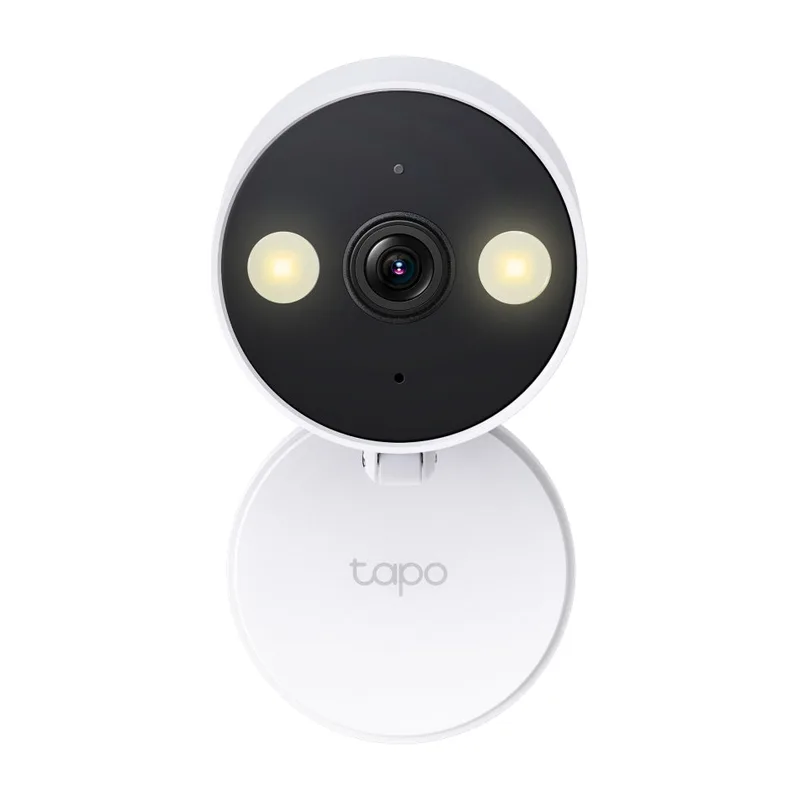
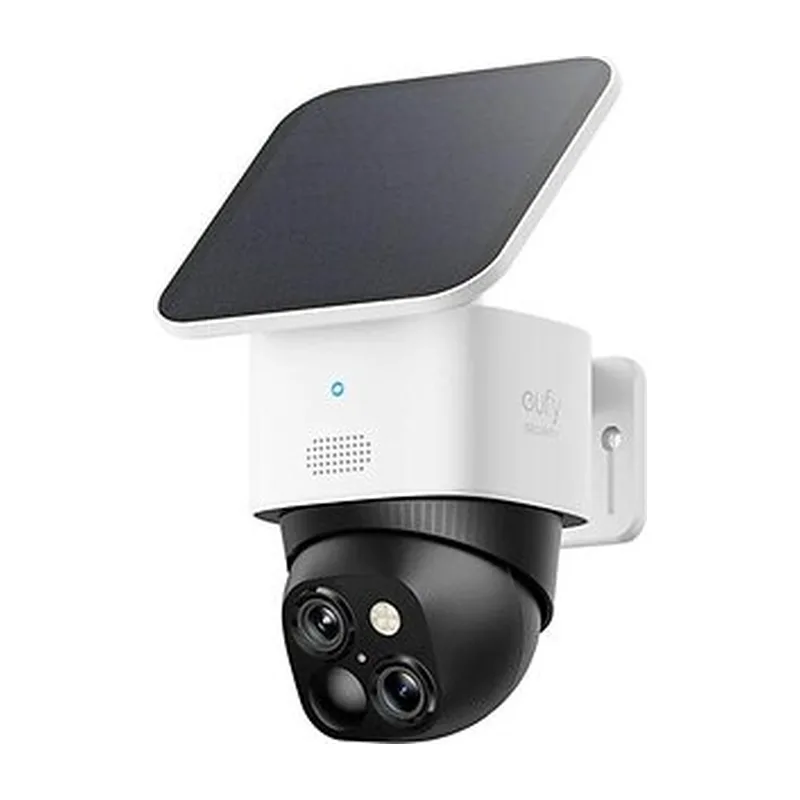
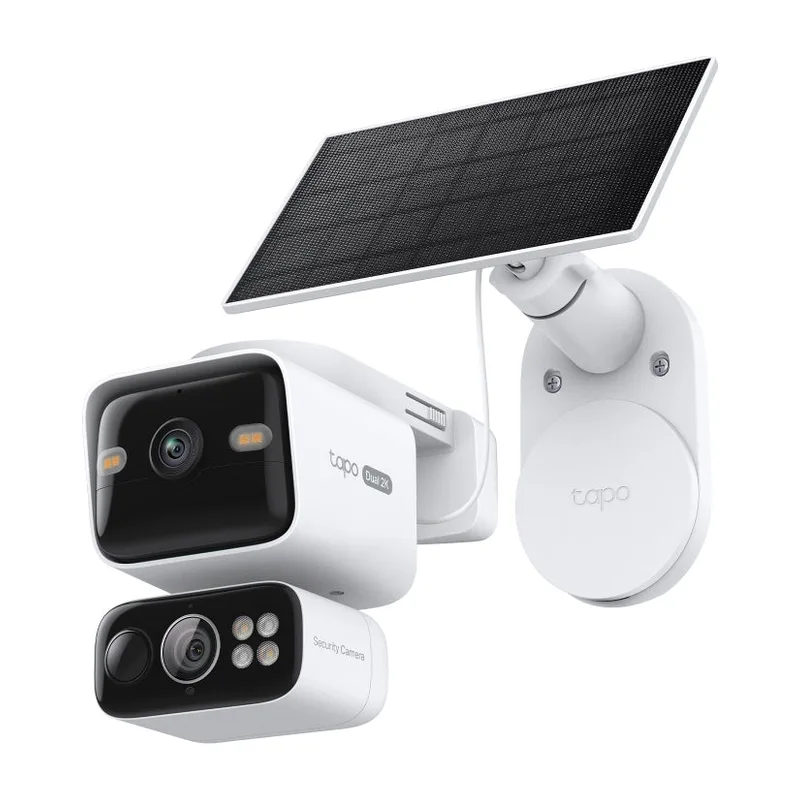
The two twin-lens solar cameras are the closest pair in the list, and Expert Reviews names the Eufy as the Tapo's main rival. The Tapo costs £114.39 and the Eufy £179, so the Eufy asks £64.61 more. For that it has a 3K wide lens at 2,880 x 1,620 against the Tapo's 2,304 x 1,296, and 8 GB of storage built in where the Tapo needs a microSD card.
The Tapo has a longer view, 165° against 135°, a 3 m solar cable against about 2 m, dual-band Wi-Fi against 2.4 GHz only, and a stated IP65 rating where the Eufy review gave none. Expert Reviews quotes up to 10.8x digital zoom for the Tapo, against the Eufy's 2x optical and up to 8x hybrid zoom. Expert Reviews recommends the Tapo for beginners and says the Eufy was its favourite outdoor camera when it reviewed it in 2024. Newer evidence and a lower price favour the Tapo, and that is why it is our top pick.
The practical difference may be the card. A microSD card for the Tapo costs a few pounds, which reduces the gap, but Expert Reviews does not state what card size the Tapo supports, so check before buying a large one. If you would rather not choose and fit a card, the Eufy has storage from day one.
Floodlight cameras solve a different problem from tracking cameras
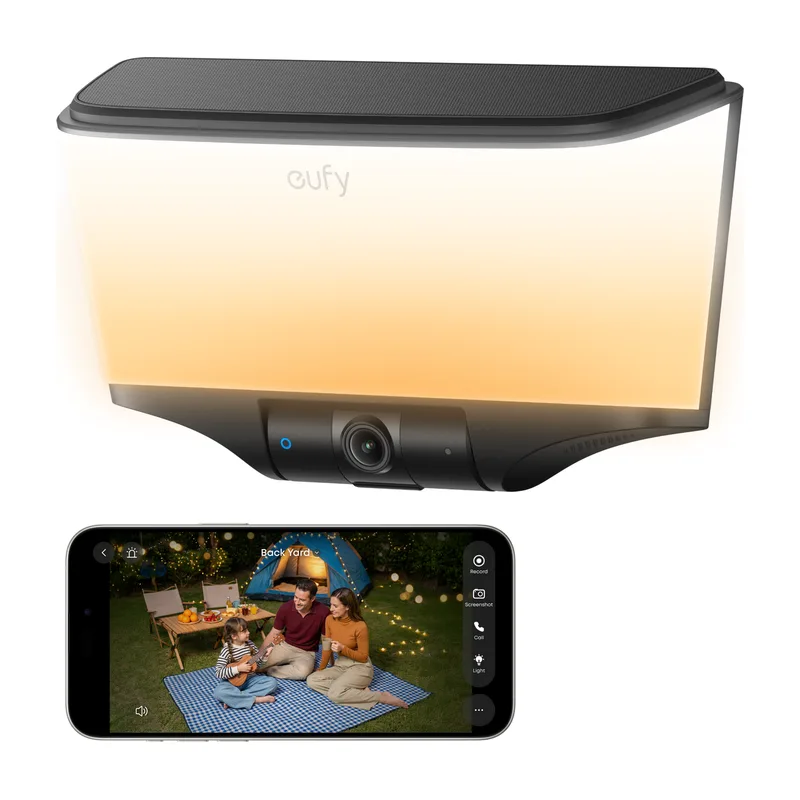
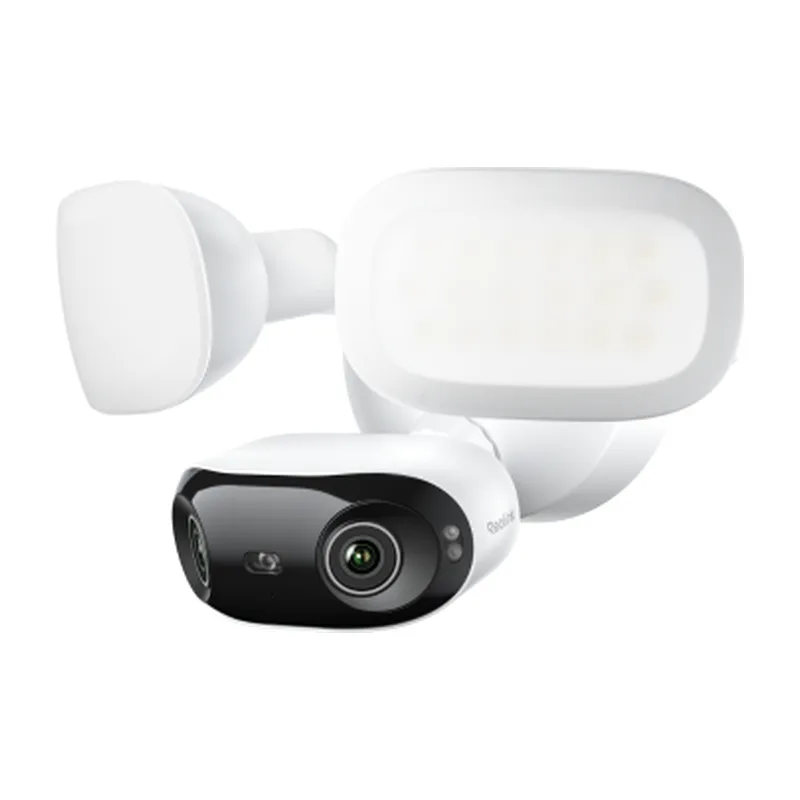
The Reolink Elite Floodlight and the Eufy S4 wall light both put a light and a camera on one fitting, but they sit at opposite ends. The Reolink offers 3,000 lumens, a 180 x 59° view, a 105 dB siren and 240 V mains, at £160.59. The Eufy offers 500 lumens, a 4K fixed view with 8x digital zoom, a 100 dB siren and a solar battery, at £229, and Expert Reviews says its light cannot be left on permanently.
Both reviews raise the same limit: neither floodlight can serve as all-night garden lighting. Expert Reviews says the Reolink's floodlights cannot be left on permanently for ambient lighting, and says the S4 has no always-on mode either. The Reolink review adds that the camera is overkill for most British gardens, suiting businesses and owners of large detached or rural properties. If your home is neither, the S4 wall light is the more realistic fit.
Detection is where they separate. Expert Reviews did not judge the Reolink's accuracy, while it considers the S4's radar credible but with a 35° side blind spot. Neither is a tracker like the C645D, so a floodlight camera suits a defined area, such as a drive or a back door, better than a wide lawn.
Fitting differs too. The Reolink weighs 1.3 kg and measures 174 x 184 x 295 mm, with a highly adjustable mount, and it needs the mains wiring described earlier. The Eufy weighs 915 g and measures 245 x 81.8 x 142 mm, and goes up on a fold-out hook or the supplied wall bracket, which Expert Reviews calls very simple. The Reolink also has Wi-Fi 6 on both bands and a Windows desktop client with more image controls, where the Eufy is 2.4 GHz only and needs a Eufy account.
The two cheap cameras are cheap in different ways
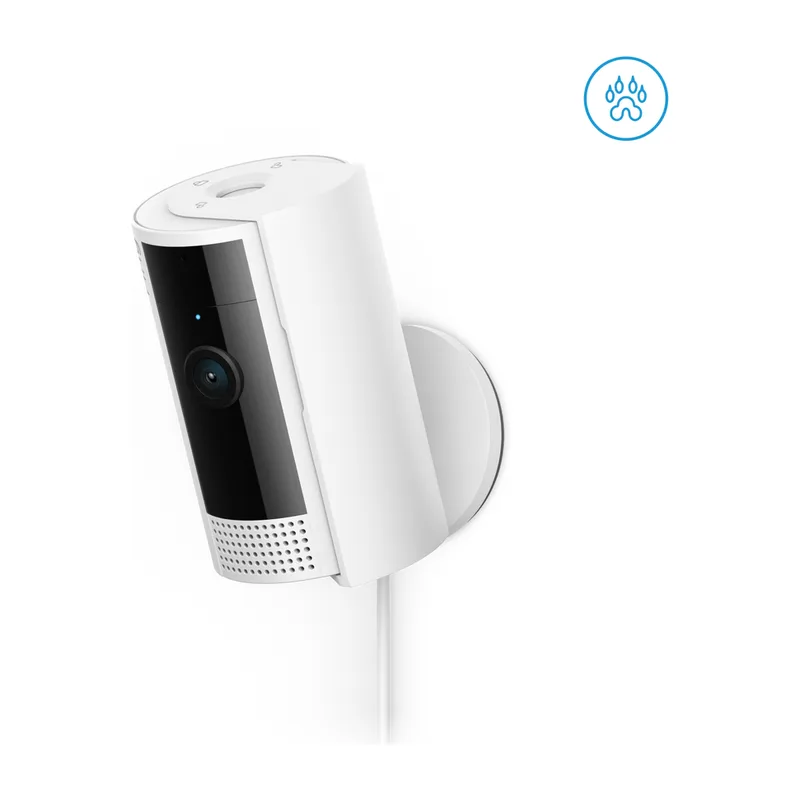
The Tapo C120 and the Ring Indoor Cam are the two lowest prices in the list, £33.29 and £19.99. Their costs diverge in year one. The Ring's cheapest way to save video is a subscription from £4.99 a month, £59.88 across twelve months, so £79.87 with the camera. The Tapo C120 records to a microSD card at no monthly cost, and even the optional Tapo Care plan, at £29.88 or £35.88 a year, costs less than the Ring's.
The cameras also differ in what they can do. The C120 records 2.5K at 20 frames a second with a 103° horizontal view and an IP66 rating, and has a 96 dB siren. The Ring records 1080p with a 143° diagonal view, a privacy cover and no weather rating. Expert Reviews found the C120's app response faster than that of the Ring Pan/Tilt camera, which is a different model, so that comparison is a loose guide to Tapo against Ring, not to the Indoor Cam.
What the Ring does better is simple. If you already use other Ring devices, T3 says the app manages them in one place. If that is not you, the C120 is the better value.
There is also a case for several cheap cameras over one dear one. Three C120s at £33.29 each cost less than one C645D at £114.39, and give three fixed 2.5K views, but each needs a socket and none follows movement. Where the spots to watch are separate, say a front door, a side gate and a garage, that arrangement can cover more than one tracking camera that can only look one way at a time.
What the reviews measured and what they did not
Expert Reviews measured some things and described others, and the difference is worth knowing. It measured the C645D's siren at about 91.5 dBA at maximum volume, but for the rest of the six it mostly describes what it saw in use. For the S340 it reports alerts arriving in about five seconds, and setup in under an hour.
T3's Ring review times setup at 5 to 10 minutes and describes the picture in words. The reviews we read give no night-vision range for these cameras, which is why our image scores lean on resolution and field of view as well as on opinion. If a figure is missing from a spec line, the source did not publish it, and we have written not stated.
Buying guide: choosing the right home security camera
Solar power only works if the panel can see the sky
Three of these six cameras charge from the sun, and the way each does it decides where it can go. The Tapo C645D uses a separate panel on a 3 m USB-C cable, so the panel can sit on a sunny roof edge while the camera watches a shady side passage. The Eufy SoloCam S340 can have its panel attached or mounted separately on a cable of about 2 m, and the Eufy S4 wall light has a detachable 2 W panel on a 2 m cable. A shorter cable means the camera and the sunlight have to share the same patch of wall.
The evidence is encouraging but thin. Expert Reviews says the C645D's battery stayed at 65% through a dull March in Lancashire despite heavy use, and rose to 100% once the sun appeared. The same reviewer kept the S340 above 90% through overcast days in 2024, and saw the S4 wall light climb from 30% to 88% in a week with frequent triggers and maximum brightness. None of those reviews gives a battery life in days, so they show that the panels cope in British weather, not how long a camera lasts with no sun at all.
A north-facing wall under a tree is where solar fails, and the Tapo and Eufy kits then need that cable or a different mounting spot. In that case the mains-powered Tapo C120 is simpler: it takes a 3 m USB-C cable and needs a nearby socket, and Expert Reviews lists the need to be plugged in as its first drawback. The Reolink Elite Floodlight is the extreme case. It runs on 240 V mains through a three-core cable and has no battery, so unless there is already an outdoor light fitting to replace, you may need an electrician, a cost the shop price does not include.
One more point about batteries. The C645D and the S4 wall light both quote a 10,000 mAh battery, but the S340's capacity is not stated in the review we read, so you cannot compare the three on that figure. What the reviews do show is that a brighter light and more triggers drain the charge faster, which is why the S4 result at maximum brightness is the more demanding one.
A camera with no fee can still cost you £60 a year
Running costs split these cameras into two groups. The Tapo C645D, the Eufy S340 and the Eufy S4 wall light all record locally without a plan, and so do the Tapo C120 and the Reolink. The Ring Indoor Cam does not: according to Ring, without a subscription you cannot save or review video or photos, and the plan starts from £4.99 a month per device. Over twelve months that is £59.88, and with the camera at £19.99 the first year comes to £79.87. For the same money you could buy the Tapo C120 at £33.29 twice and have change.
The optional plans on the other cameras are cheaper and mostly add convenience. Tapo Care costs £2.49 a month for one camera with 7 days of history, or £2.99 a month with 30 days, so £29.88 or £35.88 across a year. The Eufy S4 wall light's cloud storage costs £4 a month or £40 a year for one camera, or £13 a month or £130 a year for several. Reolink's cloud plan starts at £3.49 a month for five cameras and 30 GB, which is £41.88 a year. If you only want footage kept on a card in the camera, you can ignore all of these, and the camera still sends alerts.
Local storage has its own limits. The S340 has 8 GB built in and the S4 wall light has 32 GB, while the C645D, the C120 and the Reolink use a microSD card, up to 512 GB on the last two. Expert Reviews does not state a maximum card size for the C645D, and the card is not supplied. None of the reviews says how many days of footage each size holds, so we give no figure for that. A card also has a weakness a cloud plan does not: if someone steals the camera, the footage goes with it.
If you would rather not manage cards or accounts at all, a subscribed camera is a fair choice, and that is where the Ring fits. It is the wrong choice if you want a one-off price, because the camera is a small part of what you pay over three years.
More pixels matter less than a wider, steadier view
Headline resolution is easy to compare and easy to over-read. The Eufy S4 wall light records 3,840 x 2,160, about 8.3 million pixels. The Reolink Elite Floodlight records 5,120 x 1,552, about 7.9 million pixels, but spread over a 180 x 59° view, so the extra pixels buy width rather than height. The Eufy S340's 3K wide lens records 2,880 x 1,620, about 4.7 million pixels. The Tapo C120 records 2,560 x 1,440, about 3.7 million. The Tapo C645D's two lenses each record 2,304 x 1,296, about 3 million, and the Ring Indoor Cam records 1080p, about 2.1 million.
Frame rate and field of view complicate that league table. Expert Reviews wished the C645D's picture, capped at about 15 frames a second, were smoother, and the Reolink and C120 record at 20 frames a second. The C645D's fixed lens sees 165° diagonally, the S340's wide lens 135°, the Ring 143° and the C120 103° horizontally. A wide view shows more of your garden but makes each person smaller in the frame, which is why the telephoto lenses on the C645D and S340 exist.
The reviews say the sharper picture shows up in particular places. Expert Reviews found the C645D holds up at full zoom, the S340's optical zoom stays sharp, and the S4 wall light's zoom holds up better than the 2K Eufy C37's. For the Ring, T3 found daytime footage often blurry, grainy and choppy in 2024, but night vision sharp. Night modes differ: the C645D shows colour in low light and switches to infrared in very dark conditions, the S4 offers three modes, and the Ring lists colour night vision without a range.
You do not need 4K to watch a front door, and the S4's extra resolution costs £114.61 more than the C645D. It makes sense only if you want to read a number plate or identify a face at distance, and none of the reviews we read covers that.
A moving lens earns its price only where there is something to follow
Pan and tilt are easy to want and hard to use well. Of the six, only the Tapo C645D and the Eufy S340 have a motorised lens that tracks people. Expert Reviews says the C645D followed movement almost flawlessly and lost track once, when it stayed on a dog after the reviewer walked out of shot. For the S340, the same site found tracking good at following people, though it can jump between two people in frame.
The fixed cameras take a different approach. The Eufy S4 wall light uses a 60 GHz radar with a 10 m range over 120°, but Expert Reviews points out a 35° blind spot at the side, which makes it easier to evade than a dedicated tracking camera. The Reolink covers 180 x 59° with two fixed sensors and says nothing about tracking. The C120 and the Ring watch one spot.
Fixed is better than it sounds for a doorway or a hallway. A camera that stays on one view gives you a consistent picture and a simple activity zone, while a tracking camera produces clips that move. Expert Reviews notes that the S340's AI ignored birds, pets and moving shadows in its review, and that the C645D app's Smart Actions can be customised.
A tracking camera is the wrong buy if you only want to see who is at the door: the £81.10 between the C645D and the C120 buys tracking, and a fixed view does not need it.
The Wi-Fi band decides more than the voice assistant
Four of the six cameras connect on 2.4 GHz only: the Eufy S340, the Eufy S4 wall light, the Tapo C120 and the Ring Indoor Cam. The Tapo C645D is dual-band, and the Reolink supports 2.4 and 5 GHz (Wi-Fi 6). The 2.4 GHz band reaches further through walls, which suits a garden camera, but it is also the more crowded band, and the reviews give no range figures to compare. If your router sits at the front of the house and the camera is at the back, the cameras to worry about are the 2.4 GHz-only models, and a mesh node near the window helps all of them.
Voice support varies in ways that matter if you already own a smart display. Alexa and Google Home work with the C645D, S340 and S4 wall light, and the C120 supports Alexa and Google Assistant. The Reolink supports Google Assistant and ONVIF, which lets some other recorders talk to it, but has no Alexa or Apple HomeKit. None of the reviews lists direct Apple HomeKit support for any of them, and Apple Home on the S4 needs the optional HomeBase S380, at £159.
Apps get less attention than they deserve. Expert Reviews calls the Tapo C645D's app well designed with Android widgets, finds the Eufy app responsive and intuitive, and says the S4 app lacks the text-based search that Reolink's app offers. For the C120, it found alerts and live streams faster than on the Ring Pan/Tilt camera it compared it with. Those are one tester's impressions, not measurements, so treat them as hints.
A weak spot in your Wi-Fi is a reason to pick the dual-band C645D or the Reolink over a 2.4 GHz model, even if the other camera has a better picture on paper.
An indoor camera and an outdoor camera are different purchases
Weather ratings sort the six quickly. The Tapo C645D is IP65 and rated for -20°C to 45°C, the S4 wall light is IP65, the C120 and the Reolink are IP66, and the Ring Indoor Cam has no rating on the manufacturer's page. The S340 review did not state one, so check the box before mounting it on an exposed wall. A rating tells you how a camera handles rain, not how long it lasts in a cold winter, and the C645D is the only one with a stated temperature range.
The Ring is built for rooms, and it carries a manual cover that slides over the lens and turns off the camera and microphone. That makes it easy to leave a camera at home with the family around, and T3 says the app can black out parts of the view such as a bathroom. Outdoor cameras do the opposite: they want a clear view and a wide angle. If what you want is to watch a sleeping child, a dedicated device is a better fit, and our baby monitor comparison covers those.
Where a camera points matters as much as the camera. Aim a camera at your own property, and think before you capture a neighbour's garden or the street.
A sheltered porch with a socket suits the C120, and an exposed gable end with no power suits the C645D or the S340. A camera in the wrong place is a poor buy whichever one you choose.
A review's date matters more than its verdict
Two of the six reviews are from 2024: the Eufy SoloCam S340 in April and the Ring Indoor Cam in January. The Tapo C120 review is from January 2025, the Reolink from September 2025, the Tapo C645D from April 2026 and the Eufy S4 wall light from October 2026. These cameras get software updates, so a 2024 review may describe features that have changed. The Ring subscription, for example, is quoted from £4.99 a month on the manufacturer's page, against £3.49 a month in T3's 2024 write-up.
Prices also drift. Expert Reviews recorded the C645D at £130 against a recommended £170, and the store lists it at £114.39 today. It recorded the Reolink at £199 and the Reolink UK page lists £160.59. It lists the S4 wall light at £230 and the eufy store has £229. Black Friday week usually moves prices again, so a camera that looks expensive today may be cheaper by the time you read this.
The sensible approach is to treat the newest review as the best evidence and the oldest as a guide to the hardware, not the software. A 2024 review of the S340 tells you the lenses and the solar panel are good, but not whether the app has caught up with its newer siblings.
Which camera suits which home
A small front garden with a wall and no outdoor socket suits our top pick, the Tapo C645D, or the S340 if you want more resolution and can pay £64.61 more. A sheltered porch or a ground-floor window next to a socket suits the Tapo C120 at £33.29, and three of them cost less than one C645D. A large rural plot with a wired light position suits the Reolink Elite Floodlight, which Expert Reviews says is overkill for most British gardens.
A dark side passage where you also want light suits the S4 wall light, whose 500 lumens are modest next to the Reolink's 3,000. A rented flat where you can do little but plug in and cannot drill suits the Ring, provided you accept the subscription. Whichever you choose, the best home security camera is the one whose weak point your house does not expose.