In depth: washing machines explained
Mumsnet's three tester reports agree on quiet and split on nearly everything else
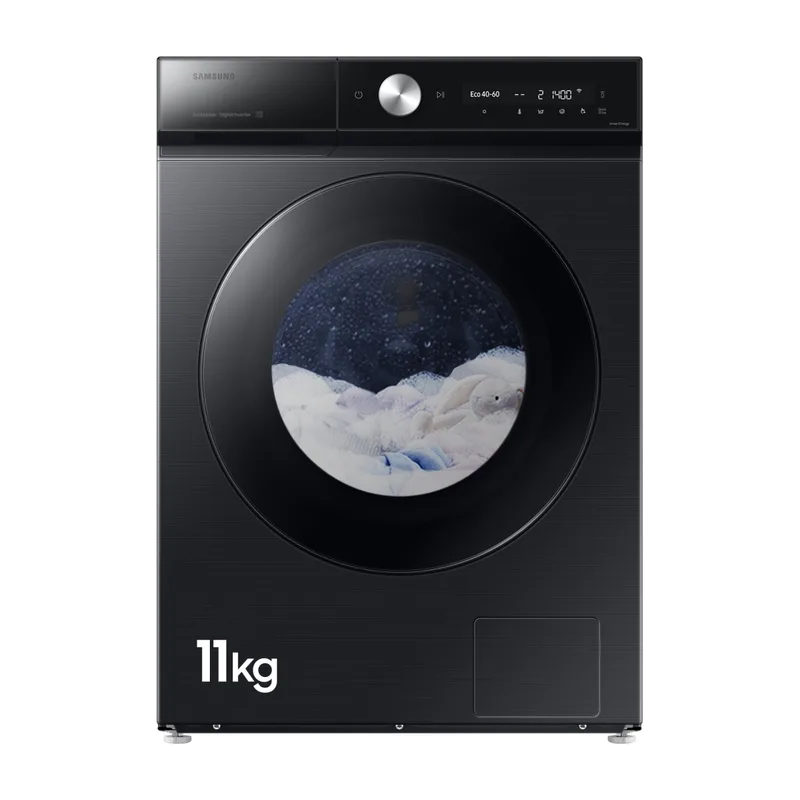
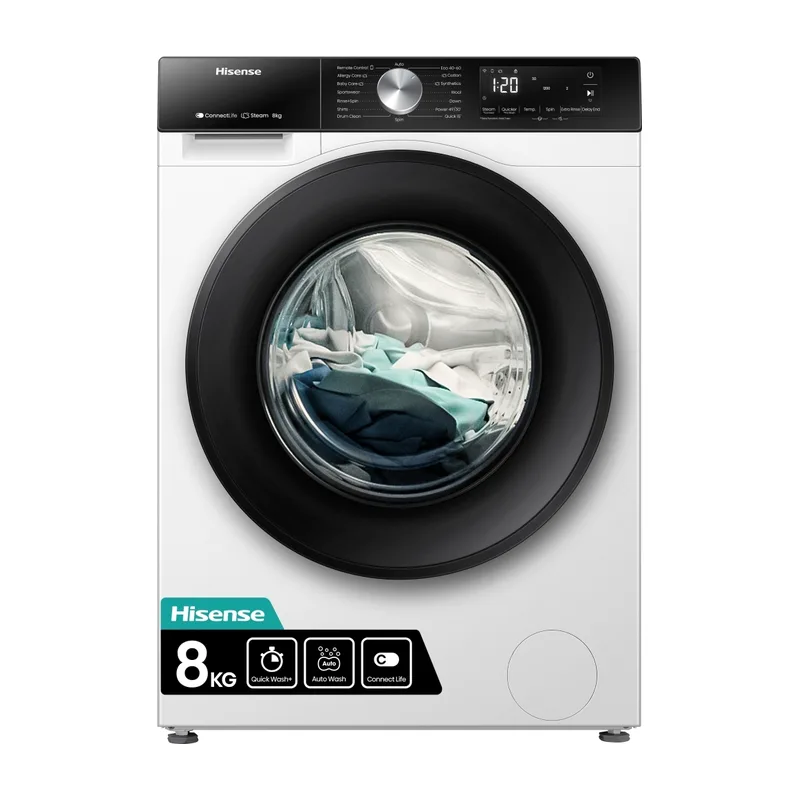
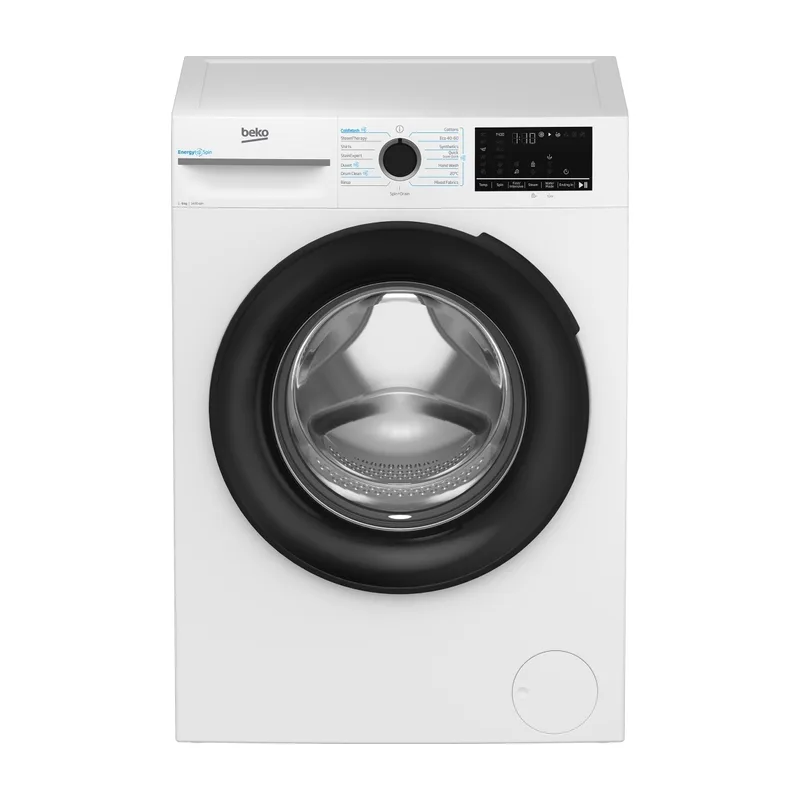
Three machines here were used by named Mumsnet testers in their own homes. Laura ran the Beko for two months and over 50 cycles for a household of her partner and four children aged one to four. Anna used the Hisense for about a month in a three-bedroom home in East Sussex. Mairi ran the Samsung for 70 washes for a family of eight. Anna and Mairi took notes on ease of use, efficiency, effectiveness and noise.
All three say the machine cleans well, and none gives a measured stain result, so the cleaning scores are not a lab ranking. Quick programmes are where they differ in useful ways: 15 minutes on the Hisense, 28 minutes on the Beko and 39 minutes on the Samsung, according to Mumsnet's reports. Anna made the 15-minute wash her default, and Mairi used the 39-minute wash for a school uniform.
Their complaints are about time and drying rather than cleanliness. Laura points to the Beko's 800 rpm spin on EnergySpin cycles, Anna to long Eco 40-60 cycles on the Hisense, and Mairi to the Samsung's eco cycle of nearly three hours and a touchscreen on/off button that reacts too easily. Mairi also says a 40°C cycle damaged a waterproof bed protector, which is a reminder to check fabric labels against programme temperatures.
The limits matter. Each report is one household, published in August or September 2025, so they are older than the prices on this page. None gives a decibel reading, and the Hisense report uses two model codes. They are better read as three informed owners than as measurements.
The Samsung against the LG: £351 buys 1 kg and a tester's report
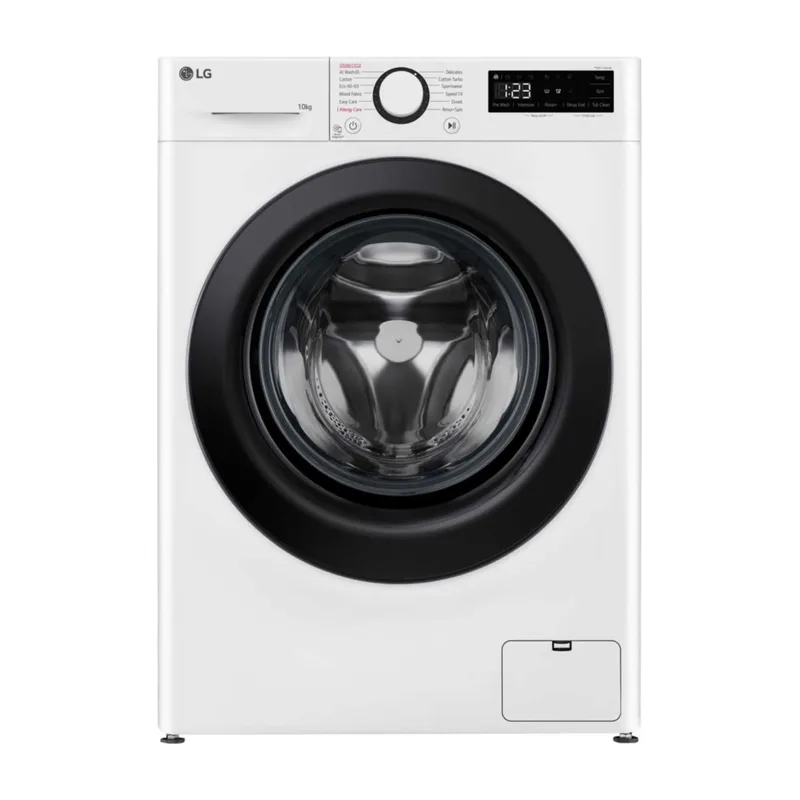
The two top-ranked machines are the most interesting pair, because they differ on almost every number. The Samsung is 11 kg and the LG 10 kg. The Samsung quotes 32 kWh per 100 cycles against 47 kWh. The Samsung uses 54 litres per cycle against 52. And the Samsung costs £81.82 per kilogram of capacity against the LG's £54.90.
On spin the LG pulls ahead, with class A and 44.9% residual moisture against class B for the Samsung, and 71 dB against 72 dB. On reviews the LG's 4.8 out of 5 from 327 ratings at Hughes outranks the Samsung's 4.3 from 134 at John Lewis, though they are different shops. On guarantee the LG offers five years if registered and the Samsung two years as standard.
Where the Samsung gets its second place is cleaning evidence. Mairi's 70 washes give it the fullest tester's account in the list, and the LG has none. That is the point at which the Samsung's rank is least certain, because the LG's cleaning score is deliberately middling rather than known to be worse.
To decide, price the energy gap yourself. Multiply 15 kWh by your tariff in pounds per kWh and by the number of 100-cycle blocks you expect, and compare it with the price gap. If you wash for a large family, the extra kilogram and the lower energy figure will count for more. If you live in a one or two person home, the LG is £351 cheaper and its owners rate it higher.
Hisense or Beko: £70 separates the two cheapest machines
The Hisense and Beko are the two cheapest machines here and the most alike on paper. The Hisense is 8 kg, 47 kWh per 100 cycles, 72 dB on spin and 36 litres per cycle at Marks Electrical, or 45 at Mumsnet. The Beko is 9 kg, 49 kWh, 75 dB and 49 litres. The Hisense is cheaper per kilogram, at £34.88 against £38.78.
On programmes they split. The Hisense has a 15-minute quick wash, an Auto cycle of about an hour and 16 programmes, with no delicate or hand-wash. The Beko has 15 programmes with a hand wash and wool wash but no delicate wash, runs from 28 minutes to 2 hours 30 minutes, and has a delay start Laura used to run overnight. Both testers called their machine quiet.
The Hisense ranks above the Beko mainly on spin and energy. The Beko's 800 rpm EnergySpin cycles and 75 dB spin are the weakest spin evidence in the list, while the Hisense has no comparable complaint. Neither has a product-level review count, so the two sit level on reviews.
Stock is a practical difference. Marks Electrical lists the Hisense in stock at its warehouse, with delivery from 17 November. The Beko is available at John Lewis with delivery from 3 working days, but Marks Electrical lists it as discontinued, so supply may thin out. If you need 9 kg for a family, the Beko is the cheaper route, and if you are stepping up, the Bosch is £130 more with five years of guarantee.
The Bosch and Miele show where reviews run ahead of the evidence
Two machines in the list are ranked mainly by what owners say and what shops publish, and the difference in how much that supports each is large. The Bosch has 461 reviews at AO averaging 4.9 out of 5. The Miele has 36 at John Lewis averaging 4.70. Neither has a tester's report, so neither has a measured stain result.
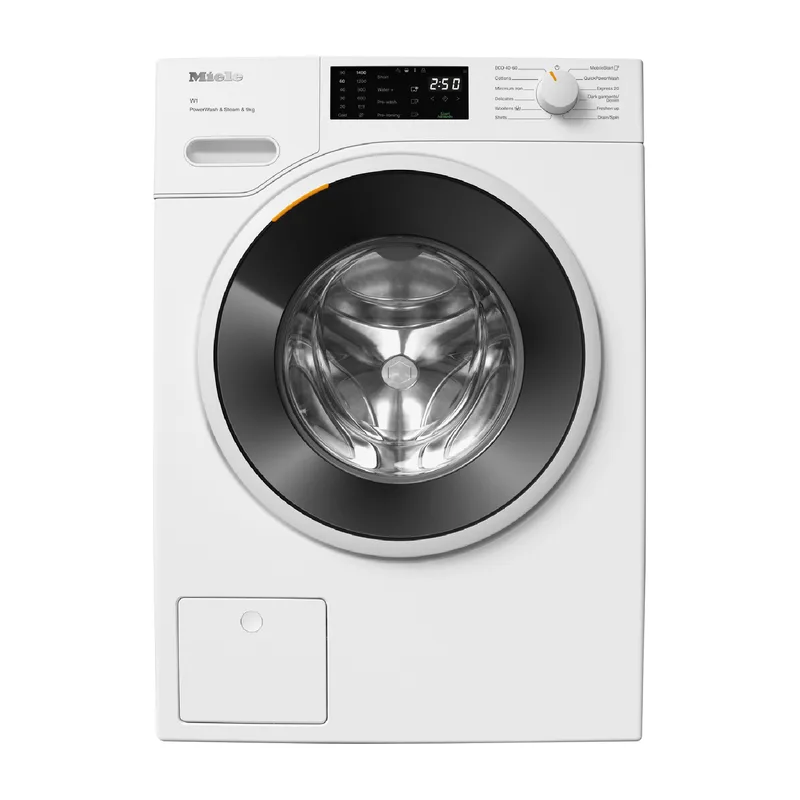
The Bosch's evidence is broad but narrow in content: the nine reviews we could read praise quiet running, simple installation and a large drum, and none complains. It lacks an energy figure in kWh. The Miele's evidence is thin but its specification is complete: 40 kWh per 100 cycles, 50 litres per cycle, 50 dB on wash and 72 dB on spin, plus features such as AddLoad and a 20-minute QuickPowerWash cycle, all as stated by the retailer.
That is why the two end up on either side of the Beko. The Bosch's missing kWh figure holds its energy score down, and £53.22 per kilogram keeps its price score in the upper half. The Miele has the better energy and noise figures, but its £127.67 per kilogram costs it most of the price score, and 36 reviews carry less weight.
If you want a premium machine and are happy to pay for the name, the Miele is the choice in this list, with the caveat that nothing we read shows it cleaning better. If you want a 9 kg machine for around £500 with five years of guarantee, the Bosch is the one to check, once you have confirmed the energy figure on the shop's label.
Buying guide: choosing the right washing machine
A bigger drum only pays off if you fill it
The six machines here hold between 8 kg and 11 kg, and the price per kilogram of capacity runs from £34.88 for the Hisense to £127.67 for the Miele. That spread says more than the sticker price. The Samsung at 11 kg costs £351 more than the LG for one extra kilogram, though it also quotes 15 kWh less per 100 cycles. Whether that trade is sensible depends on how often the drum is full.
Two Mumsnet testers show the extremes. Mairi, who washes for a family of eight, says the Samsung's drum let her roughly double her washing without using more detergent. Anna, in a three-bedroom home, fitted bedding into the Hisense's 8 kg drum in one go. So 8 kg is enough for a duvet, but a large family will be running it more often, and each extra run adds its own energy and water.
John Lewis describes the energy and water figures on its pages as weighted, which means they blend full and part loads. A big drum run half empty is therefore not automatically cheaper to run than a smaller one run full. If you are looking for the best 9kg washing machine in this list, the Bosch ranks highest of the three 9 kg models at fourth overall, ahead of the Beko in fifth and the Miele in sixth, and the gap to the Miele is £670 in price.
The 11 kg Samsung does not suit a one or two person home, because you pay £81.82 for each kilogram of capacity and rarely use the top end. The 8 kg Hisense does not suit anyone who washes bulky bedding every week, since each large item takes up most of the drum.
The energy label compares machines, not your bill
Energy per 100 cycles is the most useful single number on a washing machine page, and it is also the one most often missing. In this list it runs from 32 kWh for the Samsung to 49 kWh for the Beko, a difference of 17 kWh every 100 cycles. Per cycle that is 0.32 kWh against 0.49 kWh, which are the figures Mumsnet's own pages quote for the two machines.
To turn it into money, multiply 17 by your tariff in pounds per kWh and by the number of 100-cycle blocks you expect to run. That total has to reach the £551 price gap before the Samsung pays back on energy alone, and the Samsung's case therefore rests on capacity and cleaning as much as on running costs.
Water works the other way round. The Samsung quotes 54 litres per cycle, 5 litres more than the Beko's 49, so over 100 cycles it uses 500 litres more even though it uses less electricity. The Hisense is the awkward one: Marks Electrical quotes 36 litres per cycle, Mumsnet quotes 45, and both cannot be right, so the water score for that machine is provisional.
A missing figure is itself information. The Bosch pages we read give energy class A and 50 litres per cycle but no kWh per 100 cycles, so it cannot be compared with the others on electricity use. And the label figure covers the eco programme only. Mairi found the Samsung's eco cycle took nearly three hours and put her off using it, so a superb label figure is only worth something if you will wait for it.
The spin speed on the box is not the speed you get on the eco cycle
Every machine in the list is sold as 1400 rpm, and that headline tells you almost nothing. Five of the six are spin class B. The LG is the exception at spin-drying class A with residual moisture of 44.9% according to Marks Electrical, which is the only residual moisture figure published for the group.
The Beko shows how the maximum can mislead. Mumsnet's tester Laura reports that its EnergySpin cycles reach only 800 rpm and that the speed cannot be changed there, so clothes come out wetter and take longer to dry, or need an extra drain and spin. That is the main drawback in her report, and it appears despite the 1400 rpm on the spec sheet.
Figures and experience do not always agree. A Hughes reviewer says the LG removes less water than their previous machine, even though the retailer quotes class A. One complaint among the ten reviews we read is not a pattern, but it is a reminder that a class on the label is a rating band, and your own loads and programmes decide the result.
A high spin class matters most if you dry clothes indoors on a rack, where every extra bit of water slows things down. It matters less if you tumble dry. It is the wrong thing to pay extra for if you mostly run the Beko-style energy cycles or quick washes, because the spin speed on the programmes you actually use is what counts, and the box rarely says.
Spin noise is similar across the group, so ask about wash noise
On spin the six machines sit within 4 dB of each other: 71 dB for the LG and Bosch, 72 dB for the Samsung, Hisense and Miele, and 75 dB for the Beko. Only two retailers' pages give a wash noise figure at all, 54 dB for the LG and 50 dB for the Miele. For the rest it is not stated, so any claim of a silent wash on the others rests on reviewers' impressions rather than numbers.
Those impressions are mostly positive. Reviewers at AO call the Bosch much quieter than their previous machines, and Hughes reviewers say the same of the LG, although one hears a whine from its direct drive motor that takes time to get used to. Mumsnet's testers describe the Beko and the Hisense as quiet, and Anna adds that the Hisense's beeps can be turned off by holding two buttons.
The practical rule is to place the machine by what you do with the room. A kitchen with a door can take the Beko's 75 dB spin without much fuss. An open-plan flat is different, since the noise is heard throughout, and there the Miele's 50 dB wash and the LG's 54 dB are the only measured comfort figures to go on.
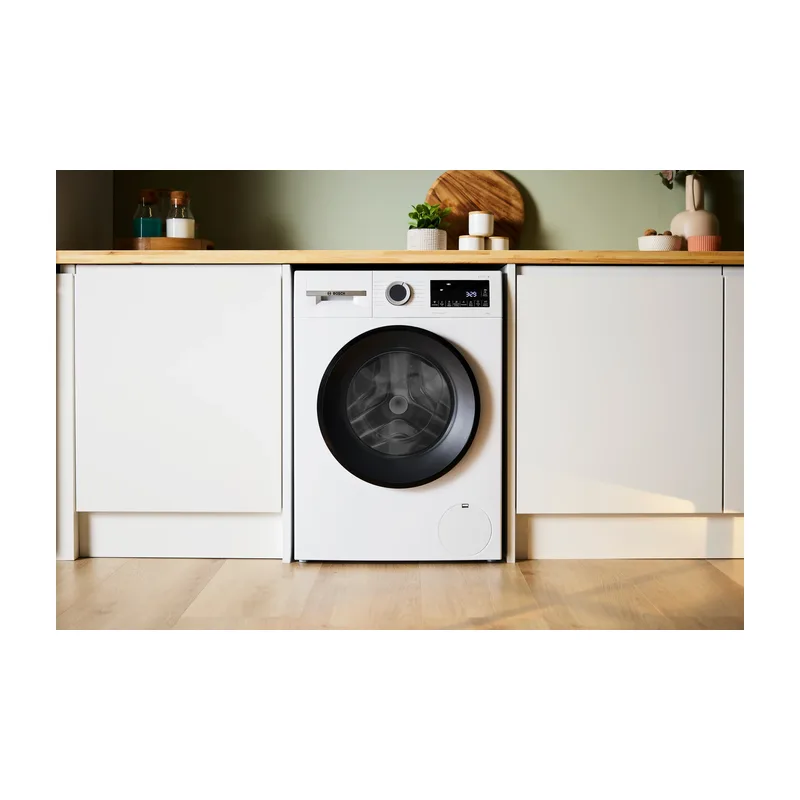
A noise figure on a retailer's page does not say how the machine sounds in your hall or on a suspended floor. If vibration is a worry, the weight is a clue: Marks Electrical gives the Hisense at 59 kg and the Beko at 64 kg, while the Bosch is listed at 73.7 kg.
A five-year guarantee is only worth having if you register in time
Two machines here carry five-year guarantees and both come with conditions. The LG offers five years parts and labour provided you register within 90 days of purchase, according to Marks Electrical. The Bosch also quotes five years, registered within three months according to Vaughans, and Mullen Domestic lists the same five-year manufacturer guarantee.
The Samsung has a two-year guarantee at John Lewis, and the page adds a five-year parts and labour warranty on selected products that has to be redeemed within 90 days. It does not say whether this model qualifies, so the safe assumption is two years. The Hisense and Beko are also two years, and the Miele is two years at John Lewis.
Put a price on the difference. The LG costs £270 more than the Hisense, with 2 kg more capacity as well as the longer guarantee. If the guarantee is all you want, the Bosch offers a similar five years for £70 less than the LG.
A long guarantee is the wrong reason to buy if you will not complete the registration form. Set a reminder on the day of delivery and keep the receipt. We have not read the full guarantee terms for any of these machines, so read them before relying on the cover.
Check the full model code, because shops and lists blur variants
Washing machine codes differ by one letter for a colour, and the price differs with it. John Lewis sells the Samsung black as WW11DB8B95GBU1 at £900, while Which? lists the white WW11DB8B95GHU1 from £745. A price quoted for one colour is not a price for the other, and that single gap is larger than the difference between several machines in this list.
Even published pages disagree. Mumsnet's review of the Hisense names WF3S8043BW in its text but WFQA8014EVJM in its web address. John Lewis shows the Miele as WWD380 WCS in the title and WWD360 WCS in the description. Mumsnet lists the Miele as 8 kg in its spec but 9 kg in its name, while John Lewis and the Miele UK site say 9 kg.
Prices drift even faster. Mumsnet's list of the best washing machines shows the LG at £389, the Beko at £339 and the Hisense at £329 at the time of writing, while the shops we read on 16 November 2026 showed £549, £349 and £279. Neither number is wrong; they are different days and different shops.
So before ordering, copy the full code from the shop page and compare it with the label on the machine you are buying, including the letters at the end. If the code differs, the machine may be a different variant with a different programme set or spin speed, and the review you relied on may not apply.
Customer ratings describe the first year, not the tenth
Four machines here have a product-level review count: the Bosch with 461 reviews at AO, the LG with 327 ratings at Hughes, the Samsung with 134 at John Lewis and the Miele with 36 at John Lewis. A rating built on 461 reviews carries more weight than the same rating from 36, which is why the Miele's 4.70 does not outrank the Bosch's 4.9.
The Samsung's 4.3 out of 5 from 134 reviews is the lowest average where a count is known, and it is a reminder to read the comments behind a score. The pages we could read did not show them, so we do not know whether the 4.3 comes from reliability, the touchscreen Mumsnet's tester disliked, or delivery. That uncertainty is why the lower average costs the Samsung some points without being treated as a verdict.
Reviews also come from one shop each, with its own audience and its own habit of asking for them. A Hughes customer has just paid for a machine and is rating the first months. None of the ratings above tells you what the machine is like in year seven, and none of these shops lets you filter by how long people have owned it.
Use the rating to catch problems, not to settle a close choice. If two machines are within a few tenths, the guarantee, the price per kilogram and the programme list should decide. And a machine with no count, like the Hisense and Beko here, is not a bad machine, only one we cannot assess by reviews.
Programme counts mean little, but the quick wash and delicates cycle do
The number of programmes on the box runs from 12 on the Miele to 24 on the Samsung, with the Bosch at 22, the Hisense at 16 and the Beko at 15; the LG count is not stated on the pages we read. A bigger number does not mean more useful cycles, since many are variations of cotton at different temperatures. What matters is whether the machine has the few cycles your household actually runs.
Start with the quick wash. The Hisense has a 15-minute cycle and the Bosch lists a 15-minute rapid wash, the Miele has a 20-minute QuickPowerWash, the Beko's quickest programme is 28 minutes and the Samsung's quick wash is 39 minutes in Mumsnet's report. For a school uniform needed tomorrow, the 24 minutes between the Hisense and the Samsung is the real difference.
Then check delicates and hand wash, because they are missing more often than you would expect. According to Mumsnet the Samsung has delicate wash but no hand wash, the Beko has hand wash but no delicate, and the Hisense has neither and offers only a wool programme. The Bosch lists both delicate and wool or hand wash according to Vaughans, and the Miele lists a delicate wash according to John Lewis.
A long list is the wrong thing to pay for if you wash mostly cottons and synthetics at 30°C and 40°C. A shorter list with a good quick wash, as on the Hisense, will cover that. If you wash silk, wool or sportswear often, look for the named programme before looking at the price.