In depth: dehumidifiers explained
What Expert Reviews measured, room by room
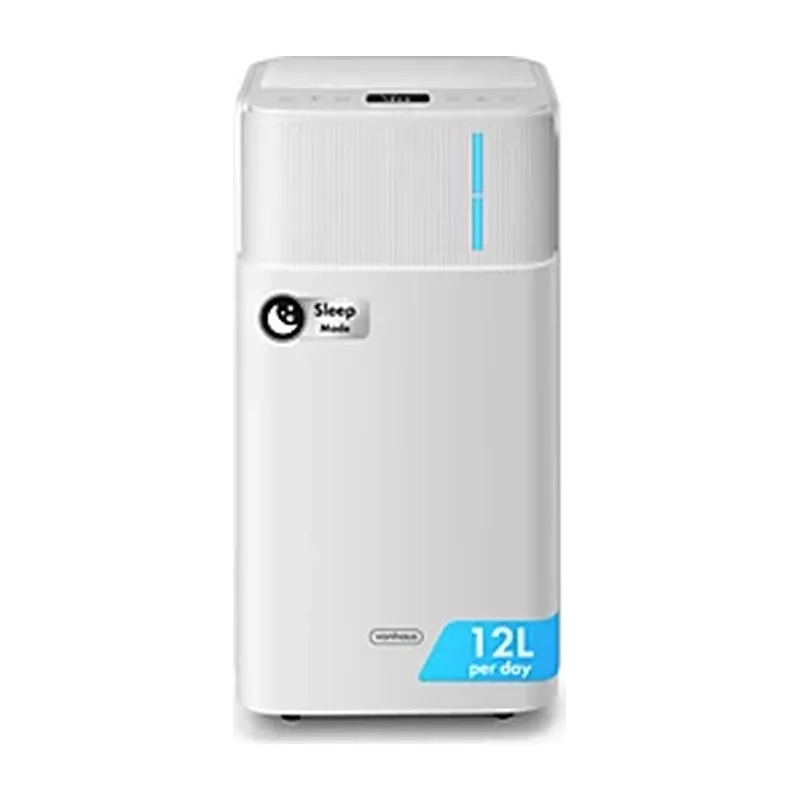
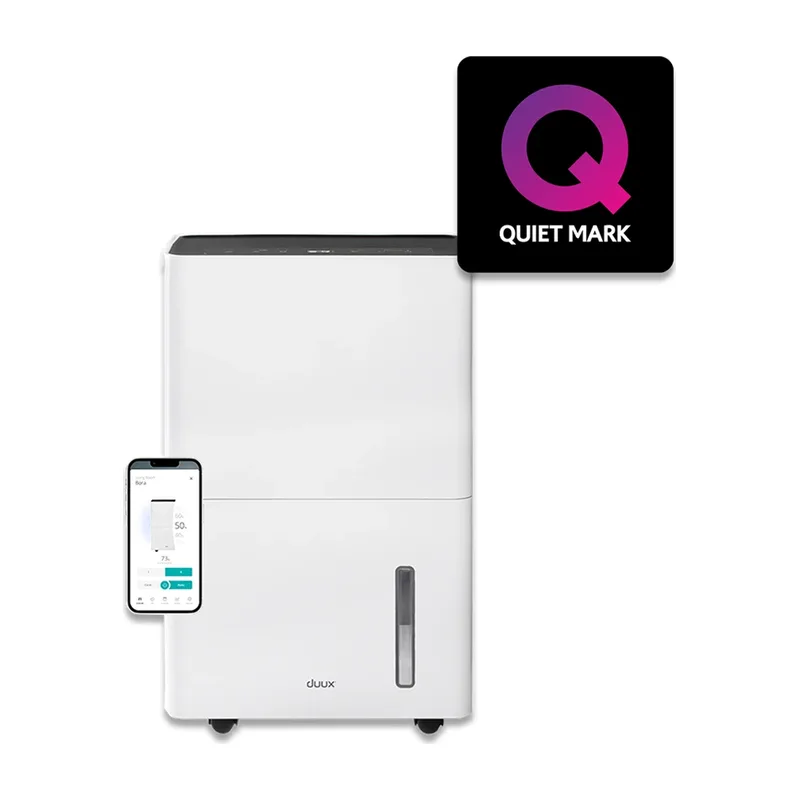
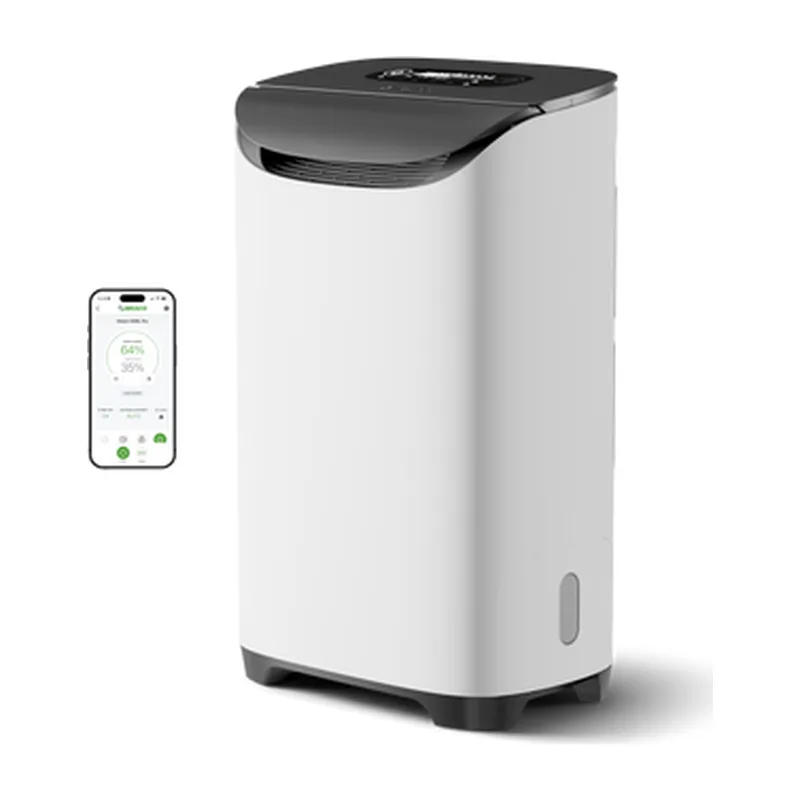
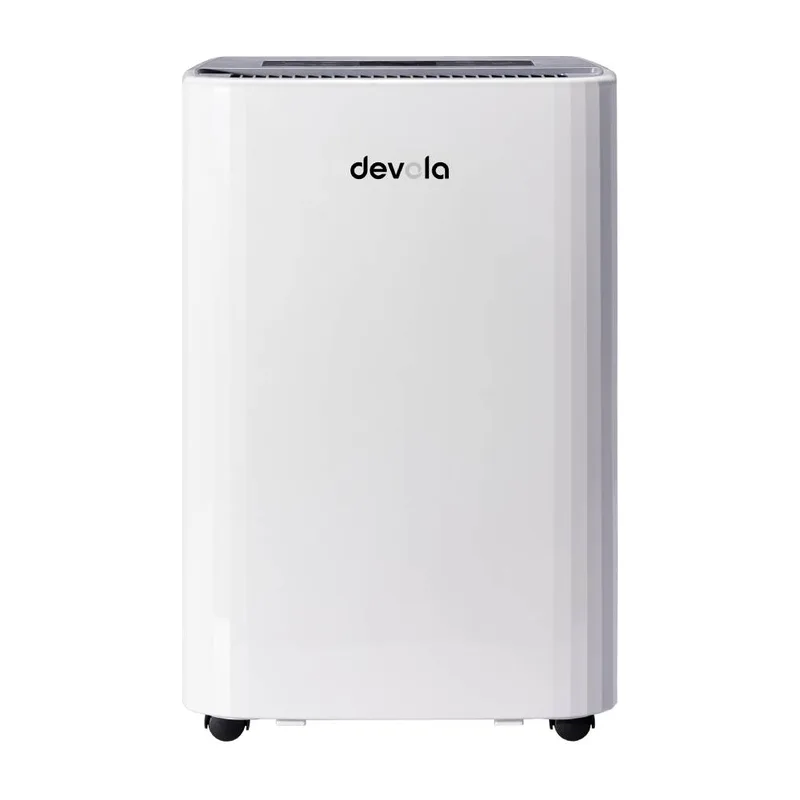
Every humidity number in this comparison comes from one reviewer, Stuart Andrews at Expert Reviews, working in a house with a damp living room and a smaller bedroom. That makes the results consistent in method but not in conditions, so it helps to line them up. In the living room, the Duux Bora 30L took humidity from 78% to 57%, the Arete Two from 76% to 67% in an hour and 61% after two, the DD8L Pro from 74% to 65% and then 62%, the VonHaus from 72% to 65%, then 63% and 61%, and the Devola from 68% to 64% and then a plateau at 63%.
In the smaller bedroom, the Duux fell from 71% to 52% over two hours, the DD8L Pro from 69% to 60% in an hour and 59% after two, the VonHaus from 70% to 60%, 57% and 55% over three hours, and the Devola from 67% to 58%, 56% and then 54% at three hours, settling at 52% in auto mode. The Arete Two's bedroom result is not in the review. Read down the columns and a pattern appears: the two 20 and 30 litre machines pull ahead in the larger room, while the 12 litre models close most of the gap in the bedroom.
Two cautions follow. First, a lower end figure is not always better, because a reviewer may have set a different target humidity. Expert Reviews set a 50% target on the highest fan for the VonHaus and Devola, and used manual settings with a 35% target for the Devola's living room test. Second, the starting points differ by up to ten percentage points, and moisture is easier to remove from damper air. Expert Reviews itself noted that temperature and season make direct comparisons hard.
Measurements also have an age. The Arete Two and Duux Bora were reviewed in late 2024, the DD8L Pro in December 2025, and the Devola and VonHaus in autumn 2026. None of the five has changed in a way we could find in the manufacturers' pages, but that is a reason to treat the 2024 results with slightly more care than the 2026 ones.
The Arete Two against the Duux Bora: quiet efficiency versus raw speed
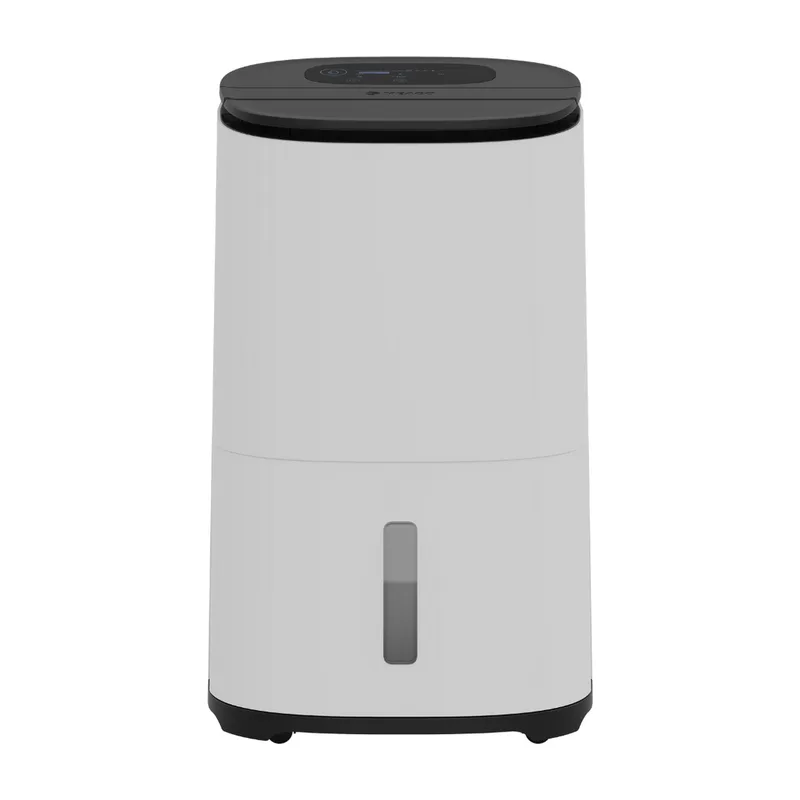
These are the two models most readers will weigh, and Expert Reviews compared them directly. On drying speed the Duux was slightly ahead, with the review calling its living room result one of the best in two years. On everything else the Arete Two wins in the numbers: 38.7 dBA against 44.7 dB at full output, 224 W against just over 400 W, a price that is £73.98 lower, a five year guarantee against 24 months, and a lower operating temperature of 5°C against 15°C.
The 30 litre rating is the Duux's strongest point, and the 4 litre tank and a hose in the box fit with it. If your problem is a large, wet space and you are happy to run the machine while you are out, the Duux gets you to a target humidity sooner, and it can then idle at 34.6 to 36 dB. If you will sit or sleep near it, the Arete Two's lower noise matters more than minutes saved. Expert Reviews also found the Duux's controls unintuitive, though its app makes up for it with hourly schedules and humidity graphs.
Both can dry clothes. The Duux dried a rack in four hours, while the Arete Two's six hour cycle suited light garments and left heavier items damp. On that measure the Duux is the faster laundry dryer, but the Arete Two's aimable louvre is a useful trick for a rack placed in front of it. For households that mostly dry laundry and have a single big room, the Duux's speed is worth the premium. For a house with two or three damp rooms, the lower running cost of the Arete Two adds up across a winter.
Why the VonHaus ranks above the Duux and the DD8L Pro
The ranking puts the cheapest model second, which can look odd beside machines with bigger ratings. The cause is the weighting. Drying performance carries the largest weight, and the VonHaus is mid-table on it, level with the Devola in the bedroom and ahead of it in the lounge. It then gains on power use, where its measured 168.5 W is the lowest measured peak, on price, where its £109.99 is the lowest by a wide margin, and on owner reviews, with 180 at B&Q averaging 4.74. It loses most on operating temperature, which is not stated, and on features.
Models three to five are close, and a small change in the weighting could reorder them. The Duux has the best drying and a strong feature set but is among the loudest compressor models, the second hungriest and the most expensive. The DD8L Pro is the best choice for cold spaces but carries the noisiest and most power-hungry results. The Devola scores solidly across the board but has no standout and no review count we could read. If you have a cold room, the DD8L Pro is a better choice than its rank suggests. If you have a very large wet room, so is the Duux.
The sensible reading is that the Arete Two is the clear leader, the VonHaus is the one to buy on a budget for a small room, and positions three to five are about which trade you prefer: speed (Duux), cold-room ability (DD8L Pro) or compactness with HEPA (Devola). Owner reviews with counts could not be read for the Duux and Devola. If they turn out strongly positive, either could move up, and the assessment will be revisited when they do.
Buying guide: choosing the right dehumidifier
A 20 litre label can mean 12 litres in a British living room
The first number on every dehumidifier box is the daily extraction rate, and it is the number most likely to mislead. Meaco rates the MeacoDry Arete Two 20L at 20 litres a day at 30°C and 80% relative humidity, which is a tropical room. At 27°C and 60%, a more ordinary warm day indoors, the same machine is rated at 12 litres. Expert Reviews pointed out that the second pair of figures is the more realistic one for UK homes. Where it gave the room temperature, its measurements were taken at 19 to 21.5°C, nearer the second set of conditions than the first.
The Meaco DD8L Pro shows the opposite problem. Its 7.97 litres a day sounds feeble beside the 30 litres of the Duux Bora Smart 30L, but Meaco rates it at 20°C and 60% humidity, a much cooler and drier standard. Expert Reviews saw it take a 19°C living room from 74% to 65% in an hour, in line with the Arete Two. The lesson is to compare ratings only when the test conditions match, and where they do not, to lean on measured drops in a real room. The Duux does not state its conditions on the pages we read, so its 30 litres is a claim we can only compare against Expert Reviews' result.
The measured results are the better guide to the best dehumidifier for your room, but they come with their own caveat. Each room started at a different humidity and temperature, so a fall from 78% to 57% in the Duux's living room is not directly comparable with the Arete Two's 76% to 61%. Expert Reviews itself said the Duux beat the Arete Two slightly but that different conditions made direct comparison difficult. Treat differences of a couple of percentage points as a tie.
Room size follows from the rating, though makers disagree about how far each machine reaches. Meaco designs the Arete Two for three to five bedroom houses. Duux quotes an effective space of 50 m² on its own site, while a retailer lists 40 m². VonHaus gives 20 m² for its 12L on its own page, while Expert Reviews quoted 12 to 15 m² from VonHaus marketing. When sources give a range like this, assume the smaller figure for a damp room, and the larger one for a room that is only mildly humid. A 12 litre unit like the Devola or VonHaus is a bedroom or small living room machine. It is not the right choice for an open-plan ground floor, where Expert Reviews saw both stall in the low sixties.
Compressor or desiccant: the coldest room decides, not the price
Most of the best dehumidifier lists you will find are full of compressor models, and for good reason: they are cheaper to run in a heated home. A compressor chills a coil so moisture condenses out of the air. A desiccant unit instead passes air over a moisture-absorbing material, which it then heats to release the water. Expert Reviews explained that the DD8L Pro heats its desiccant disc to reach the target humidity, which helps explain the power figures: up to 463 W at its worst against 224 W for the Arete Two.
What the desiccant design buys is cold-weather performance. Meaco rates the DD8L Pro for 1°C to 35°C, and Expert Reviews saw it reduce humidity by 9% in an hour in a damp 11°C utility room. The Devola DVH12L and the Arete Two are rated from 5°C. The Duux Bora needs room temperatures above 15°C, and Expert Reviews said it would not suit garages or sheds in winter, naming a desiccant model instead. If you want the Duux's speed in a room that stays above 15°C, a desiccant machine would be the wrong, more expensive way to get it.
This is the compressor vs desiccant dehumidifier question in one line: buy the compressor unless the room is regularly cold. A garage that falls below 5°C overnight is a desiccant job. A back bedroom that is merely damp is not, and paying £259.99 for the DD8L Pro when the Devola costs £159.99 would add noise and electricity for no gain. The compressor models also carry an automatic defrost mode, which the Devola lists, to cope with cool rooms down to its 5°C limit.
The one caveat on the desiccant side is noise. Expert Reviews measured 43 to 44 dBA in night mode and up to 53.8 dBA at full fan, and said it could not sleep through it. Meaco quotes from 40 dB. If your damp room is a bedroom that gets cold, you face a trade-off that no model in this group resolves: the machine that works in the cold is the loudest one.
Noise decides whether it runs at night, and the label rarely tells you
Expert Reviews measured noise with a smartphone meter app inside a house, and its figures are often higher than the quoted ones. The gap matters most for the Duux Bora, which Duux says emits 36 dB in night mode and Quiet Mark certifies as ultra quiet. Expert Reviews measured 42.3 dB in night mode while the compressor was running, and 44.7 dB at full output. The 34.6 to 36 dB figure appeared only once humidity had stabilised and the compressor eased off.
That behaviour is true of every compressor machine here. They are loudest when the room is wet and quietest when it is dry, so the first hours of a night in a damp bedroom are the noisy ones. The Arete Two is the best behaved: 34.2 to 38.7 dBA in normal operation, with laundry mode the exception at up to 46 dBA. Expert Reviews' advice was not to leave laundry mode running overnight. The VonHaus 12L and Devola DVH12L measured 40 to 44.7 dBA and 40.6 to 42.9 dBA respectively, and in the VonHaus's case Expert Reviews said the low rumble travelled through walls and floors, which a decibel figure does not capture.
If you plan to run it in a bedroom, look for a night mode that switches off the lights and beeps as well as slowing the fan. The Arete Two, Duux Bora, Meaco DD8L Pro and Devola all have one. The VonHaus has a sleep mode that dims the display and keeps the fan on low. A decibel reading at the machine is also louder than the level at your pillow, because distance and a closed door both help, but those effects are not measured in any source we used, so we cannot put a number on them.
Where noise matters least, price can lead: a utility room or spare room where nobody sleeps tolerates the DD8L Pro's 53.8 dBA far better than a main bedroom does, and a VonHaus in an under-stairs cupboard barely registers.
Running costs are a sum you can do yourself, and the maximum is the worst case
Electricity is the largest cost of owning a dehumidifier after the purchase price, and it is easy to estimate. Take the watts, divide by 1,000 to get kilowatts, and multiply by your price per kWh. Meaco uses 26.32p per kWh for its own running costs, so at that rate the Arete Two's measured maximum of 224 W costs about 5.9p an hour. The VonHaus's 168.5 W costs about 4.4p, the Duux's just over 400 W about 10.5p and the DD8L Pro's 463 W about 12.2p. Check your own tariff, because the sums scale directly with it.
These are maximums, and machines do not draw them all day. Expert Reviews saw the DD8L Pro fall to around 441 W while dehumidifying and then to 39 W once it was holding the target humidity. The VonHaus dropped to about 28.5 W in auto mode with the compressor off. So the real running cost depends on how often the compressor works, which is set by the target humidity and how leaky or damp the room is. A tight, dry room at a 55% target may cost pennies a day. A damp room with the target at 40% will run flat out.
Take an eight hour overnight run at the maximum draw as a worst case. At 26.32p per kWh that is roughly 47p for the Arete Two, 35p for the VonHaus, 84p for the Duux and 97p for the DD8L Pro. Over an assumed 90 winter nights at the worst case, the gap between the Arete Two and the DD8L Pro is about £45, which more than cancels the £14.98 by which the DD8L Pro undercuts the Arete Two. That is why we weight energy use at the same level as noise.
Manufacturers quote lower figures. Meaco lists the DD8L Pro at 231 W and 6.1p an hour, half the 12.2p we get from Expert Reviews' measured maximum. Duux quotes 8p an hour on its highest setting at a 27p rate. Use the quoted figures for a typical hour and the measured maximums as an upper bound. Where the two disagree sharply, as with the DD8L Pro, it usually means the manufacturer is quoting steady running and the reviewer caught the start-up and laundry peaks.
Drying laundry works for a rack of light clothes, not for a week of jeans
Laundry drying is the reason many people buy one of these in winter, and Expert Reviews' results are specific. The Duux Bora dried a rack in four hours, including a thick cotton shirt and a heavyweight thermal top, though Expert Reviews said jeans, towels and jumpers might tell a different story. The DD8L Pro handled jeans, jumpers and thick sweatshirts over six hours on a laundry rack in a bedroom. The Arete Two's standard six hour cycle suited lighter garments, and heavier sweatshirts, jeans and a hand towel needed more time.
The two 12 litre compact models did the job less thoroughly. The Devola dried T-shirts, socks, tea towels and underwear in six hours, while jeans and sweatshirts needed another hour or two. The VonHaus has no laundry mode at all, despite its marketing, so Expert Reviews ran the fan on high in continuous mode for six hours and found socks, underwear and T-shirts dry, with jeans and joggers still damp.
A louvre that you can aim helps more than the litre rating. The Arete Two has an adjustable manual louvre, and Expert Reviews said angling the airflow lets you dry the rack while still dehumidifying the room. The DD8L Pro has an automatic louvre that opens wide in laundry mode. Put the rack close to the outlet and keep the door shut; the tank on a 2 litre unit may fill before the cycle ends, which Expert Reviews saw happen with the VonHaus.
None of the sources compared the running cost of drying a load on these machines with a tumble dryer, so we do not make that claim. Duux says its Bora uses up to 50% less energy than a traditional tumble dryer, which is a manufacturer claim we could not check against a measurement.
A small tank and a hard-to-empty lid turn a good machine into a chore
Tank size sets how often you carry a full container of water to a sink. The VonHaus 12L has a 2 litre tank on VonHaus's own page, though Expert Reviews listed 1.5 litres, and Expert Reviews saw it fill during one dehumidifying session followed by laundry. The Meaco DD8L Pro also has 2 litres, and Expert Reviews found the opaque tank hard to empty because the lid does not come off and the pouring holes are hard to find. The Devola has 2.7 litres, the Duux Bora 4 litres, and Meaco quotes 4.8 litres for the Arete Two, though Expert Reviews lists 3.4 litres.
Continuous drainage solves this for any room where the machine can sit near a drain or a sink. The Duux Bora comes with a continuous drainage hose, the VonHaus includes a short transparent hose, and the Devola has an outlet for a 14 mm pipe that is not supplied. The Arete Two and the DD8L Pro both have continuous drainage options, with the DD8L Pro's adapter stored in the tank lid. If you intend to leave a machine running in a utility room, factor in a hose and a place for the water to go.
Filters differ. The Arete Two has a HEPA filter, with an optional charcoal filter sold separately, and the Devola has a HEPA filter with replacement packs at £14.99 for two. The Duux has a replaceable activated carbon filter behind a flap. The DD8L Pro lists a dust filter. These are not substitutes for an air purifier, and if clean air is the main concern, our air purifier comparison covers models built for it.
The Duux's self-cleaning cycle takes about an hour and, according to Expert Reviews, addresses a real issue: some dehumidifiers smell when put away for the summer without drying out. Devola's lists an automatic defrost and the Meaco models have a water tank full indicator. None of these are reasons to pick a model on their own, but where two machines are close, they decide it.