In depth: microwaves explained
The two independent reviews are useful, but neither measured anything we can compare
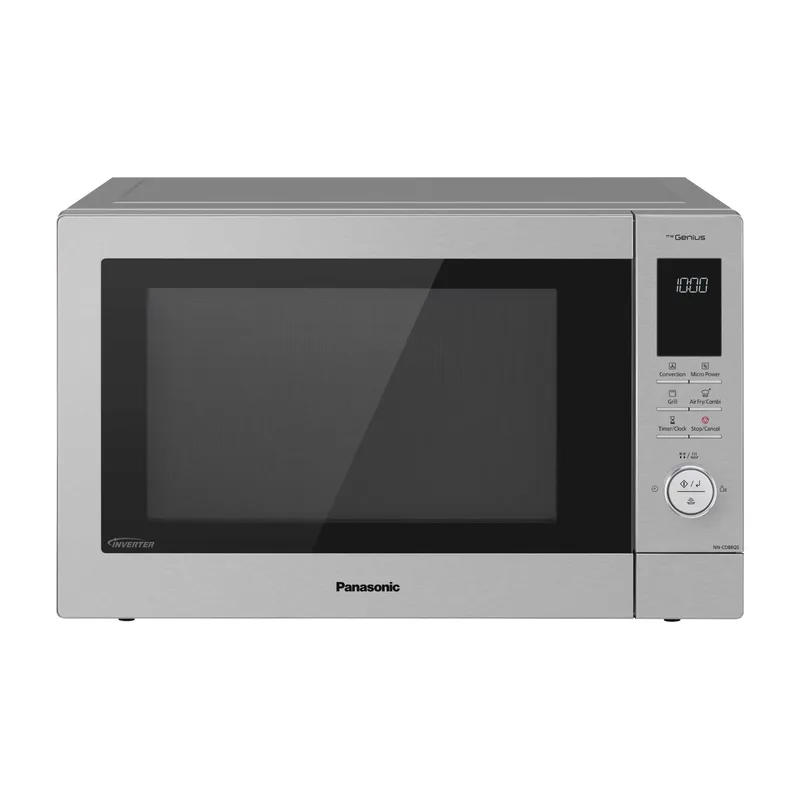
T3 and Ideal Home are the only freely readable independent reviews we used, and each says it used the products. T3's page, last updated 18 February 2026, gives the Panasonic NN-CD88 five stars and says the air fry setting produced crisp results without excess grease, the grill browned well and the sensor-controlled microwave functions worked well. Its criticisms are that the oven is very large, somewhat noisy and keeps making noise for a few minutes after cooking, and that the convection preheat takes extra minutes.
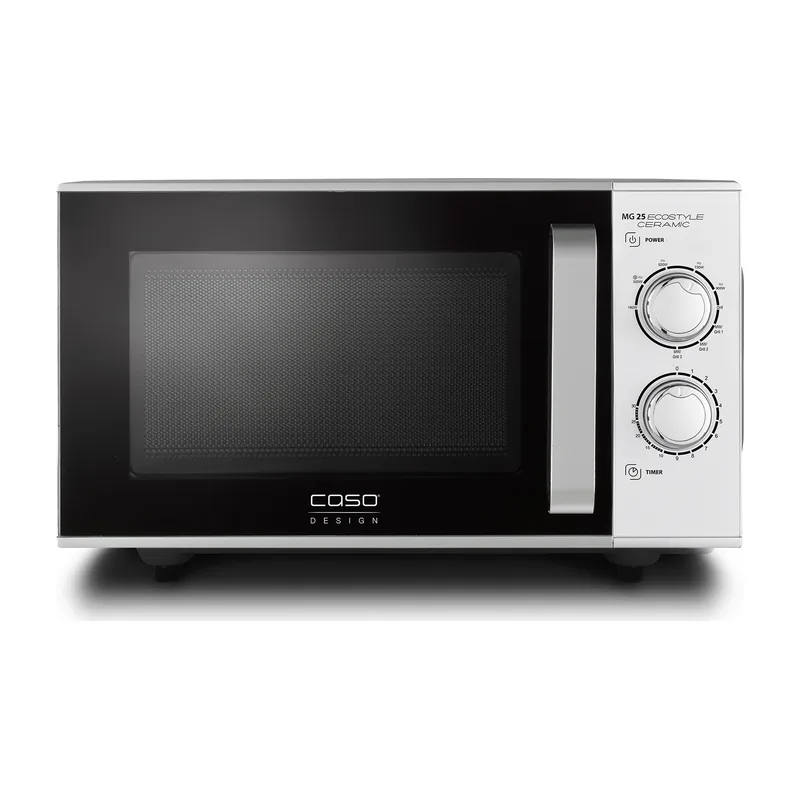
Ideal Home's roundup, updated on 3 August 2026, says it ran microwaves through thawing chicken, reheating tomato soup, cooking a jacket potato and crisping a pizza. For the CASO MG 25 it praised the two dial controls, the high power for quick reheating and the solid grill, and warned that the grill can be turned on by accident. Neither publication prints timings, temperature readings or heating evenness figures for the models on this page, which is why we cannot turn them into numbers and why neither can lift a model above its owner reviews.
An older roundup from Expert Reviews, published in May 2023, also says it ran its own tests, but it recommends different models, among them the Russell Hobbs RHM2031, the Sharp R20D and the Panasonic NN-CD58JSBPQ, so it does not apply to anything we rank. We mention it only to show that independent coverage of microwaves exists, though much of it is older or for other models than those on sale at Hughes today.
Is a bigger cavity worth the extra, once you do the sums
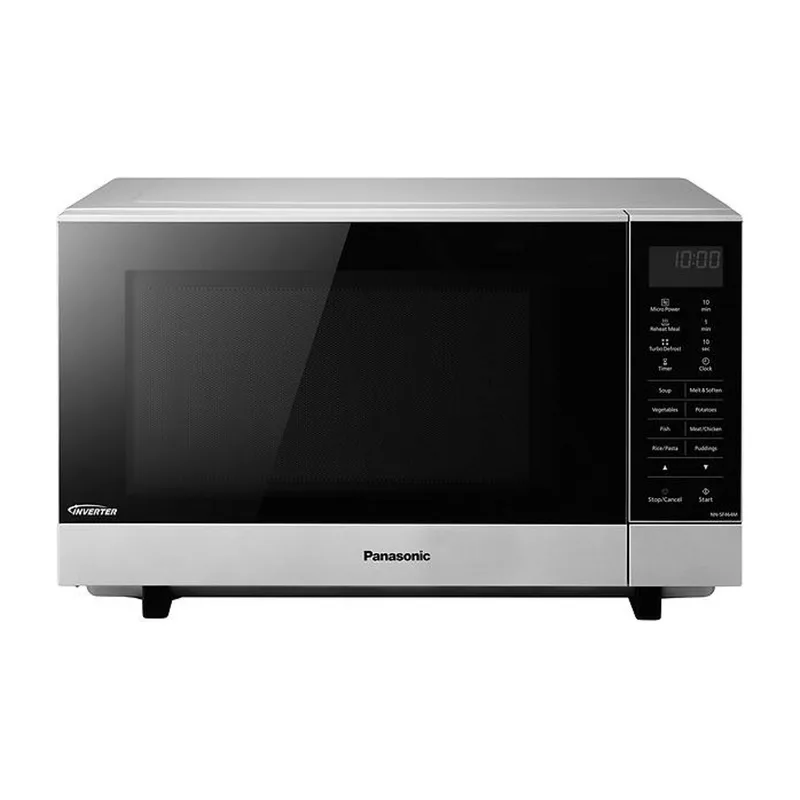
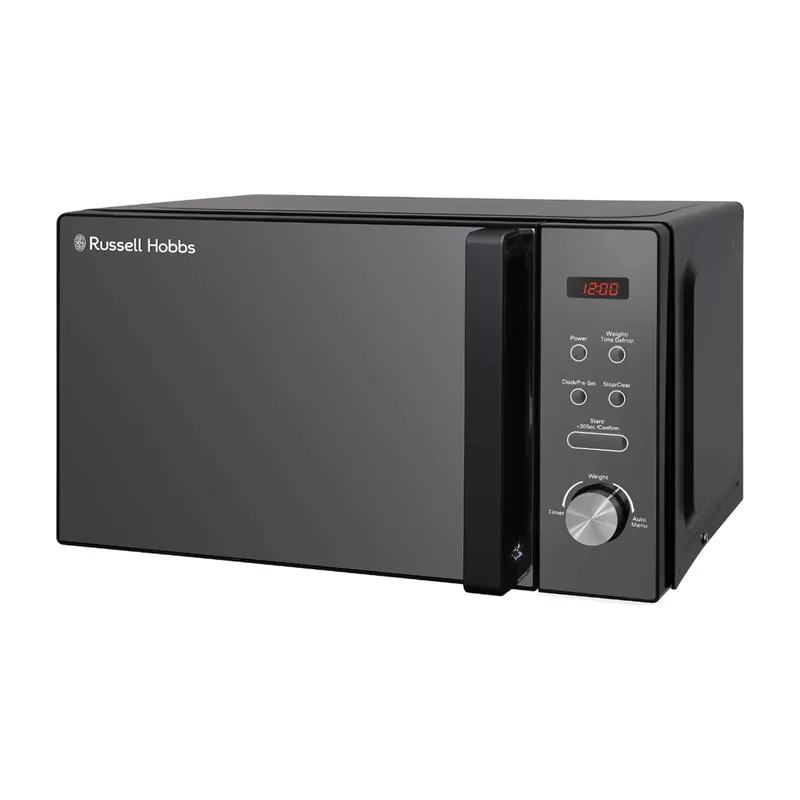
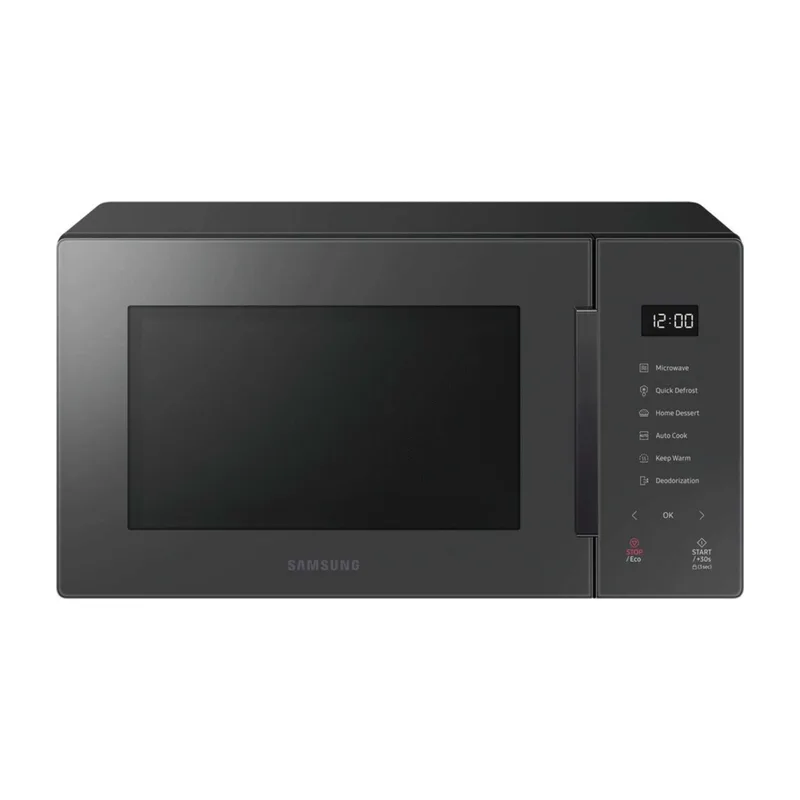
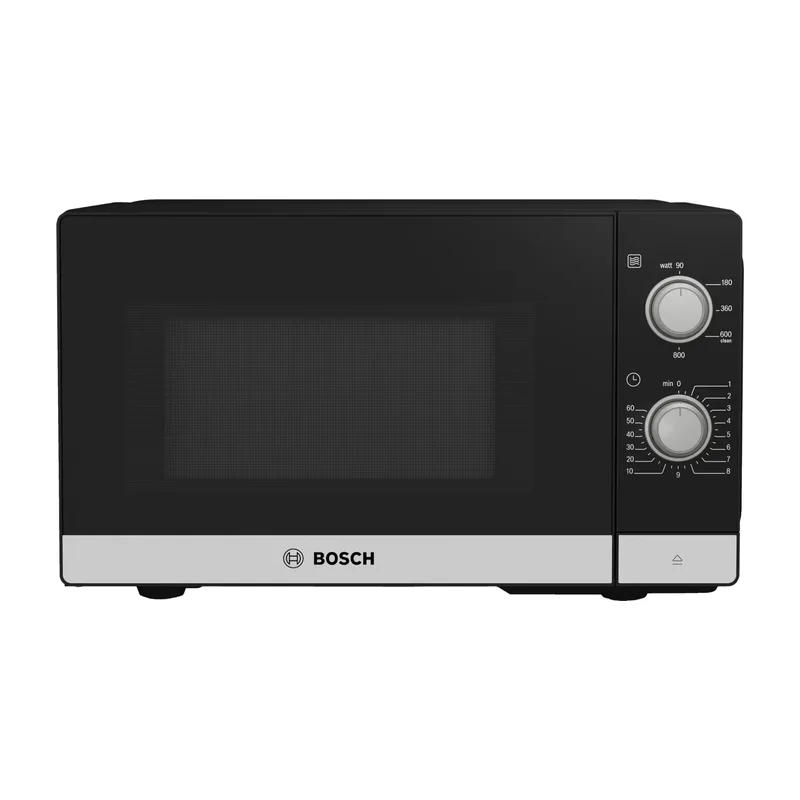
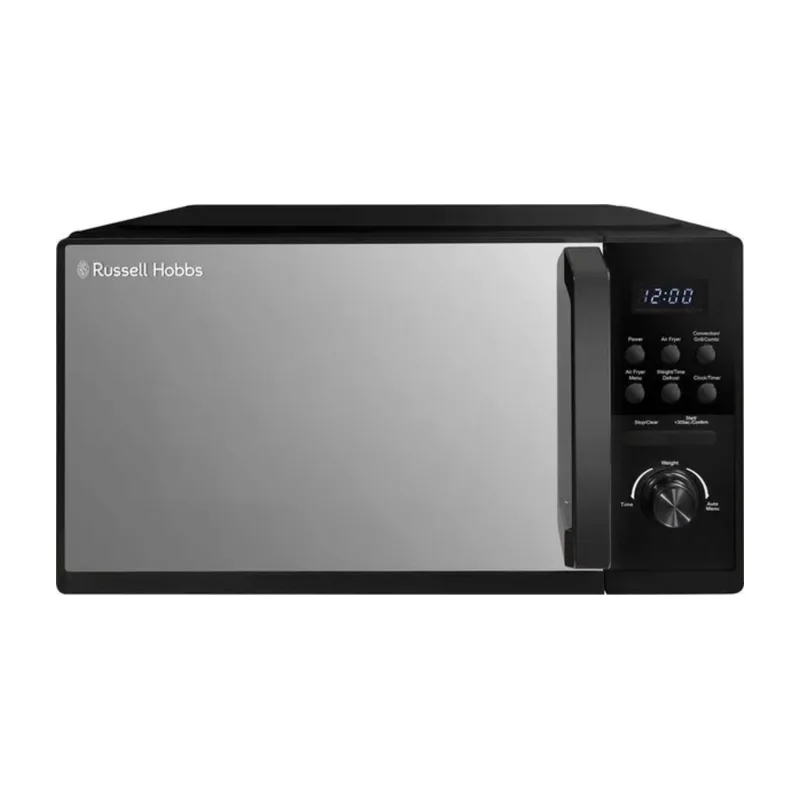
Four solo models make the trade-off visible. The Russell Hobbs RHM2076B is the baseline at £59 for 20 litres. The Bosch FFL020MS2B adds nothing in size for £70 more, only a second year of guarantee. The Samsung MS23T5018ACEU adds 3 litres and 20 programmes for £95 more, which works out at about £31.67 for each extra litre. The Panasonic NN-SF464MBPQ adds 7 litres and a flatbed for £140, which is £20 for each extra litre.
On that arithmetic the NN-SF464MBPQ is better value for space than the Samsung, which is why it leads the solo models even though the Samsung is £45 cheaper. The RHM2076B remains the best value overall because no other model gets close to its cost per litre or to its review volume.
Three cases change the answer. If you live alone and heat a mug or a small bowl, the extra litres are wasted. If your worktop is narrow, the NN-SF464MBPQ's 52.9 cm width may not fit. If you want a grill, none of the four will do, and the CASO MG 25 at £99.99 is the cheapest way to get one on this page, with the caveat that its evidence is one independent review and no owner volume.
Air fry inside a microwave is a compromise, and the sources only partly settle how large
Two models here advertise an air fry mode: the NN-CD88QSBPQ and the RHMAF2506B. T3 is the only source that reports what it does, and it says the mode on the NN-CD88 gave crisp results without excess grease. That is one reviewer's finding for one model. For the other, the evidence is the retailer's description and owner reviews.
The physical limits are visible in the specifications. A microwave air fry mode shares a cavity of 25 to 34 litres with a turntable or a flatbed, and the cheaper of the two, the RHMAF2506B, is 25 litres. We have no freely readable measurement of batch size or crispness for any of them, so a claim such as that a combination model replaces an air fryer would go beyond the evidence.
The sensible conclusion is narrower. If you want one appliance that reheats, defrosts and occasionally crisps something, a combination model is a reasonable single purchase. If you air fry several times a week, check how your household will use the cavity before paying £320 more for the NN-CD88QSBPQ than for a basic solo model.
Buying guide: choosing the right microwave
Extra cooking modes are what separate a £59 microwave from a £379 one
Every model in this comparison reheats food with microwaves, and the price gap between them is almost entirely about what else they do. The solo models cost £59 for the Russell Hobbs RHM2076B, £129 for the Bosch FFL020MS2B, £154 for the Samsung MS23T5018ACEU and £199 for the Panasonic NN-SF464MBPQ. Add a grill and the CASO MG 25 Ecostyle costs £99.99. Add air fry, and the Russell Hobbs RHMAF2506B costs £136. Add a full convection oven and an inverter microwave, and the Panasonic NN-CD88QSBPQ costs £379.
The best microwave for you is therefore decided by one question: will you use the extra modes? A grill browns the top of a dish and melts cheese, which is what Ideal Home praised in the CASO. Convection and air fry cook from heated air, and T3 found both worked on the NN-CD88, though it also noted that preheating the oven takes a few extra minutes. If your microwave mostly reheats leftovers and defrosts, none of that matters, and paying £320 more for the NN-CD88QSBPQ than for the RHM2076B buys capability you will never switch on.
Where you are mainly after crisp chips or roast potatoes, a combination microwave is a way to avoid buying a second appliance, but a dedicated air fryer is built around that job. Our air fryer comparison sets those two routes side by side. A combination microwave is also a poor choice if your worktop is tight: the NN-CD88QSBPQ is 18 kg and 56 cm wide, and the RHMAF2506B is 16.5 kg, against 11.5 kg for the RHM2076B.
Rated power is a weak guide, and 1000 W is not always better than 800 W
Three power figures appear in this comparison. The Russell Hobbs RHM2076B, Bosch FFL020MS2B and Samsung MS23T5018ACEU are rated at 800 W, the Russell Hobbs RHMAF2506B and CASO MG 25 at 900 W for the microwave, and the two Panasonics at 1000 W. On paper, 1000 W is 25 per cent more than 800 W. That does not translate to a 25 per cent shorter cooking time, and we found no freely readable independent timings that would let us say how much shorter it really is.
What the figures do tell you is how the manufacturer designed the oven. A higher rating suits larger loads such as a family portion of lasagne, while for a single bowl of soup a lower power setting is usually how you stop the edges overheating. That is why the number of power levels is worth a glance: Hughes lists 5 for the Russell Hobbs RHM2076B, Bosch and RHMAF2506B, 6 for the Samsung and 7 for the NN-CD88QSBPQ. Which? lists 6 levels for the NN-SF464MBPQ where Hughes lists 5, so check the retailer's specification before you rely on the figure.
Hughes also lists inverter technology on the NN-CD88QSBPQ and the NN-SF464MBPQ. Panasonic markets it as a way to deliver power continuously rather than switching it on and off, but we have not found a published measurement showing what that does to evenness or speed, so we treat it as a specification, not as a proven advantage. If you only ever reheat a mug or a plate, the higher rating is not a reason by itself to pay £140 more.
Litres tell you less than whether the plate can turn
A 27 litre flatbed is a different shape of space from a 27 litre turntable. The Panasonic NN-SF464MBPQ has no turntable, so a rectangular dish or a large plate sits flat and does not catch on the cavity walls as it turns. It is 32.6 by 52.9 by 42.2 cm and 11.8 kg according to Hughes, which makes it the roomiest solo model here. The cost is footprint: it is about 8 cm wider than the Russell Hobbs RHM2076B at 44.5 cm.
Capacity per pound is a rough way to compare, and it is a guide rather than a rule. The Russell Hobbs RHM2076B gives 20 litres at £2.95 per litre, the Bosch FFL020MS2B gives the same 20 litres at £6.45, and the Samsung MS23T5018ACEU gives 23 litres at £6.70. The Bosch earns its extra cost in guarantee length, not in space.
Small cavities are not a flaw if your needs are small. A 20 litre model suits a single person or a couple heating one plate at a time. They do not suit someone who regularly heats a whole casserole dish or a dinner plate with raised sides; in that case the 25 litre RHMAF2506B or CASO MG 25 is a more realistic floor, and the 27 litre Panasonic NN-SF464MBPQ is better still.
Review volume is the best evidence available for a budget microwave
Independent measurements of microwaves are scarce on the freely readable web. Which? reviews microwaves, and its page for the NN-SF464MBPQ says it was first reviewed in February 2018 and last checked in February 2026, but it shows the Best Buy label and scores only to members, so we cannot use them. T3 and Ideal Home publish freely readable reviews, but they cover only part of our list, and neither prints timings or temperature readings. For most models, owner reviews are what is left.
A single average is not enough, because sample size changes how much it can move. The Russell Hobbs RHMAF2506B shows 4.8 out of 5 from 49 reviews at Hughes. If one further buyer gave it a single star, the average would fall to about 4.72. The Russell Hobbs RHM2076B shows 4.6 from 1,947 reviews, and one more single star barely changes it. That is why we score the RHM2076B's 4.6 above the RHMAF2506B's 4.8: a high average from a small sample is less certain.
We also treat shared figures with care. Hughes shows 1,187 reviews on both the NN-CD88QSBPQ and the three-in-one NN-CF87LBBPQ, so that number may combine ratings from more than one model; the NN-CD88QSBPQ leads because of T3's review of the exact model. We left out the Panasonic NN-CT56RBBPQ because its 265 reviews at Hughes are also shown for other Panasonic combination models, which are different models, not colour variants. Second and third place rest on owner reviews alone, from 1,263 reviews for the NN-SF464MBPQ and 1,947 for the RHM2076B, the latter shared only with its silver colour version. A model with fewer than 10 reviews, like the CASO MG 25 with 4 on the maker's own page, gets a low score for owner reviews rather than a neutral one, because absence of evidence is not evidence of quality.
Automatic programmes save time only if the programme matches your dish
Auto programmes appear as headline features: Hughes lists 30 on the NN-CD88QSBPQ, 20 on the Samsung MS23T5018ACEU and 10 auto cook functions on the RHMAF2506B. Hughes advertises 18 for the NN-SF464MBPQ but its specification table says the model has no auto cook, so that count is unconfirmed. The Russell Hobbs RHM2076B and Bosch FFL020MS2B have none.
A long list is not the same as a good one. Ideal Home reported on two microwaves that are not in this comparison: the Tower T24021W's defrost setting recommended a fairly lengthy time for chicken breast, which ended up cooking it, and its auto cook setting needed a few extra minutes for a jacket potato. The point is that automatic times are starting points. A model with a sensor, such as the NN-CD88QSBPQ, which T3 says controls its microwave functions by sensor, adjusts as it goes, but a time-based programme cannot.
If you cook the same three dishes every week, a few well-chosen programmes matter more than a long list, and a manual dial such as the one on the RHM2076B is perfectly adequate. If you rarely cook from scratch and rely on frozen meals, the manufacturer's packet times are a better guide than any programme, whatever the model.
Weight, guarantee and where you buy from change the real cost
Weight matters if the microwave will be moved for cleaning or stored in a cupboard. The Russell Hobbs RHM2076B weighs 11.5 kg and the NN-SF464MBPQ 11.8 kg, the Samsung MS23T5018ACEU 12 kg and the CASO MG 25 13.4 kg. The RHMAF2506B is 16.5 kg, the Bosch FFL020MS2B 17.8 kg and the NN-CD88QSBPQ 18 kg. The Bosch is the surprise: it holds only 20 litres but weighs about 6 kg more than the equally sized Russell Hobbs.
Guarantees differ more than prices suggest. Hughes lists 1 year on the Russell Hobbs RHM2076B, RHMAF2506B, NN-SF464MBPQ and NN-CD88QSBPQ, and 2 years on the Samsung and Bosch. The Bosch costs £70 more than the RHM2076B for the same capacity and power, so that is effectively the price of one extra year of cover and a stainless steel finish. Whether that is worth it depends on how long you expect a microwave to last, which we have no source for.
Where you buy matters too. Six of the seven models are linked to Hughes, which showed each as in stock with delivery on 14 November 2026. The CASO MG 25 is linked to the maker's own UK shop, which lists free delivery but no guarantee period we could read. Hughes marks several prices with promotion dates, for example the Samsung up to 3 November, so a price can change; check the current figure before you order.
The interior finish affects cleaning more than the headline specification does
Retailers list interior materials, and they differ across this comparison. Hughes lists a stainless steel interior for the NN-CD88QSBPQ, a ceramic interior for the Samsung MS23T5018ACEU, which it describes as easier to clean than enamel or stainless steel, and an acrylic interior for the NN-SF464MBPQ, which it says lets splashes wipe away. The maker of the CASO MG 25 quotes an easy-clean coating, and the Bosch description mentions cleaning assistance technology. The Russell Hobbs RHM2076B is listed without a stainless steel interior, and the RHMAF2506B too.
None of these claims comes with a measurement, so treat them as the manufacturer's or retailer's description. The practical difference is the shape: a flatbed such as the NN-SF464MBPQ has one flat floor to wipe, a turntable model adds a ring and a plate to remove and wash, and a combination model with a grill element adds a surface that gets splashed with fat. If you reheat sauces often, the cleaning design deserves as much weight as capacity.
This criterion is also where a cheap model is least likely to disappoint. A simple solo microwave has fewer parts to clean than any combination model, which is one reason the Russell Hobbs RHM2076B scores well on ease of use despite having the fewest features. It is a poor match only if you want an interior that resists staining without effort, in which case the Samsung's ceramic lining or the Panasonic's flatbed are the models to look at.
Frequently asked questions
What is the best microwave in the UK?
In our comparison the Panasonic NN-CD88QSBPQ is the best microwave for people who want air fry, convection and grill as well, based on T3's five star review and 1,187 reviews at Hughes. For plain reheating, the Russell Hobbs RHM2076B at £59 has 1,947 reviews averaging 4.6, and the Panasonic NN-SF464MBPQ is the better solo model if you want 27 litres.
What is the difference between a solo and a combination microwave?
A solo microwave only heats with microwaves. A combination microwave adds a grill, a convection oven or both, and some, like the Panasonic NN-CD88QSBPQ, add an air fry mode. In this comparison the solo models cost from £59 to £199 and the combination models from £99.99 to £379.
What size microwave do I need?
Choose by the largest dish you heat regularly, not by litres alone. A 20 litre model such as the Russell Hobbs RHM2076B suits one or two people heating single plates, while 25 to 27 litres suits larger plates and family dishes. The Panasonic NN-SF464MBPQ has a flatbed, so a rectangular dish sits flat in its 27 litres.
Does a higher wattage mean a better microwave?
Not by itself. The two Panasonics are rated at 1000 W and the budget models at 800 W, which is 25 per cent more on paper, but we found no freely readable independent timings that show how much faster the higher rating cooks. Look at the number of power levels, the controls and owner reviews as well.
How are these microwaves ranked if you have not used them?
We have not used them ourselves. We compare manufacturer and retailer specifications with freely readable independent reviews and with owner reviews at UK retailers, and every model is scored on the same scale. Where a placement rests on owner reviews alone, the product assessment says so.
Are flatbed microwaves better than turntable ones?
A flatbed has no turntable, so large or rectangular dishes fit more easily and the floor is a single surface to wipe. The Panasonic NN-SF464MBPQ is the flatbed model here, and 1,263 reviews at Hughes average 4.7. The trade-off is width: it is 52.9 cm across against 44.5 cm for the Russell Hobbs RHM2076B.
What is the cheapest microwave worth buying?
The Russell Hobbs RHM2076B at £59 is the cheapest model here and has the largest review sample, 1,947 reviews averaging 4.6 at Hughes. It has 20 litres, 800 W and no grill or programmes, so it suits simple reheating and defrosting.
Can a combination microwave replace an oven?
For small meals it can. T3 found the NN-CD88's convection mode good and its air fry mode crisp. The 34 litre cavity is still smaller than a full oven, and preheating took a few extra minutes, so it replaces an oven for small households rather than for large roasts.
What guarantee do microwaves come with?
Hughes lists 1 year for the Russell Hobbs RHM2076B, RHMAF2506B, Panasonic NN-SF464MBPQ and NN-CD88QSBPQ, 2 years for the Samsung MS23T5018ACEU and Bosch FFL020MS2B. The CASO MG 25's guarantee period is not stated on the maker's page.
Are the reviews on these pages reliable?
They are the best volume of evidence available, but they are not verified by us. Hughes shows some figures, such as 1,187 reviews, on more than one related model, so we treat them as family signals. A high average from few reviews, like the 4.8 from 49 for the Russell Hobbs RHMAF2506B, is weighted below a slightly lower average from thousands.
How much should I spend on a microwave?
For simple reheating, the Russell Hobbs RHM2076B at £59 has more reviews than any other model here. Spending up to £199 buys 27 litres and a flatbed, and the combination models start at £99.99 for a grill and £136 for air fry. Pay more only for functions you will use.
Is a stainless steel interior better than other finishes?
Not necessarily. Hughes lists stainless steel for the Panasonic NN-CD88QSBPQ, ceramic for the Samsung MS23T5018ACEU and acrylic for the Panasonic NN-SF464MBPQ, and each is described as easy to wipe. We found no measurement comparing them, so choose on the shape of the cavity and your cleaning habits.