In depth: rollators explained
What Which? measured, and why its results are not on this page
Which? has tested 20 rollators, most recently in May 2025, and describes its method in its free article: a panel of differently sized testers rate assembly, handle adjustment and how easily each rollator turns indoors and outdoors; they walk over cobbles and hills; a newton meter measures how easily each one tips; and the brakes are checked locked and on a downward slope. Three rollators scored highly enough to be Best Buys.
Those results, and the names of the Best Buys, are visible only to Which? members, so we do not use them. What Which? lists freely is useful anyway: the models tested, their sizes, weights and maximum user weights. Four of the six rollators here appear in that list, and we use those figures where the retailer does not state them.
The free part of the article also lists six general lessons from Which?'s testing, from seats set too high for shorter users to brakes that barely slowed a rollator on a slope. They apply to every model here and are worth reading before you buy.
Which?'s list also shows how prices vary between shops for the same model. The Drive DeVilbiss Steel 3-Wheel Rollator, for example, was listed at £81.59 including VAT at one shop and £110 at Argos when Which? last checked, a difference of about a third, so it pays to compare.
byACRE or Let's Fly: £192 for 2 kg and a lifetime warranty
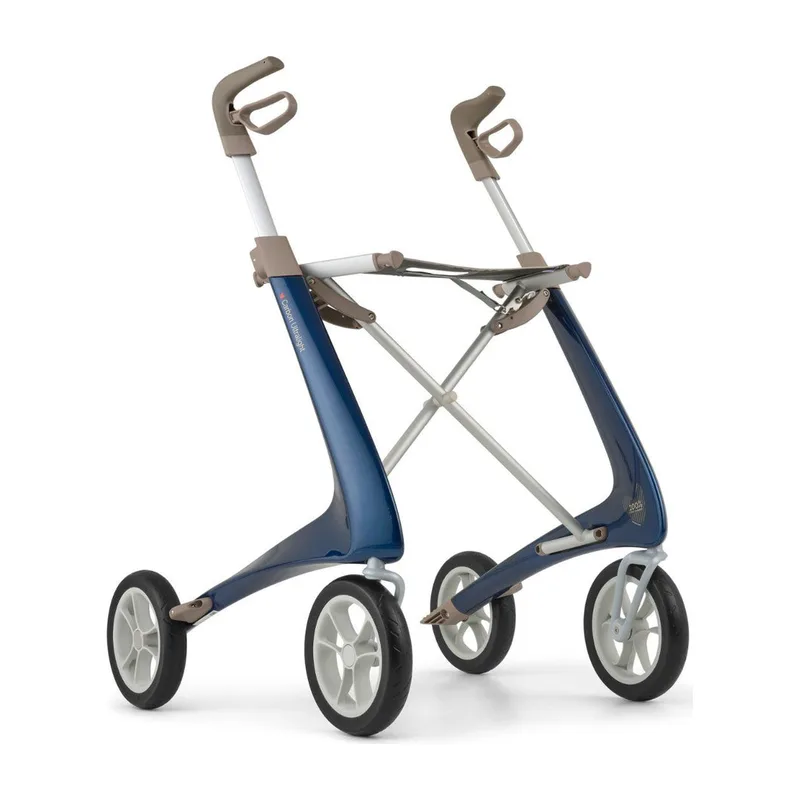
These two are the lightweight rollators most buyers will choose between. The byACRE weighs 4.8 kg and costs £588 including VAT; the Let's Fly weighs 6.8 kg and costs £396, both at Assist Mobility. The byACRE adds a lifetime frame warranty and three frame widths, and has far more owner reviews.
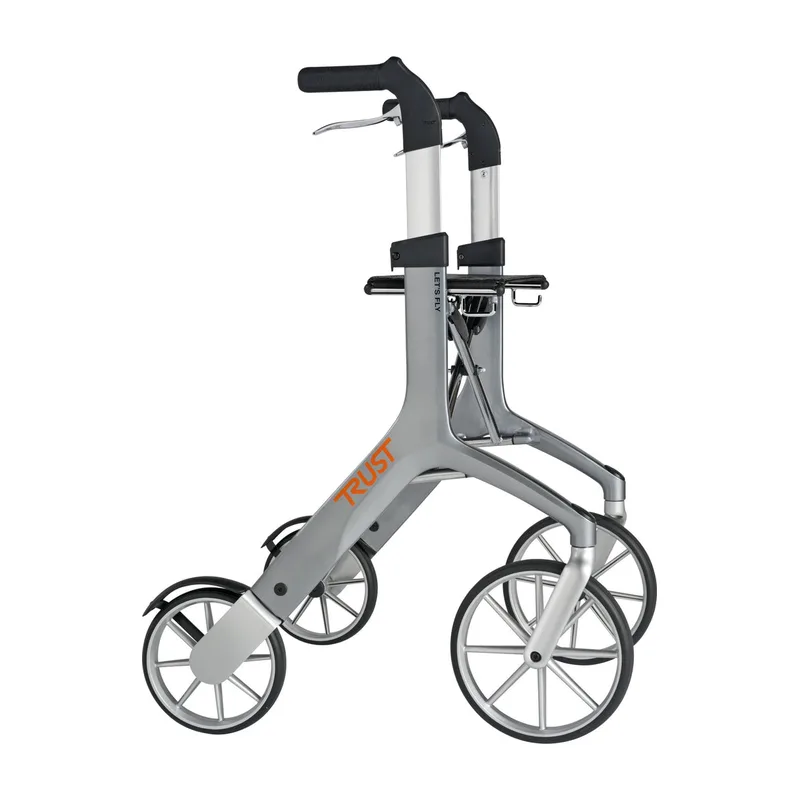
The Let's Fly fights back on wheels and width. Its 24.5 cm front wheels are made for kerbs, and its 57 cm frame passes through narrow doorways. It also stands on its own when folded, which matters if you store it in a hallway.
If you mostly lift the rollator into a car, the byACRE's weight saving is worth the money. If you mostly walk from your front door over uneven pavements, the Let's Fly is the more comfortable choice and saves you £192.
Both are sold by Assist Mobility, which states that the rollators are in stock at its UK warehouse and that delivery is free. The byACRE arrives fully assembled, according to the retailer, which matters because Which?'s testers found assembly awkward on some models.
Looking after a rollator: brakes, tyres and fabric
The parts that wear on a rollator are the ones that keep you safe. Brake cables stretch, rubber wears and wheels pick up grit. Which?'s testers found that brake performance varied widely between models, so check yours regularly by locking the brakes and pushing gently: the rollator should not move.
Air tyres on the Veloped need the right pressure to absorb bumps and to stop the brakes slipping; Trionic sells X-Country and Primera tyre sets in its UK shop. Solid wheels need no attention beyond cleaning.
Seat and bag fabrics get wet and dirty. Trionic uses water repellent 600D polyester for the Veloped's seat and basket. For other models, the material is not stated, so wipe the seat after a wet walk and let it dry before folding the rollator away.
Store a rollator folded and dry, away from radiators, which can harden rubber grips and tyres. If the brakes start to feel spongy or the rollator pulls to one side, have it checked by the shop before you rely on it again.
The Veloped is a walking machine, not a shopping trolley
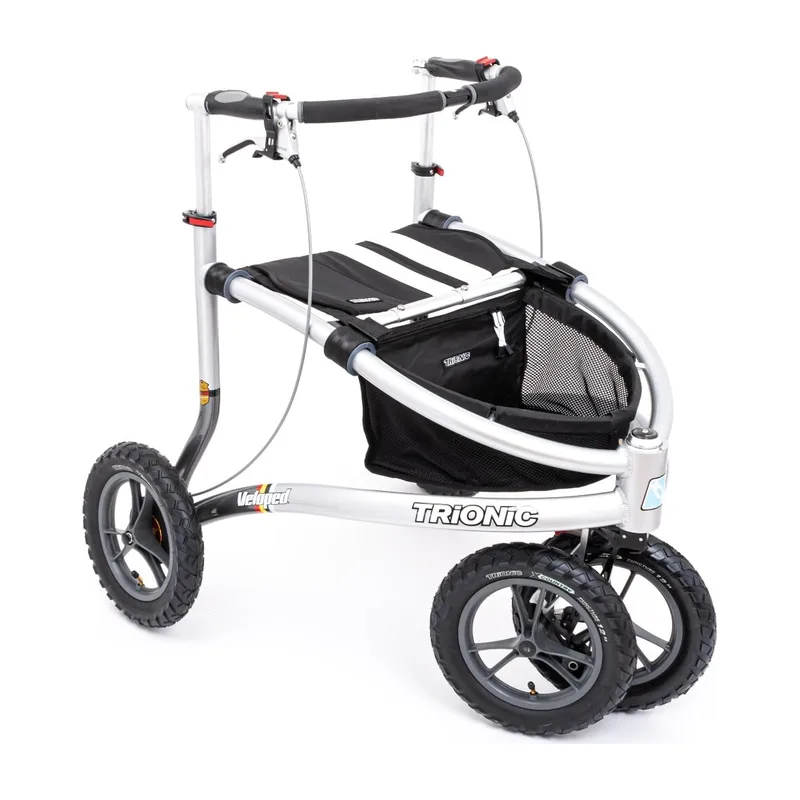
The Trionic Veloped is easy to misjudge if you compare it only on price and weight. At £1,098 including VAT and 11.4 kg, it loses to every other rollator here on both counts. What it offers instead is the ability to keep walking where others stop: 31 cm air tyres, a climbing wheel for kerbs and roots up to 13 cm, and a 150 kg user limit.
Trionic also sells versions aimed at particular uses, from the Veloped Golf with bag holders to the Veloped Jakt for hunting, and larger 14 inch wheel models. The Sport 12er M on this page is the general outdoor model for users from 150 to 189 cm tall; a size L is available for taller users.
For most people, the right comparison is not the Veloped against the byACRE, but the Veloped against not walking on footpaths at all. If you used to walk in the countryside and a standard rollator keeps you on pavements, it is the only model here that changes that.
It comes fourth here because its weight and price cost it more points than its wheels and guarantee earn. A buyer who needs a pavement rollator for shops and buses should look higher up the list; a buyer who wants the countryside back should look at nothing else on this page.
Buying guide: choosing the right rollator
Every kilogram counts twice: once in your hands, once in the boot
The weight range here runs from 4.8 kg for the byACRE to 11.4 kg for the Veloped, and you feel it every time the rollator goes into a car or up a step. Pushing a rollator along a pavement takes little effort whatever it weighs, but lifting it does not. If you or the person who helps you lifts it often, weight is the first thing to check.
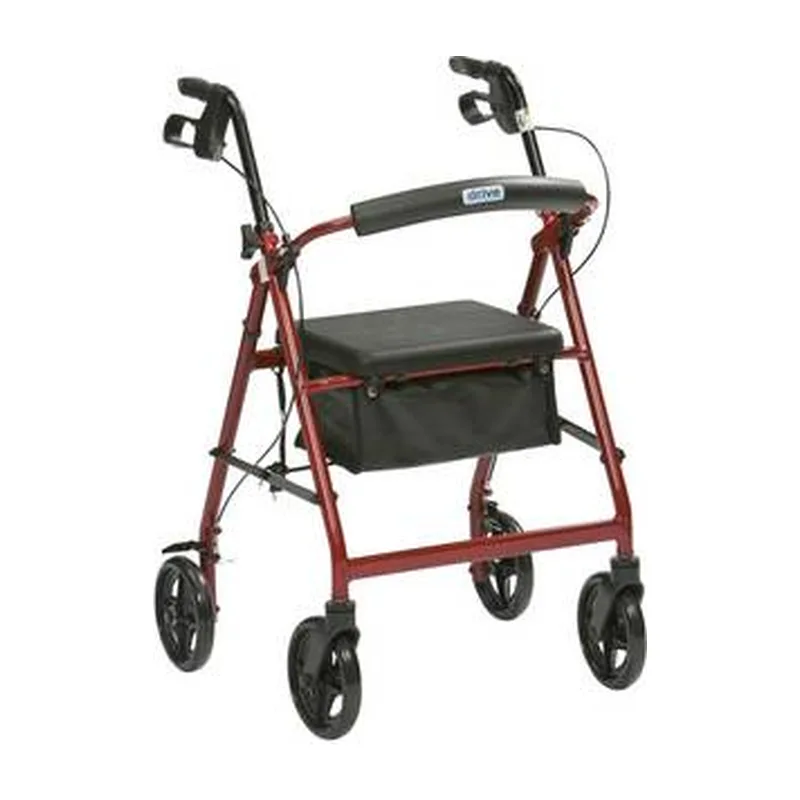
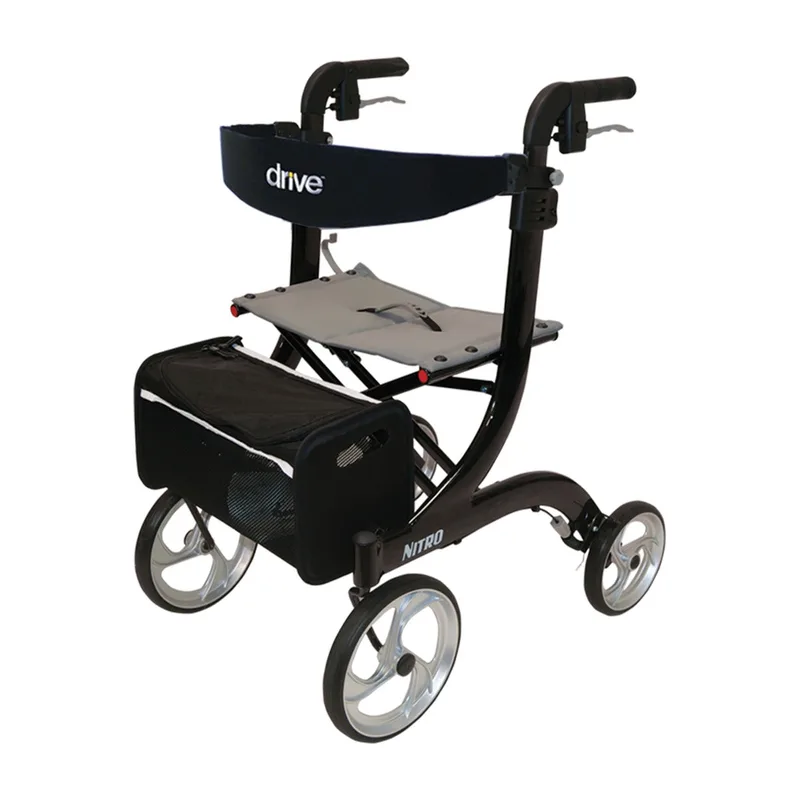
The cheapest way to save weight here is the Drive four wheel rollator at 7 kg for £100. Going to the Let's Fly saves another 0.2 kg and adds a much slimmer fold, and the byACRE saves a further 2 kg. The Veloped goes the other way: its 11.4 kg buys large air tyres, though removing the wheels brings the lifting weight down to 7.4 kg.
Folded size matters as much as weight for small cars. The Let's Fly folds to 20 cm wide and stands up on its own, according to Assist Mobility, and the byACRE folds flat. Which?'s testers noted that rollators with canvas seats are often the easiest to fold, because you simply pull the seat up in the middle.
Think about who does the lifting, too. If a partner or carer folds the rollator into the car for you, their back takes the strain, and a rollator that is 2 kg lighter is felt by both of you. The Veloped's removable wheels make sense for a strong user who drives alone; for an older couple sharing the lifting, the byACRE or Let's Fly is kinder.
Small wheels are fine indoors and a nuisance on a cobbled street
Wheel size decides where a rollator is comfortable. Which?'s testers found that some rollators handle bumpy surfaces well while others are, in their words, real bone rattlers, and advise thinking about the surfaces you will cover before you buy. The sources we could use state a wheel size for only two rollators here: 24.5 cm front wheels on the Let's Fly and 31 cm air tyres on the Veloped.
Air tyres absorb bumps that hard plastic wheels pass straight to your wrists, but they need pumping up and can puncture; Trionic fits puncture protection and sells spare tubes for that reason. For pavements, shops and the inside of your home, solid wheels are less fuss.
If most of your walking is on gravel paths, grass or a beach, only the Veloped is designed for it. If you mostly walk in town but meet the odd kerb, the Let's Fly's larger front wheels are a sensible middle ground, and much easier to live with indoors than the Veloped's 76 cm wide frame.
Brakes and wheels work together. On a slope, larger wheels roll more easily, which is welcome going up and less so coming down. The Veloped has what Trionic calls all terrain brakes for that reason, and Which?'s free article notes that some rollator brakes barely slowed their model on a slope. If your local walks include hills, ask the shop how the brakes are adjusted and how easy they are to reach.
Indoors, wheel size matters less than turning circle, and none of the sources we could use measured that for these six models, so try a rollator in a shop if tight corners at home are your main concern.
Handle height and user weight limits rule some rollators out before price does
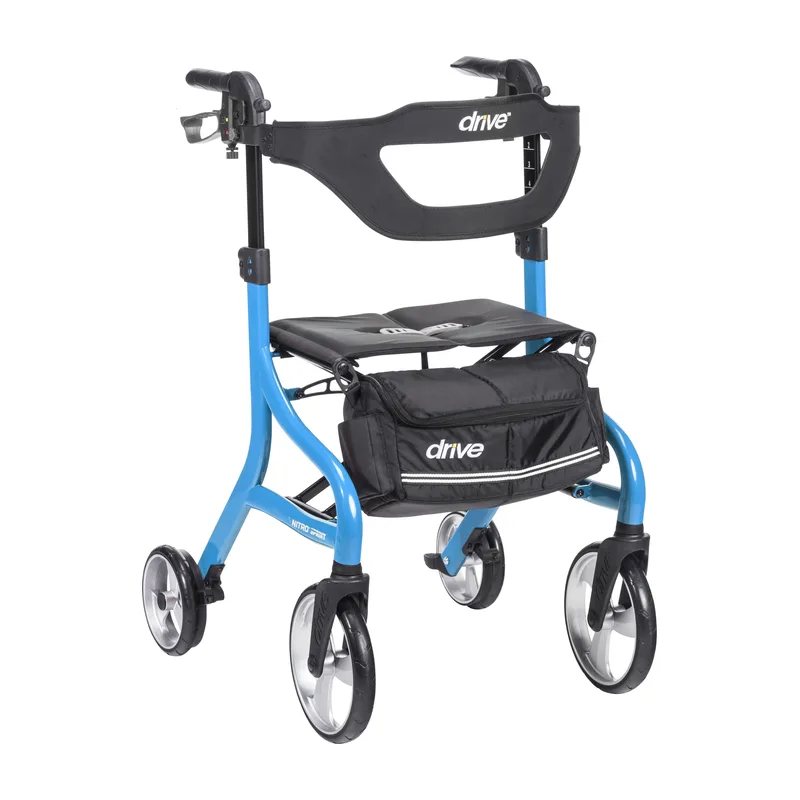
Which?'s guidance on walking safely is that the handles should sit just above your wrist joint when your arms hang by your sides, so your elbows bend slightly when you hold them. That makes the handle range the first thing to compare with your own height. The Nitro's handles reach 97 cm and the byACRE's 96 cm, while the Nitro Sprint stops at 93 cm and the Let's Fly at 92 cm.
Maximum user weight varies more than most buyers expect: from 113 kg for the Drive at Argos to 158 kg for the Nitro Sprint. If you are close to a limit, choose a model with a margin, because the figure is the maker's rating for safe use, not a target.
Width matters at home. The Let's Fly is 57 cm wide and the Nitro Sprint 51 cm according to Which?, while the Veloped is 76 cm. Measure your narrowest door before you buy, especially the bathroom door, where a rollator is often most useful.
Seat height matters if you plan to rest on longer walks. Which?'s testers found some seats too high for shorter people to sit on comfortably. The Let's Fly's seat is 60 cm high and the Veloped's 58 cm, according to their sellers; the other four do not state a seat height on the pages we read, so shorter buyers should ask before ordering.
If you are between two sizes, choose the rollator whose handle range puts your ideal height in the middle rather than at the very top, so there is room to adjust if you change shoes or posture.
VAT relief can take a sixth off the price, if you qualify
Disabled people and people with a long term illness can buy eligible mobility aids at 0% VAT in the UK instead of 20%, as Trionic's UK site explains. Specialist shops show both prices: the byACRE is £588 including VAT or £490 with relief at Assist Mobility, and the Veloped £1,098 or £915 at Trionic. The prices on this page include VAT, because not every reader is eligible.
To claim the relief you usually sign a short declaration at checkout. The general shops do not always offer it: the Argos price for the Drive four wheel rollator is the full price, so the gap between it and the specialist rollators narrows by a sixth if you qualify.
Check the rules before you sign. The declaration is a legal statement about your circumstances, and the shop cannot decide for you whether you qualify. If you are unsure, the price including VAT is the safe figure to budget with.
The saving is real money on the dearer models: £98 on the byACRE, £66 on the Let's Fly, £183 on the Veloped. On the two Drive Nitro models at Fenetic Wellbeing the saving is £28 and £36. It does not change the order on this page, because the price criterion uses the price including VAT for every model.
Owner reviews are the best evidence available, so count them as well as averaging them
Because Which?'s rollator results are for members only, owner reviews are the main performance evidence on this page. Three rollators have a meaningful number: 949 reviews for the byACRE, 638 for the Drive at Argos and 35 for the Veloped. The Let's Fly has 24. The two Nitro models have no product specific count we could verify, only a figure for the whole shop.
A 4.88 average from 24 reviews and a 4.8 average from 638 are not the same strength of evidence. The larger the number, the less one enthusiastic or unhappy buyer can move the average, which is why the Drive at Argos ranks above the Veloped despite costing a tenth as much.
Reviews also reflect who buys from each shop. Specialist mobility shops attract buyers who have often used rollators before, while Argos reviews include many first time buyers. Neither is better, but it is worth reading a few reviews from people who use their rollator the way you will.
The same caution applies to star ratings shown for a whole shop rather than a product. Fenetic Wellbeing's pages for both Nitro models showed the same rating and count, which suggests a shop wide figure, so we did not count it for either model. Look for reviews attached to the exact model and size you are buying.
Read the one and two star reviews as closely as the five star ones. They tell you what goes wrong when something does: a stiff fold, a wobbly wheel, a seat that sags. If the same complaint appears several times for a model, it is a pattern rather than bad luck.
A long guarantee says how long the maker expects the frame to last
The guarantees here range from one year on the Drive at Argos to a lifetime warranty on the byACRE's carbon frame, with the Veloped at 10 years excluding wear parts. Three rollators have no guarantee stated on the product pages we read.
Wear parts matter more on a rollator than on most products. Brakes, tyres and seat fabric wear out with use, and Trionic and Assist Mobility both sell spare parts. Before you buy, check that brake cables and wheels are available for your model, because a rollator with worn brakes is not safe to lean on.
Which?'s testers found that brakes on some rollators barely slowed them on a slope, and noted that rollator brakes generally slow you rather than stop you. Follow the maker's instructions if you adjust them, and have them checked if they feel weak.
A guarantee only helps if the company is easy to reach. Trionic sells directly in the UK and lists spare parts on its own site, and Assist Mobility states that it handles the byACRE warranty itself. For the Drive models bought from a general retailer, the guarantee runs through the shop, so keep the receipt.
A rollator is not a walking frame, and the difference matters indoors
Which? explains the difference clearly: a rollator has wheels on all legs, brakes and usually a seat, and suits walking outside; a walking frame, often called a zimmer frame, has no wheels or wheels only at the front, and is mainly used indoors because you lean on it as you step.
All six products here are four wheeled rollators. They roll freely, which makes them easier to push but means they will move if you lean on them without the brakes on. If you need something to bear your weight as you stand up, a frame or professional advice is the better route.
An occupational therapist or physiotherapist can assess which walking aid suits you, and in some areas the NHS or your local council can lend or provide one. That is worth doing before spending several hundred pounds.
Indoor only rollators also exist. They are smaller, with a tray instead of a seat, and are designed for moving around a flat or bungalow. None of the six here is one; all are built mainly for walking outside, and the Veloped and the byACRE are the least practical indoors, the first because of its width and the second because it is designed above all for travel.
A borrowed or loaned rollator is also a cheap way to learn what you need before buying one of the dearer models here.
Three wheels turn more easily, four wheels stand more steadily
Which? explains in its free guide that four wheeled rollators are more common than three wheeled ones, and that some people find three wheeled models easier to turn, at the cost of some stability. Its tested list includes three wheeled models from Drive and NRS weighing as little as 4.2 kg.
All six rollators on this page have four wheels and a seat. We chose them because most buyers want somewhere to sit on a longer walk, and a three wheeled rollator has no room for a seat. If you never sit down while out and mainly need help steering through shops, a three wheeled model is worth comparing.
Stability is the reason to stay with four wheels if your balance is uncertain. Which?'s testers measured how easily each rollator tipped with a newton meter, which shows how seriously it takes the question, but the results are for members only, so we cannot name the steadiest model here.
If you are choosing for someone else, ask them where they want to go rather than how they walk now. A rollator that makes the walk to the shops easier but cannot manage the path to the park may end up used less than one that suits the walks they care about.